Most homeowners pick fire pit chairs the same way they pick a bag of charcoal, on price and proximity to the checkout. Two seasons later the chairs are warped, the fabric is mildewed, and the seats sit eight inches too low for the height of the pit. The best chairs for fire pit conversations balance ergonomics, weather resistance, and the height of the pit itself, which determines whether you are leaning back to enjoy the flames or hunched forward like a campsite hostage. The right setup is not expensive; it is just specified correctly.
Pit Height Drives Chair Height
Standard backyard fire pits sit 12 to 18 inches off the ground at the lip. A taller, wood-burning pit like a Solo Stove Yukon at 17 inches or a Breeo X30 at 14.5 inches needs chairs with a seat height around 13 to 16 inches so the eye line falls naturally on the flame and the heat reaches the legs and torso. Adirondack chairs at 13 to 15 inches seated height pair perfectly with these pits. A taller propane fire table at 24 to 30 inches needs upright dining-height chairs at 18 to 20 inches seated.
Mismatched heights are the single biggest comfort problem. Sit too low and the smoke drifts directly into your face. Sit too high and the legs lose the heat.
Material Choices and What They Cost
Five material categories dominate the market:
- HDPE recycled plastic (POLYWOOD, Highwood): $200 to $500 per chair. Weatherproof for 20+ years, no maintenance, heavy enough to resist wind.
- Powder-coated steel (Belham Living, Sunnydaze): $90 to $280 per chair. Modern looks, prone to rust on chips. Repaint every three to five years.
- Cast aluminum (Hanover, Hampton Bay): $200 to $600 per chair. Lightweight, rustproof, comfortable with cushions.
- Cedar or teak (Outer, Pottery Barn): $300 to $900 per chair. Beautiful patina, requires annual oiling for color retention.
- Wicker on steel frame (Christopher Knight, Devoko): $150 to $450 per chair. Modern look, but cheap resin wicker cracks in UV after three seasons.
For year-round outdoor use in any climate, HDPE plastic and cast aluminum lead on durability per dollar.
Top Picks by Style
Six options worth shortlisting based on real-world use and review consensus.
- POLYWOOD Classic Adirondack: $300 to $400. Lifetime warranty, made in the US, available in 17 colors. The benchmark for HDPE chairs.
- Yardbird Eden Swivel Lounge: $550 to $700. Cast aluminum frame with Sunbrella cushions. The swivel base lets you face the pit or the conversation.
- Outer Wicker Lounge Chair: $850 to $1,100. Higher seat for fire tables. Includes a built-in cushion cover that pulls over the seat when not in use.
- Hampton Bay Mix and Match Stack Chair (Home Depot): $79 to $120. Best budget option. Steel frame, stackable for winter storage.
- Sunnydaze Decor Rocker: $180 to $260. Cast aluminum rocker, surprisingly stable, paired well with a 17-inch wood-burning pit.
- Lifetime Adirondack (Costco): $130 to $180. HDPE plastic, basic Adirondack shape, often the best value at members-only club pricing.
Weight Rating and Sturdiness
Look for a static weight rating of at least 300 pounds. Cheap chairs commonly list 250 pounds, which means the joints flex under any larger guest and the chair feels unstable. The POLYWOOD Classic carries a 350-pound rating; the Yardbird Eden goes to 400 pounds. Cast aluminum chairs with welded joints generally exceed 400 pounds because the frame, not the fasteners, carries the load.
Wind matters too. A 5-pound steel-frame chair that wobbles in a 10 mph gust will end up flipped against the fence after every summer thunderstorm. HDPE chairs at 35 to 50 pounds and cast aluminum chairs at 25 to 40 pounds stay put. Add a chain or strap to any chair below 20 pounds in coastal or open-yard conditions.
Fire Safety Clearances
Fire code in most US municipalities requires a minimum of 10 feet of clearance from a permanent structure for any open-flame pit. The chair-to-pit clearance is separate. Position chairs 24 to 36 inches from the lip of a wood-burning pit and 18 to 24 inches from a propane unit. Plastic chairs at HDPE are tested to soften around 250 degrees Fahrenheit; even an inferno-strength wood pit rarely projects that heat past 18 inches of clearance, but better safe than warped.
Cushions and throw blankets are the most common ignition source. Use only outdoor-rated fabrics labeled flame-resistant (FR), and shake off embers before retreating indoors. Sunbrella and Olefin both meet residential FR standards out of the box.
Cushion and Accessory Choices
HDPE and aluminum chairs are comfortable without cushions, but a 2-inch Sunbrella cushion from POLYWOOD, Frontgate, or Pottery Barn at $80 to $200 per chair extends comfort by hours and adds the color layer that pulls a fire pit zone together. Look for cushions with quick-dry foam (not standard polyurethane), Sunbrella-grade fabric, and a YKK zipper for cover removal.
Optional add-ons worth the money include an ottoman or extended footrest for Adirondack chairs ($60 to $150), a side table at 18 to 20 inches tall to hold drinks ($45 to $200), and a fitted chair cover for off-season storage ($25 to $60 each from Classic Accessories or Duck Covers).
How Many Chairs to Buy
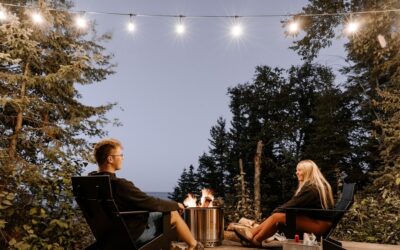
The conversation circle around a 36- to 40-inch fire pit comfortably seats four to six chairs at 6 to 8 feet of pit-to-chair distance. Squeeze six in if the chairs are Adirondack-shaped and angled inward, since the angled wings give shoulder room. Eight chairs around a single pit feels crowded and breaks the conversation into two groups; better to add a second pit or a separate seating cluster.
Plan storage from day one. A 12-by-12-foot deck box from Suncast or Keter at $180 to $400 holds cushions and small accessories. The chairs themselves stack or fold flat for winter on most semi-decent models.
Final Buying Checklist
Before clicking buy, verify five specs: seat height matches your fire pit lip height plus 0 to 3 inches, material rated for year-round outdoor exposure, weight rating at least 300 pounds, fire-resistant cushion fabric if cushions are included, and a manufacturer warranty of at least three years on the frame. Hit all five and you have a setup that lasts a decade. Skip any one and you are shopping again next spring.