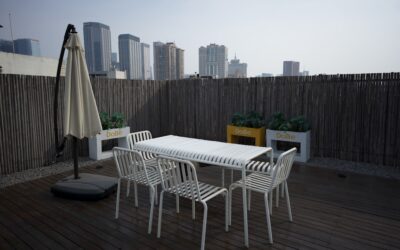
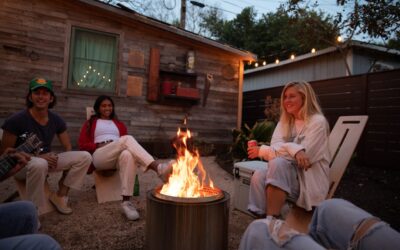
Fire is the feature that changes how often a patio gets used — sets with a flame at the center get sat around in March and November, not just July. Buying patio furniture with fire pit included, as a matched conversation set, solves the two problems that plague piecemeal setups: seat heights that match the fire table, and a layout designed around safe clearances. The market runs from $600 big-box bundles to $5,000 luxury suites, and the differences that matter are hidden in the BTU rating, the frame material, and the cushion fabric. Here is how to buy one you will still like in year five.
Part of our Decks & Outdoor guide — explore the full guide →
- What a Fire Pit Conversation Set Includes
- Propane vs Wood at the Center
- BTUs and Heat: The Spec Everyone Misreads
- Frame and Cushion Materials: Where Budgets Separate
- Layout, Clearance, and Sizing the Set to the Patio
- What Each Budget Buys in 2026
- Accessories Worth Budgeting From Day One
- Care That Doubles the Lifespan
What a Fire Pit Conversation Set Includes
The standard configuration is a propane fire table plus seating for four to six: either a sofa with two club chairs, four chairs in a circle, or L-shaped sectional variants. The fire table itself is the anchor — usually 28-52 inches across, with a burner under lava rock or fire glass, a hidden compartment or side cabinet for a 20-pound propane tank, and a lid that converts the burner area to tabletop when the flame is off. Chat-height tables (24-26 inches) pair with lounge seating; dining-height fire tables (28-30 inches) exist for eat-around setups. Match heights deliberately: a tall table with low-slung chairs puts the flame at face level and the tabletop above elbows.
Propane vs Wood at the Center
Nearly all furniture sets ship with propane fire tables, and for good reason: instant on/off, no smoke chasing guests around the circle, no embers near cushions, and legality on decks and in most HOAs where wood fires are restricted. A 20-pound tank runs $20-25 to exchange and lasts roughly 4-8 hours at full output. The trades are real too — propane throws less heat than a wood fire, and there are no marshmallows-over-coals aesthetics. If you want wood, buy the furniture and a separate wood-burning pit (steel bowl, smokeless-style cylinder, or masonry), and push seating clearance out: wood fires want 5-7 feet from fabric and 10-25 feet from structures depending on local burn ordinances. Propane sets are designed to be sat around at 24-30 inches, which is exactly why the packaged sets work.
If a natural gas line reaches your patio, many mid-range and premium tables offer NG conversion kits ($50-100) — endless fuel, lower cost per hour, and no tank swaps. It is the best long-term setup for a permanent seating area.
BTUs and Heat: The Spec Everyone Misreads
Fire tables in furniture sets run 40,000-60,000 BTU. That number is fuel consumption, and it translates to ambiance plus warmth for people sitting within about 2-3 feet — not the radiant blast of a bonfire. 50,000 BTU is the category sweet spot; below 40,000 the flame reads decorative in any breeze. Fire glass reflects and radiates a touch more warmth than lava rock and looks brighter at night; lava rock is cheaper and more traditional. For genuinely cold-evening heating, plan on a patio heater as a supplement rather than expecting the table to do it. And check the wind: flames under 12-15 mph gusts waste fuel and stress igniters, so a wind guard (a glass rectangle around the burner, $60-120) is the most worthwhile accessory in the category.
Frame and Cushion Materials: Where Budgets Separate
- Steel frames with resin wicker — the $600-1,200 entry tier. Fine under a covered patio; in full weather, the steel eventually rusts at welds and the PVC wicker fades. Expect 3-6 years.
- Aluminum frames with PE (polyethylene) wicker — the $1,200-2,500 sweet spot. Rustproof frames, UV-stabilized wicker, and 7-15 year realistic lifespans. Most quality mid-market sets live here.
- Cast aluminum, teak, or HDPE lumber — $2,500-5,000+. Heirloom-grade frames; teak weathers to silver gracefully and HDPE (poly lumber) is essentially weatherproof.
Cushions decide daily satisfaction more than frames. Look for solution-dyed acrylic fabric (Sunbrella and equivalents) rather than printed polyester — the color runs through the fiber and survives 5-10 years of UV instead of two. Foam should be quick-dry reticulated or wrapped in breathable ticking, and covers should zip off for washing. On the fire table itself, confirm a CSA or ETL listing, an accessible control valve, and a burner warranty of at least 3-5 years; the burner and igniter are what fail first on cheap tables.
Layout, Clearance, and Sizing the Set to the Patio
A four-piece fire pit set needs more room than its footprint suggests: the table plus 18-24 inches to each chair front, plus walk-around space behind. Practical minimums: a 10×10-foot patio for a four-chair set, 12×14 for a sofa-and-chairs group. Overhead, keep any flame at least 6-8 feet below combustible cover — and note many manufacturers prohibit operation under a closed roof entirely; open pergolas are generally fine, but check the manual and your local code. On wooden decks, propane fire tables are usually permitted (another advantage over wood), but confirm your HOA and the table’s deck-use guidance. Store the propane tank outdoors, never in a garage or enclosed box without ventilation openings — which is why quality tables ventilate their tank cabinets.
What Each Budget Buys in 2026
- $600-1,200: steel-frame four-piece with a 40-50K BTU table (Better Homes and Gardens, Mainstays, entry Hampton Bay). Honest value under a covered patio; buy covers immediately.
- $1,200-2,500: aluminum frames, PE wicker, Sunbrella-class cushions, 50-55K BTU with wind-guard options (Hampton Bay’s upper lines, Ovios, Wade Logan, better Costco bundles). The recommendation zone for most buyers.
- $2,500-5,000+: cast aluminum or teak, premium burners with lifetime frame warranties (Hanover, Agio signature lines, specialty patio retailers). Buy once, reupholster someday.
Accessories Worth Budgeting From Day One
Plan an extra 10-15 percent of the set price for the pieces that make ownership painless. In rough order of value: a fitted fire table cover ($30-80) — burners and control panels are the components weather kills, and the flat lid alone does not seal them; a full-set furniture cover or individual chair covers ($60-150) for the off-season; a glass wind guard ($60-120) if your evenings have any breeze; a second propane tank ($35-50 filled) so a mid-gathering empty is a two-minute swap instead of a store run; and a tank scale or gauge ($10-20) to end the guessing. Fire glass upgrades ($1.50-3 per pound; a 42-inch table takes 15-20 pounds) are the cheapest visual upgrade in the category if your set shipped with lava rock. Skip the “fire pit cooking grate” accessories on propane furniture tables — dripping fat onto a decorative burner is a cleaning problem at best and a flare-up at worst; these tables are for warmth and light, not grilling.
Storage strategy matters as much as covers. Cushions live longest in a deck box ($100-250) or garage between uses; frames can winter outdoors under covers, but in snow country, disconnect the tank, store it outside away from the house, and let the table winter with its cover cinched. Come spring, the whole set needs only a wash and a leak-check to go back into service.
Care That Doubles the Lifespan
Timing the purchase saves real money: fire pit sets discount 30-50 percent from late August through October as retailers clear seasonal floor space, and floor models go cheaper still. Buying in fall for next season is the enthusiast move.
Three habits: cover or store cushions when not in use (UV plus trapped moisture kills them faster than rain alone), burn the table for 10 minutes monthly in the off-season to keep spiders out of the burner venturi (the number-one service issue on propane anything), and wash frames and wicker each spring with car-wash soap. Check the gas connection annually with soapy water — bubbles mean a fitting needs attention. Do that, and the set that anchored one summer’s gatherings will still be the best seat in the backyard a decade on.