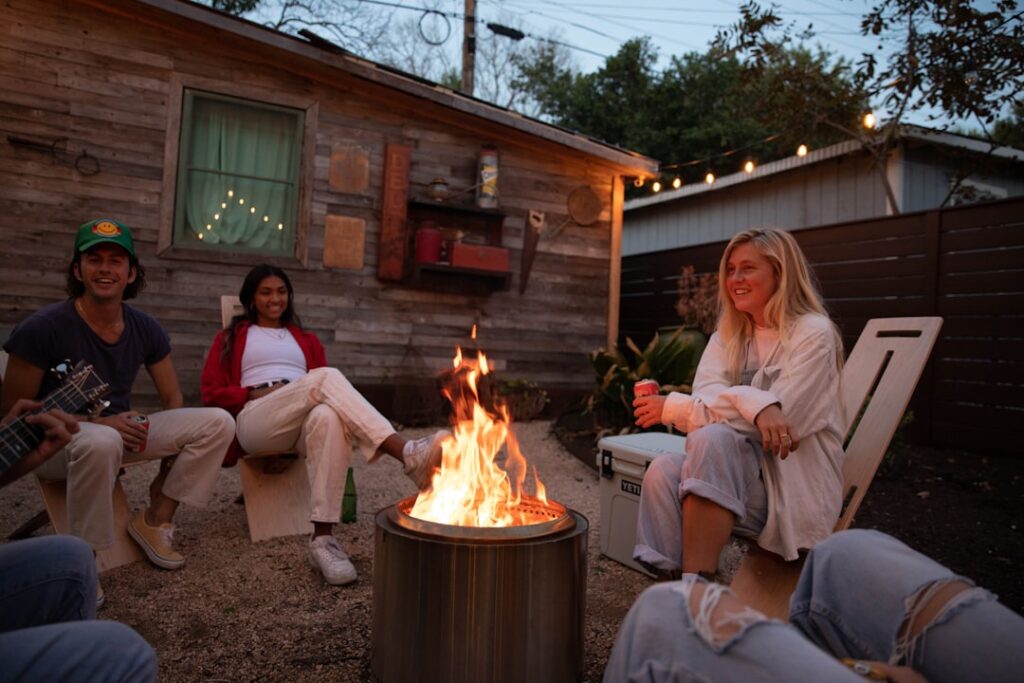
A patio fire pit propane setup is one of the easiest ways to add warmth, ambiance, and gathering space to an outdoor living area without the mess and hassle of firewood. Push a button, turn a knob, and you have a clean, controllable flame in seconds; when you’re done, shut it off and there are no embers to babysit. Having installed and used gas fire features for years, I’ll walk you through what to look for when buying and, just as important, how to run one safely.
Propane fire pits are convenient, but they burn real fuel and produce real heat, so a little knowledge goes a long way toward keeping your patio enjoyable and your family safe. Let’s cover how they work, what they cost, the specs that matter, and the safety rules you should never bend.
How Propane Fire Pits Work
A propane fire pit connects to a standard 20-pound liquid propane tank, the same kind used on a gas grill, through a regulator and a gas line to a burner ring. Igniting the burner sends gas up through a bed of lava rock, fire glass, or ceramic logs, producing an even, adjustable flame. Most models use either a push-button spark igniter or a simple manual light with a long lighter.
Because the flame is controlled by a valve, you get instant on-off convenience and adjustable heat, which wood fires can never match. The tank typically hides inside the fire pit base or an adjacent enclosure. A full 20-pound tank generally provides somewhere between 8 and 12 hours of burn time depending on the burner’s output, so casual weekend use might get you several evenings per refill.
Understanding BTUs and Heat Output
The most important spec on any propane fire pit is its BTU rating, which measures heat output. Most patio models fall between 40,000 and 60,000 BTUs. A 40,000-BTU unit produces pleasant ambiance and modest warmth suitable for mild evenings, while a 55,000- to 60,000-BTU pit throws enough heat to keep a small circle of people comfortable on a cool night.
Don’t assume more is always better. Higher BTU output consumes propane faster, shortening your burn time per tank, and an oversized flame can feel overwhelming on a small patio. Match the output to your space and climate. For a compact urban patio, a 40,000-BTU table-style pit is plenty; for an exposed yard in a cold region, lean toward the higher end.
Types and Styles to Consider
Propane fire pits come in several formats. Fire pit tables combine a flame in the center with a usable tabletop surface, ideal for entertaining. Bowl-style pits are portable and often the most affordable. Column and tower styles emphasize flame height and visual drama, while built-in units integrate into a permanent patio design and usually run on a dedicated gas supply.
Materials range from powder-coated steel and aluminum to cast concrete, stone, and tile. Consider weight if you’ll move the pit for storage, and look for a sturdy lid or cover to keep water and debris out of the burner. A quality unit should include a CSA or equivalent safety certification, which tells you it was tested to recognized standards.
Cost and Ongoing Expenses
Portable propane bowl pits start around $150 to $300, mid-range fire pit tables run $400 to $900, and premium built-in or designer units can exceed $2,000 before installation. If you want a permanent pit plumbed to a buried propane line rather than a portable tank, budget several hundred to a couple thousand dollars more for professional installation, which should always be done by a licensed gas fitter.
Operating cost is modest. A 20-pound propane tank refill runs roughly $18 to $25 and, as noted, lasts many evenings of casual use. Factor in a protective cover, occasional replacement of lava rock or fire glass, and the periodic tank swap, and a propane fire pit remains an affordable luxury compared to the ongoing cost and labor of buying firewood.
Critical Safety Rules
Safety is where I get emphatic, because a fuel-burning appliance deserves respect. First and most important: never use a propane fire pit indoors, in a garage, on a covered porch with low ceilings, or in any enclosed space. These units produce carbon monoxide, an odorless, deadly gas, and require open-air ventilation. Outdoor use only, always, with no exceptions.
Maintain generous clearances. Keep the pit at least 10 feet from your house, fences, and any combustible structure, and never place it directly under an overhang, umbrella, pergola roof, or low tree branches. Set it on a stable, level, non-combustible surface. Keep the flame well away from furniture cushions, blankets, and dry vegetation, and never leave a lit pit unattended, especially around children and pets.
Propane Versus Natural Gas and Wood
Before you commit to a propane model, it’s worth understanding how it compares to the alternatives. Propane’s biggest advantages are portability and independence: it runs off a standard 20-pound tank, so you can place the pit anywhere and take it with you, with no plumbing required. It burns hot and clean, lights instantly, and offers precise flame control. The trade-off is the recurring cost and chore of refilling tanks and the finite burn time each tank provides.
A natural gas fire pit, by contrast, connects to your home’s gas line for an endless fuel supply and lower per-hour cost, but it must stay in one spot and requires professional installation of a gas line, which is a significant upfront expense. Wood fire pits deliver the crackle, aroma, and radiant heat many people love, but they’re messy, slow to start, produce smoke and embers, and demand constant tending. For most patios, propane hits the sweet spot of convenience, safety, and flexibility.
Placement, Surface, and Wind Considerations
Where and how you set up the pit matters as much as the unit itself. Always place a propane fire pit on a firm, level, non-combustible surface such as concrete, pavers, stone, or bare earth, never directly on a wood deck or dry grass without a proper heat-resistant barrier beneath it. An unlevel base can let the tank or burner shift, which is both a fire and a tipping hazard.
Wind deserves respect too. A strong gust can blow the flame sideways toward furniture or people, scatter embers from the media bed, or blow the flame out entirely while gas continues to flow. On breezy evenings, use a purpose-made wind guard, reduce the flame, or hold off on lighting until conditions calm. Keep a fire extinguisher rated for gas fires nearby, and make sure everyone around the pit knows how to shut the tank valve quickly in case something goes wrong.
Handling Propane Tanks the Right Way
Treat the propane tank itself with care. Always store and use tanks upright, never lay them on their side, and keep spare tanks outdoors, never in a hot car, basement, or living space. Before each use, check the hose and connections for cracks or wear, and test for leaks by brushing soapy water on the fittings and watching for bubbles when the valve is open; if you see bubbles, shut off the gas immediately.
If you ever smell gas, do not light the pit. Turn off the tank valve, let the area ventilate, and inspect connections before trying again. When shutting down, close the tank valve first and let the remaining gas in the line burn off. Following these habits every single time makes a patio fire pit propane setup a safe, dependable centerpiece for outdoor evenings all season long.