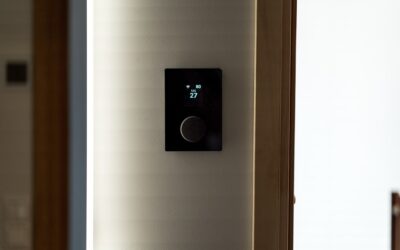
Dimmer switches sound simple until you install one and discover the lights flicker, hum, or refuse to dim below 50% brightness. The problem is rarely the bulbs—most LED issues come from old or mismatched dimmer technology. The best dimmer switches on the market today handle the lower power draw and electronic drivers of modern LEDs, work with smart home systems, and fit standard wall boxes without modification. After installing roughly 200 dimmers in client and personal projects, I can tell you the right pick depends almost entirely on the bulbs you have and whether you want smart features.
Why Old Dimmers Fail With New LEDs
Traditional incandescent dimmers worked by chopping off part of the AC waveform to reduce power. LED bulbs have electronic drivers that do not respond well to that waveform, producing flicker, buzzing, and inconsistent dimming.
Modern LED-compatible dimmers use two main technologies:
- Forward phase (leading edge): Compatible with most dimmable LEDs and older incandescents. The standard choice.
- Reverse phase (trailing edge): Smoother dimming for high-end LEDs and electronic transformers. More expensive but quieter.
Some dimmers automatically detect and switch between modes. These are called dual-mode or universal dimmers and are the safest bet if you have a mix of bulb types.
Top Standard Dimmers
- Lutron Maestro CL (MACL-153M): $20 to $30. The gold standard for LED dimming. Compatible with up to 150 watts of LED or 600 watts of incandescent. Quiet operation.
- Lutron Diva CL (DVCL-153P): $22 to $32. Same internals as the Maestro but with a paddle switch instead of a slider. More traditional look.
- Leviton Decora SureSlide (6674): $15 to $22. Budget pick that handles most LED bulbs well. Easier installation than Lutron in some boxes.
- Pass and Seymour Harmony Tru-Universal (94001): $25 to $35. Auto-detects forward or reverse phase. Strong choice for mixed bulb situations.
For most homeowners, the Lutron Maestro CL is the easiest win. Wide LED compatibility, reliable performance, and broad availability at Home Depot and Lowes.
Top Smart Dimmers
Smart dimmers connect to Wi-Fi, Zigbee, or proprietary hub networks and integrate with Alexa, Google Home, and Apple HomeKit. They cost more but enable scheduling, voice control, and scene presets.
- Lutron Caseta (PD-6WCL): $50 to $65 per switch plus $80 for the required hub. The most reliable smart dimming system on the market. Works with HomeKit, Alexa, Google.
- Leviton Decora Smart Wi-Fi (D26HD): $35 to $50. No hub required—connects directly to home Wi-Fi. Slightly less reliable than Lutron but cheaper.
- TP-Link Kasa Smart Dimmer (HS220): $20 to $35. Budget smart pick. Direct Wi-Fi, easy app setup, decent LED compatibility.
- GE Cync Smart Dimmer: $25 to $40. Bluetooth and Wi-Fi options. Best for homeowners already in the GE ecosystem.
For a multi-room smart lighting setup, Lutron Caseta is worth the higher cost. The reliability and HomeKit integration outweigh the upfront investment over a 10- to 15-year usage span.
3-Way and 4-Way Configurations
Many homes have lights controlled from two or more locations (top and bottom of stairs, both ends of a hallway). These require 3-way or 4-way wiring with companion switches.
For Lutron systems, the Pico remote replaces traditional companion switches and runs on a battery for 10 years. This avoids the headache of rewiring multi-switch circuits and works wirelessly with the main dimmer. Pico remotes cost $20 to $30 each.
Standard 3-way dimmer kits include the primary dimmer plus a companion (non-dimming) switch. Both must be from the same manufacturer and product family to function correctly.
Wattage Ratings and Load Limits
Every dimmer has a maximum wattage rating, but with LEDs there is a twist. LED bulbs run electronically rather than as resistive loads, so a dimmer rated for 600 watts of incandescent typically handles only 150 watts of LED. The reduction factor varies but plan for roughly 25 to 30% of the incandescent rating for LED loads.
A typical kitchen with 6 ceiling LEDs at 9 watts each (54 watts total) is well within any LED dimmer’s range. A chandelier with 20 candelabra LEDs at 5 watts each (100 watts total) may push the limits of a budget dimmer—choose a 150W+ LED-rated model.
Installation Basics
Installing a dimmer is straightforward for anyone comfortable with basic electrical work. Always turn off the breaker first and verify with a voltage tester before touching wires.
- Remove the old switch. Take a photo of the wiring before disconnecting anything.
- Identify wire types. Hot (usually black), neutral (white), traveler (red, for 3-way), and ground (green or bare copper).
- Check if your dimmer requires a neutral. Most smart dimmers do. Older homes built before 1985 sometimes lack a neutral in switch boxes.
- Connect wires per the dimmer’s diagram. Use wire nuts (typically yellow or orange depending on gauge).
- Push wires carefully into the box, mount the dimmer, and attach the cover plate.
- Restore power and test. Dim the lights across the full range to confirm smooth operation.
If your switch box lacks a neutral wire and you want a smart dimmer, look for no-neutral-required options like the Lutron Caseta. Otherwise, hire an electrician—running new wire is not a DIY-friendly task.
Troubleshooting Common Issues
- Flickering at low brightness: Usually a bulb compatibility issue. Try a different LED brand or check the dimmer’s minimum load specification.
- Buzzing or humming: Forward-phase dimmer mismatched with an electronic transformer. Switch to a reverse-phase or universal model.
- Lights don’t reach full brightness: Adjust the high-end trim setting if available, or replace bulbs with higher-output equivalents.
- Smart dimmer keeps disconnecting: Wi-Fi range issue. Move the router closer or add a Wi-Fi extender. Hub-based systems (Lutron Caseta) tend to be more reliable.
Picking the Right One for Your Home
For most homeowners, a Lutron Maestro CL or Diva CL covers 90% of real-world dimming needs at a reasonable price. For smart home integration, the Lutron Caseta system is hard to beat on reliability. For budget setups or single-room installations, the Leviton Decora SureSlide or TP-Link Kasa Smart Dimmer offer solid performance at lower cost.
Match the dimmer to your bulb count, wattage, and ecosystem before buying. A well-chosen dimmer disappears into the wall and just works for 15 to 20 years—exactly what you want from a switch you touch every day.