Using the wrong cleaner on your floors can leave residue, dull the finish, or cause long-term damage. The best floor cleaner for mopping depends entirely on what your floor is made of. Here’s a floor-by-floor breakdown of what works, what to avoid, and how to make your own effective cleaning solutions.
Best Mop Cleaners for Hardwood Floors
Hardwood is the most sensitive common flooring material when it comes to cleaning products. The finish (polyurethane, wax, or oil) determines what’s safe to use.
For Polyurethane-Finished Hardwood
Most modern hardwood floors have a polyurethane topcoat. These floors can handle slightly more moisture than waxed or oiled floors, but they still shouldn’t be soaked.
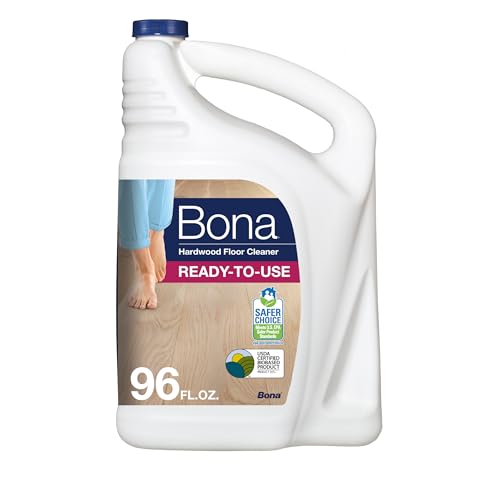
- Bona Hardwood Floor Cleaner: The industry standard. Water-based, pH-neutral, dries without residue. Available in spray bottles and refillable concentrate. A 128-oz refill runs about $20 and lasts months.
- Bona PowerPlus Hardwood Floor Deep Cleaner: For deeper cleaning sessions when the regular formula isn’t cutting it. Use monthly rather than daily.
- Method Squirt + Mop Wood Floor Cleaner: Plant-based, non-toxic, almond-scented. Slightly less effective on heavy grime than Bona but a solid everyday option.
For Wax-Finished Hardwood
Older homes and some specialty floors use paste wax finishes. These floors require specific care:
- Use only a damp (barely wet) mop with plain warm water
- Periodically apply liquid or paste floor wax to maintain the protective layer
- Never use water-based polyurethane cleaners — they can cloud the wax finish
For Oil-Finished Hardwood
European-style oil finishes (Rubio Monocoat, Osmo) penetrate the wood rather than sitting on top. Use only the cleaner recommended by the finish manufacturer. Rubio Monocoat Surface Care and Osmo Wash and Care are the respective go-to products.
What to Avoid on Hardwood
- Vinegar: The acidity dulls polyurethane finish over time. It won’t destroy your floor overnight, but regular use causes cumulative damage.
- Steam mops: The heat and moisture combination can warp planks and delaminate engineered hardwood.
- Murphy’s Oil Soap: Leaves a residue buildup that dulls the floor and becomes sticky over time. Despite its reputation, it’s not recommended by most hardwood flooring manufacturers.
- Pine-Sol, Fabuloso, or any cleaner with ammonia: Too harsh for wood finishes.


Best Mop Cleaners for Tile Floors
Tile (ceramic and porcelain) is the most forgiving flooring material when it comes to cleaners. The tile itself is nearly indestructible, but grout is porous and stains easily.
Commercial Cleaners
- Zep Neutral pH Floor Cleaner: Works on all tile types without leaving residue. Concentrated formula — one gallon makes 128 gallons of cleaning solution. About $12 per gallon.
- Black Diamond Stoneworks Ultimate Grout Cleaner: Not a mop solution, but essential for periodic grout cleaning. Apply along grout lines with a brush before mopping.
- Aunt Fannie’s Floor Cleaner Vinegar Wash: Safe for tile (unlike hardwood). The vinegar cuts grease and hard water deposits effectively.
What to Avoid on Tile
- Oil-based cleaners: Leave a slippery film on glazed tile that attracts dirt.
- Bleach on colored grout: Bleach is fine for white grout but can discolor or fade tinted grout.
- Abrasive powders on glazed tile: Comet or Ajax can scratch the glaze over time.
Natural Stone Tile (Different Rules)
Marble, travertine, slate, and granite tile require pH-neutral cleaners only. Acidic products (vinegar, citrus, most bathroom cleaners) etch natural stone surfaces permanently. Use StoneTech Stone and Tile Cleaner or Black Diamond Marble and Tile Floor Cleaner.
Best Mop Cleaners for Vinyl Floors
Vinyl flooring (sheet vinyl, luxury vinyl plank, and luxury vinyl tile) is durable and water-resistant, but the wrong cleaner can damage the wear layer or leave a hazy residue.
Commercial Cleaners
- Bona Hard-Surface Floor Cleaner: The multi-surface version of Bona’s line. Safe for vinyl, tile, and laminate. Residue-free formula.
- Rejuvenate Luxury Vinyl Floor Cleaner: Specifically formulated for LVP and LVT. Spray-and-mop format that dries streak-free.
- ZEP Commercial Neutral Floor Cleaner: A professional-grade option that works well on all vinyl types at a low cost per use.
What to Avoid on Vinyl
- Acetone, nail polish remover, or harsh solvents: These dissolve the vinyl wear layer.
- Abrasive scrubbers or steel wool: Scratches the surface permanently.
- “Mop and shine” products: Wax-based products build up on vinyl and create a sticky, yellowing film.
- Steam mops: Most vinyl manufacturers explicitly void warranties if steam mops are used. The heat can cause planks to warp or adhesive to fail.
- Highly alkaline cleaners (ammonia-based): Can damage the finish layer over time.
Best Mop Cleaners for Laminate Floors
Laminate is the most water-sensitive flooring on this list. The core is made of compressed wood fiber (HDF), and water that penetrates seams causes irreversible swelling. Mopping laminate requires minimal water.
Commercial Cleaners
- Bona Hard-Surface Floor Cleaner: Same product recommended for vinyl. The spray-and-wipe application controls moisture perfectly for laminate.
- Black Diamond Wood and Laminate Floor Cleaner: Streakless formula designed specifically for laminate. Available in a ready-to-use spray bottle for $10 to $14.
- Quick Shine Multi-Surface Floor Cleaner: Plant-based, biodegradable, and effective on laminate. Avoid their “floor finish” product, which is a wax that builds up on laminate.
Mopping Technique for Laminate
The mop matters as much as the cleaner for laminate floors:
- Use a spray mop (like the Bona Premium Spray Mop) or a well-wrung microfiber mop
- Never pour water directly on the floor
- Dry the floor within 2 to 3 minutes of mopping — standing water causes edge swelling
- Mop in the direction of the plank length to prevent water from pooling in the seams
What to Avoid on Laminate
- Wet mops or string mops: Too much water. Period.
- Steam mops: Will damage laminate. Every major laminate manufacturer warns against them.
- Vinegar: While less damaging on laminate than hardwood, the acidity can still dull the surface over time.
- Wax or polish: Laminate has a melamine wear layer that doesn’t bond with wax. The wax just sits on top, attracting dirt and creating a cloudy appearance.
DIY Floor Cleaning Solutions
Homemade solutions can work well when they’re formulated correctly for the floor type.
For Tile Floors
Mix 1/2 cup white vinegar with 1 gallon of warm water. Add 2 to 3 drops of dish soap (Dawn or similar) for extra cutting power on greasy kitchen tile. This is cheap, effective, and safe for ceramic and porcelain tile. Do not use on natural stone.
For Vinyl Floors
Mix 1 cup of apple cider vinegar with 1 gallon of warm water. The lower acidity of apple cider vinegar is gentler than white vinegar. For tough spots, add 1 tablespoon of dish soap. Rinse with plain water afterward to prevent residue.
For Hardwood Floors (Polyurethane Finish)
The safest DIY option is simply warm water with 2 to 3 drops of dish soap per gallon. Wring the mop until it’s barely damp. This won’t match the performance of Bona, but it’s effective for routine maintenance and won’t damage the finish.
For Laminate Floors
Mix 1 part rubbing alcohol (isopropyl) with 3 parts water in a spray bottle. Spray lightly on the floor and wipe with a microfiber mop. The alcohol cleans effectively and evaporates quickly, minimizing moisture exposure. This also eliminates streaks better than most commercial products.
Universal Ingredients to Avoid
Regardless of floor type, these ingredients cause problems on most flooring surfaces:
- Bleach: Safe for disinfecting tile and vinyl in diluted form but damages hardwood, laminate, grout color, and natural stone.
- Ammonia: Strips finishes from hardwood and can cloud vinyl and laminate over time.
- Undiluted essential oils: Citrus and tea tree oils can damage floor finishes. If you want scent, add 2 to 3 drops to a full gallon of water — never apply directly.
- Abrasive particles (baking soda paste, scouring powder): Micro-scratches accumulate and dull the surface on all floor types.
How Often to Mop Each Floor Type
- Tile: Weekly for most households. High-traffic kitchens may need twice weekly.
- Vinyl: Weekly. More frequent in kitchens and entryways.
- Hardwood: Every 1 to 2 weeks. Over-mopping introduces unnecessary moisture.
- Laminate: Every 1 to 2 weeks with a barely-damp mop. Sweep or vacuum more frequently to prevent grit from scratching the surface.
Best Mops for Floor Cleaning
The mop itself matters as much as the cleaner:
- Microfiber flat mop: Best for hardwood and laminate. Holds minimal water and won’t scratch. The O-Cedar ProMist MAX and Bona Premium Spray Mop are top picks in 2026.
- Spin mop: Good for tile and vinyl where more water is acceptable. The O-Cedar EasyWring remains the best-selling option.
- String mop: Only for tile floors. Holds too much water for wood, laminate, or vinyl.
- Steam mop: Only for sealed tile and sealed concrete. Not safe for hardwood, laminate, vinyl, or natural stone.
Match your cleaner to your floor type, use the right amount of water, and mop at the right frequency. That simple formula keeps any floor looking its best for years.
Prefer to explore on your own?
See how new flooring looks in your actual room in seconds — free, no signup.
Try the free Floor Studio →