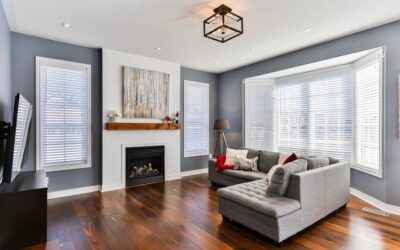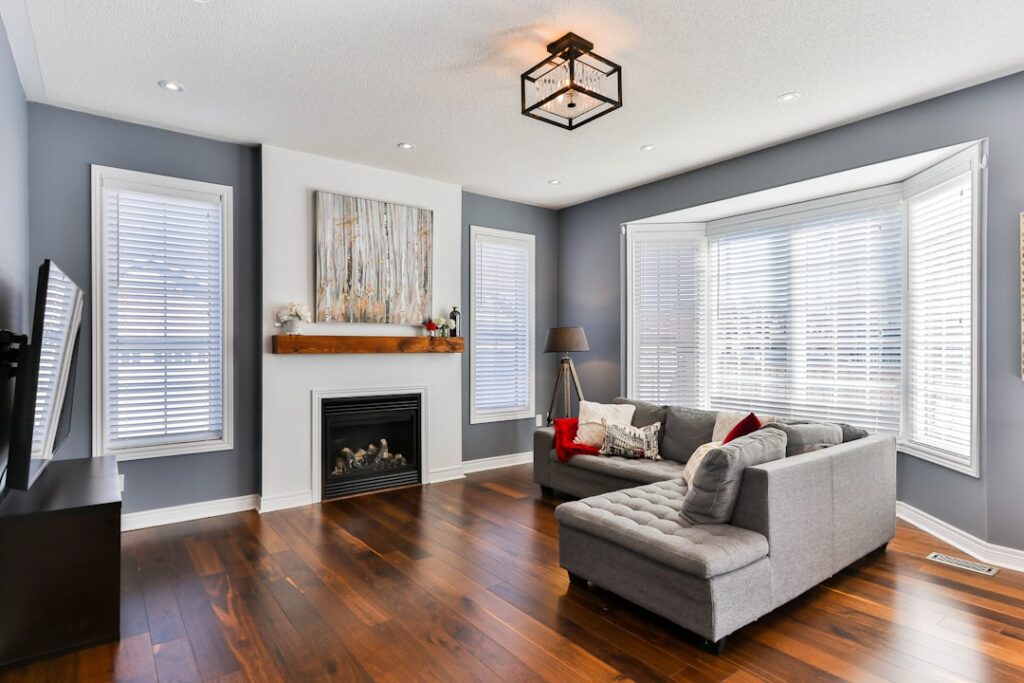
That tired, scratched, or dated wood floor under your feet may be a better foundation than you think. The best flooring to put over old hardwood takes advantage of the fact that you already have a flat, solid, structurally sound base, which means you can often skip a costly tear-out and go straight to a fresh surface. The catch is that not every flooring type belongs over wood, and old hardwood comes with quirks (squeaks, gaps, cupping, and uneven boards) that you have to address first. Here is how to choose the right covering and prep the floor so it lasts.
- Should You Cover It or Refinish It?
- Prep Comes First: Squeaks, Level, and Soundness
- Top Pick: Floating Luxury Vinyl Plank (LVP)
- Laminate Flooring
- Engineered Hardwood
- Carpet
- What to Avoid
- Mind the Height and Transitions
- Moisture and Subfloor Considerations
- Cost Comparison of Your Options
- The Bottom Line
Should You Cover It or Refinish It?
Before buying anything, ask whether the wood underneath is worth saving. Solid hardwood can usually be sanded and refinished multiple times, and a $3 to $5 per square foot refinish often delivers a stunning result for less than new flooring. If your old floor is genuine solid wood with plenty of thickness left, refinishing is frequently the smarter, more valuable move, since it preserves the wood that buyers love.
Cover it instead when the wood is too thin to sand again, badly water-damaged, painted, a species you dislike, or when you simply want a different look or a waterproof surface. In those cases, the existing floor becomes an excellent subfloor.
Prep Comes First: Squeaks, Level, and Soundness
No matter what you install on top, the new floor will only be as good as the prep underneath. Walk every square foot and address problems before a single new plank goes down.
- Squeaks: Locate the joists and drive screws through the hardwood into them to pull loose boards tight. Silencing squeaks now is the only chance you will get once they are buried.
- Level and flatness: Check for dips, crowns, and cupped boards with a long straightedge. Most floating floors tolerate only about 3/16 inch of variation over 10 feet. Sand down high spots and fill low ones with a patching or leveling compound.
- Soundness: Replace rotted or springy boards and re-secure anything loose. Make sure the floor is clean, dry, and free of protruding nails.
Skipping prep is the number one reason floors installed over old hardwood fail with hollow spots, movement, and renewed squeaking.
Top Pick: Floating Luxury Vinyl Plank (LVP)
For most homeowners, click-lock LVP is the best all-around choice over old hardwood. It floats on top with no glue or nails, installs quickly, and the rigid-core (SPC) versions bridge minor imperfections better than thinner products. LVP is waterproof, durable, and available in convincing wood and stone looks.
Lay a thin underlayment if the product does not have one attached, leave the required expansion gap around the perimeter, and you have a fresh, water-resistant floor in a weekend. Because it is not fastened down, you are not driving anything through the original wood, which preserves it if you ever want it back.
Laminate Flooring
Laminate is another strong floating-floor option over hardwood, often at a slightly lower price than premium LVP. It clicks together the same way, installs over a foam underlayment, and offers excellent scratch resistance thanks to its hard wear layer. The trade-off is that standard laminate is not waterproof, so it is better suited to bedrooms, living rooms, and hallways than to kitchens or baths. Water-resistant laminate lines have narrowed that gap, but for true wet areas, vinyl still wins.
Engineered Hardwood
If you want real wood on top but a different species or color, engineered hardwood can go over old hardwood as a floating floor or, with care, glued or nailed. It gives you an authentic wood surface that is more dimensionally stable than solid planks. Running the new boards perpendicular to the old ones adds stability. Expect a higher material cost than LVP or laminate, but you get a genuine wood floor that can sometimes be refinished, depending on the wear-layer thickness.
Carpet
Carpet is the most forgiving covering over an imperfect old floor. With proper padding, it hides minor unevenness, deadens sound, and adds warmth underfoot in bedrooms and basements. It installs with tack strips around the perimeter, which do penetrate the wood, so consider that if you want to recover the hardwood later. For families wanting comfort and quiet, though, carpet over hardwood is a comfortable, budget-friendly answer.
What to Avoid
Skip glue-down tile or anything that requires a rigid mortar bed directly on wood planks, since seasonal wood movement cracks grout and tile. If you want tile, you generally need a proper underlayment system or cement board first, which adds height and complexity. Also avoid gluing products directly to old finished hardwood; adhesives may not bond to old wax or polyurethane, and you sacrifice reversibility.
Mind the Height and Transitions
Adding a layer on top raises the floor, which affects door clearances, appliance fit, and the transitions to adjacent rooms. Measure before you buy. You may need to undercut door jambs, trim door bottoms, and plan transition strips where the new height meets tile, carpet, or thresholds in other rooms.
Moisture and Subfloor Considerations
Old hardwood is a wood subfloor, which means moisture rules still apply to whatever you lay on top. Before installing LVP, laminate, or engineered wood, make sure the existing floor is dry and the space below is not a damp crawlspace or unconditioned basement venting moisture upward. For laminate especially, trapped moisture causes swelling at the edges. If the old hardwood is over a slab or in a below-grade area, address humidity first. A quick moisture check and a few weeks of normal climate control before installation can save you from a floor that cups or peaks after the job is done.
Cost Comparison of Your Options
Budget often decides the choice, so here is a rough sense of where each option lands for materials. Carpet is typically the most affordable, followed by laminate, then mid-grade LVP, with engineered hardwood at the top. Refinishing the existing floor, when it is viable, frequently costs less than installing new flooring and adds the most resale value because buyers prize real hardwood. Whatever you choose, factor in prep labor; squeak repair, leveling, and door undercutting take time but are the steps that keep the new floor quiet and flat. Treat any pricing as a planning range and confirm current local costs.
The Bottom Line
The best flooring to put over old hardwood for most homes is a quality floating LVP or laminate, both of which install fast, preserve the wood beneath, and forgive minor flaws once you have prepped properly. Choose engineered wood if you want the real thing in a new look, or carpet for warmth and quiet. But always weigh refinishing first; if that old floor still has good wood in it, a sand-and-finish may give you the best result of all for the least money.
Prefer to explore on your own?
See how new flooring looks in your actual room in seconds — free, no signup.
Try the free Floor Studio →