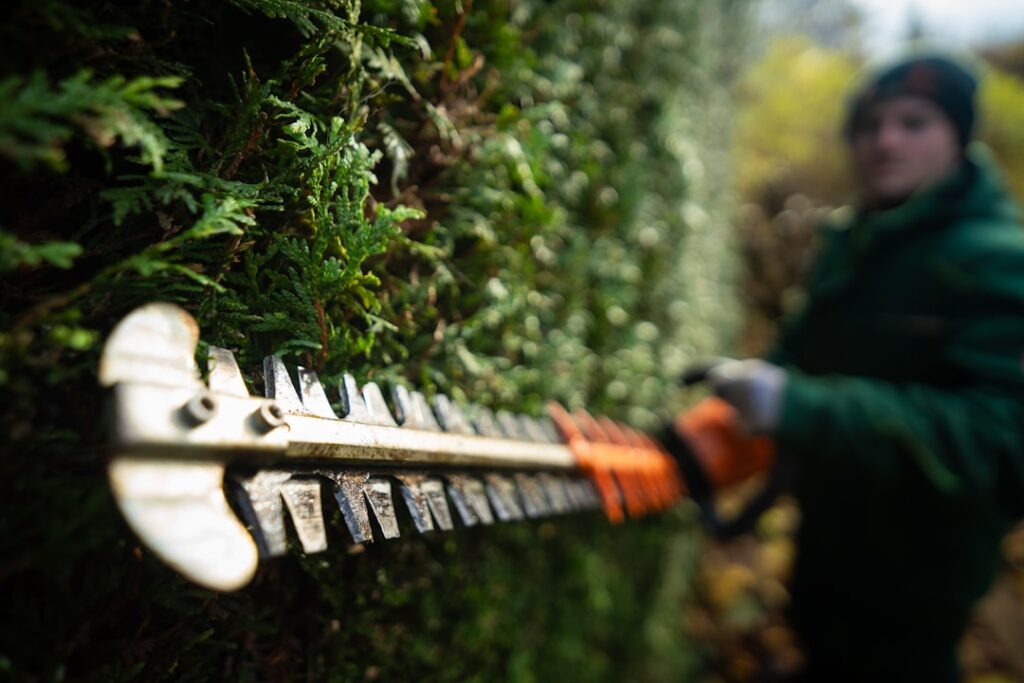
Choosing the best hedge shears for your yard comes down to matching the tool to the hedge, because a pair of shears that dices through soft boxwood will bog down and bruise the thick canes of an overgrown laurel. Whether you are keeping a formal boxwood parterre crisp or knocking back a fast-growing privet, the right shears make the job faster, cleaner, and far easier on your hands and shoulders. This guide walks through the types available, the features that actually matter, and the technique that turns a decent tool into professional-looking results.
Manual, Electric, or Battery: Which Type
The first decision is power source, and each type has a clear best use:
- Manual hedge shears: two long blades on long handles, worked by hand. Best for small to medium hedges, detail work, and topiary. Quiet, precise, no cords or charging, and they give the cleanest cut on soft growth.
- Corded electric trimmers: lightweight and powerful with unlimited runtime, but tethered to an outlet by an extension cord. Good for medium hedges close to the house.
- Battery (cordless) trimmers: the fastest-growing category, offering cordless freedom with plenty of power for most homeowners. Runtime depends on battery amp-hours. Ideal for medium to large hedges anywhere in the yard.
- Gas trimmers: the most powerful, for large properties and heavy commercial work, but heavy, loud, and higher-maintenance.
For a typical suburban lot, a good pair of manual shears for detail and a battery trimmer for the bulk covers nearly every job.
Manual Hedge Shears: What to Look For
Do not dismiss manual shears as old-fashioned; for boxwood, small formal hedges, and finishing cuts, they outperform powered tools. When choosing a pair, focus on these features:
- Blade material: high-carbon steel holds an edge; a nonstick or coated blade resists sap buildup
- Blade length: longer blades (around 8 to 10 inches) cover more per stroke on flat hedges; shorter blades give more control for shaping
- Wavy or serrated section: a notch near the pivot grips and cuts thicker stems
- Handle length and material: longer handles extend reach and leverage; lightweight aluminum reduces fatigue on long sessions
- Shock absorbers: bumpers at the pivot cushion the jolt at the end of each cut, saving your wrists and elbows
- Comfort grips: cushioned, non-slip handles matter over an afternoon of trimming
Powered Trimmers: Key Specs
If you go powered, a handful of specifications determine how the tool performs:
- Blade length: 18 to 22 inches suits most home hedges; longer blades speed up long, tall runs but are harder to control
- Tooth gap (cutting capacity): a wider gap, around 3/4 inch, cuts thicker branches; a narrow gap gives a finer finish on soft growth
- Battery voltage and amp-hours: higher voltage means more power, more amp-hours mean longer runtime; 40V and 60V platforms handle demanding hedges
- Weight: a lighter tool is far easier to hold overhead; test the balance, not just the number on the box
- Dual-action blades: both blades move, cutting faster with less vibration than single-action designs
Matching Shears to Your Hedge
The best tool depends entirely on what you are cutting. For fine-leaved formal hedges like boxwood, yew, and privet, manual shears or a fine-tooth powered trimmer give the crisp, tight finish those hedges demand. For large-leaved plants like cherry laurel, hand pruners actually beat shears, because shearing chops the big leaves in half and leaves ragged brown edges. For fast, woody, overgrown hedges, a battery or gas trimmer with a wide tooth gap powers through thick growth that would exhaust you with hand shears. And for tall hedges, look at long-reach or pole hedge trimmers so you can shape the top safely from the ground rather than teetering on a ladder.
How to Use Hedge Shears the Right Way
Good technique matters as much as a good tool. Follow these steps for a clean, professional-looking hedge:
- Sharpen and clean first: a sharp blade cuts cleanly instead of tearing, which reduces disease entry and brown edges
- Cut the sides before the top: shape the sides first, then level the top to the height you want
- Keep the base wider than the top: angle the sides so the bottom is slightly broader, letting light reach the lower foliage and preventing a bare base
- Use a string line or level: a taut string at your target height keeps the top dead flat
- Sweep in smooth arcs: work with steady, even strokes and let the blades do the cutting rather than forcing them
- Step back often: check your progress from a distance to catch dips and bulges before they set in
When to Trim
Timing protects both the look and the health of the hedge. For most formal evergreen hedges, shear in late spring after the new growth flushes, with a lighter touch-up in mid to late summer. Avoid heavy pruning in fall, which can push tender new growth right before frost. Flowering hedges are the exception: prune them right after they bloom so you do not cut off next season’s flower buds. Whatever the plant, avoid shearing in the heat of a hot, dry day, and never cut wet foliage on disease-prone plants like photinia.
Common Mistakes to Avoid
Even with the best hedge shears in hand, a few common errors ruin otherwise good work. The most frequent is cutting the top narrower than the base, or letting the hedge bulge outward at the top, which shades the lower foliage and leaves the bottom thin and bare over time. Another is dull blades: forcing tired, blunt shears through growth tears and crushes stems, leaving ragged brown edges and open wounds that invite disease. Trimming during the heat of a hot, dry afternoon stresses freshly cut foliage and can scorch the exposed leaves, so early morning or an overcast day is far kinder to the plant.
Overreaching is both a quality and a safety mistake. Stretching to trim the top of a tall hedge from an unstable ladder leads to uneven cuts and real injury risk; a long-reach or pole trimmer, or simply moving the ladder more often, produces better results safely. Finally, taking off too much at once on a formal hedge removes the outer green layer and exposes bare interior wood on plants that will not resprout, so trim little and often rather than making one drastic annual cut.
Matching Your Budget to the Job
You do not always need the most expensive tool, but buying too cheap costs more in the long run. For occasional trimming of a small hedge, a solid mid-range pair of manual shears with carbon-steel blades and shock-absorbing bumpers serves for years. For regular work on medium to large hedges, invest in a quality battery trimmer on a reputable tool platform so you can share batteries with other yard tools. Large properties and heavy, woody hedges justify a stronger 40V or 60V battery unit or a gas trimmer. Whatever the tool, spending a little more for good steel and comfortable, well-balanced ergonomics pays off every time you pick it up.
Maintenance and Safety
Keep your shears working well and safe to use with a little routine care. Wipe the blades after each use to remove sap, and clean off sticky residue with a resin solvent so the blades glide. Sharpen the cutting edges regularly with a file or whetstone, following the factory bevel. Apply a light coat of oil to prevent rust and keep the pivot moving smoothly. For powered trimmers, keep the blades oiled and check the tension. Always wear safety glasses and gloves, and with powered tools, keep both hands on the grips and mind the cord or battery. Never reach into the blades to clear debris until the tool is off and unplugged or the battery is removed.
The best hedge shears for you are the ones matched to your hedges and your body: manual shears for precision and small formal work, a battery trimmer for speed and larger runs, and long-reach tools for tall hedges. Buy quality steel, keep it sharp, cut the sides before the top with the base kept wider, and your hedges will look like a professional shaped them, season after season.