A patio without a good table is just a slab of concrete with chairs. The best patio table anchors your whole outdoor living space, sets the seating capacity, and decides whether your backyard works for morning coffee, family dinners, or weekend cookouts. Yet most shoppers grab the first attractive set they see and regret it two summers later when the finish flakes or the frame wobbles. Get the material, size, and shape right the first time, and a quality outdoor table easily lasts a decade.
Part of our Decks & Outdoor guide — explore the full guide →
How to Size Your Patio Table
Before you fall in love with a design, measure your space. Leave at least 36 inches of clearance between the table edge and any wall or railing so chairs can pull out and people can walk behind seated guests. A 48-inch round seats four comfortably; a 60-inch round seats six. For rectangular dining, allow 24 inches of table width per person.
Match the table to how you actually entertain. A bistro table of 24 to 30 inches suits a tiny balcony for two. A standard dining table at 28 to 30 inches tall fits most patios. Bar-height tables run 40 to 42 inches and pair with stools for a lounge feel near a grill or fire pit.
Best Materials for Outdoor Tables
Material drives both looks and lifespan, so this is the decision that matters most. Each option handles weather differently.
- Powder-coated aluminum: Lightweight, rustproof, and budget-friendly at $150 to $500. The top pick for rainy or coastal climates because it never corrodes.
- Teak: Premium hardwood with natural oils that resist rot. Expect $600 to $2,000-plus. It silvers gracefully over time and lasts 20 years with minimal care.
- Cast aluminum: Heavier and more ornate than tube aluminum, great for windy areas. Runs $300 to $900.
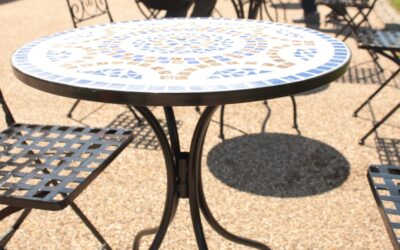
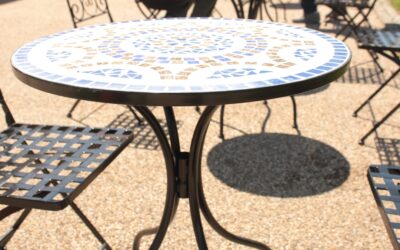
- Steel and wrought iron: Extremely sturdy and stylish, but prone to rust if the coating chips. Best in dry climates.
- HDPE and resin: Recycled-plastic lumber that mimics wood, never rots, and shrugs off UV. A smart low-maintenance choice at $400 to $1,200.
- Tempered glass tops: Sleek and easy to wipe, but they show water spots and can shatter in hail or hard knocks.
Top Patio Table Picks by Category
Here are reliable choices that consistently earn high marks for build quality and value.
Best Overall: Mid-Size Cast Aluminum Dining Table
A 48-inch round cast aluminum table in the $350 to $500 range hits the sweet spot. It seats six, resists rust, and is heavy enough to stay put in a stiff breeze without being impossible to reposition. Look for a built-in umbrella hole and a slatted top that drains rain.
Best Premium: Solid Teak Rectangular Table
If budget allows, a 72-inch teak dining table is a buy-it-for-life purchase. Brands like Outdoor Interiors and Amazonia offer FSC-certified teak around $700 to $1,300. Oil it once a year or let it weather to a soft gray.
Best Budget: Folding Steel Bistro Set
For balconies and starter patios, a folding powder-coated bistro table under $120 delivers surprising durability. The folding feature means you can store it through winter to extend its life.
Don’t Forget Umbrella Compatibility
One detail buyers overlook is shade. Many dining tables include a center hole sized for a standard 1.5-inch umbrella pole, but bar-height and glass tables often do not. If you want a market umbrella, confirm the hole diameter and pair it with a base weighing at least 50 pounds for a 9-foot umbrella. Cantilever umbrellas free up the tabletop entirely but require their own weighted stand.
Caring for Your Patio Table
Even the best patio table needs basic upkeep to reach its full lifespan. A fitted cover is the single most cost-effective protection you can buy, shielding the surface from UV fade, pollen, and standing water. Wipe aluminum and resin with mild soap and water a few times a season. Re-oil teak annually if you want to preserve the honey tone, and touch up any chips on steel or iron immediately with rust-inhibiting paint to stop corrosion before it spreads.
In freeze-prone regions, store glass tops indoors or upside down to prevent ice damage, and bring lightweight aluminum frames inside during storm season so they don’t blow over and scratch.
Table Shapes and How They Affect Seating
Shape isn’t just aesthetic; it changes how many people fit and how the table feels on your patio. Round tables are the most social, because everyone can see one another, and they tuck into corners and small spaces without sharp edges. A round table also adds a flexible extra seat or two in a pinch, since there are no fixed corners to work around.
Rectangular tables seat the most people and suit long, narrow patios or formal dining setups. Square tables work well for four and feel balanced in a compact square patio. Oval tables split the difference, offering the capacity of a rectangle with softer lines. Match the shape to both your space and the way you like to host, whether that’s intimate dinners or big group cookouts.
Built-In Features Worth Paying For
Beyond the basic top and legs, certain features dramatically improve everyday usability. These upgrades are worth seeking out:
- Slatted or perforated tops that let rain drain rather than pooling into a puddle.
- Adjustable leveling feet that stop wobble on uneven pavers or flagstone.
- Extendable leaves that grow the table for parties and shrink it for daily use.
- Built-in ice troughs or fire features for entertaining-focused patios.
- Stackable or folding designs that simplify off-season storage.
A wobble-free, well-draining table is one you’ll actually use, while a beautiful but unstable one quickly becomes a source of daily frustration.
Final Buying Checklist
Run through these questions before you check out:
- Does the table seat the number of people you actually host?
- Is the material suited to your climate, especially rain and salt air?
- Does it leave 36 inches of walking clearance on your patio?
- Do you need an umbrella hole, and does the table have one?
- Can you store or cover it in the off-season?
Answer those honestly and you’ll land on a table that fits your space and survives the seasons. The best patio table isn’t the most expensive one, it’s the one matched correctly to your backyard, your climate, and the way you like to gather outdoors.