Standing barefoot on a 145-degree concrete pool deck in July ends most pool deck shopping conversations faster than any sales pitch. The best pool deck material for your backyard balances surface temperature, slip resistance, cost per square foot, and how the material ages over 15 to 25 years of chlorine, salt, and UV exposure. The right pick raises home value and gets used every weekend; the wrong pick burns feet, cracks within five summers, and turns into a regret you walk past every morning.
Part of our Decks & Outdoor guide — explore the full guide →
What to Evaluate Before Buying
Before falling in love with any material, score each option on five factors:
- Surface temperature in direct sun at 95 degrees F ambient
- Coefficient of friction wet, ideally 0.6 or higher per ASTM C1028
- Chlorine and salt corrosion resistance
- Expansion and contraction tolerance for your climate zone
- Maintenance frequency in years between sealing or refinishing
The right material for Phoenix is rarely the right material for Boston or coastal Florida. Climate trumps trend every time.
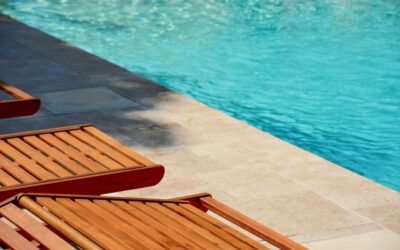
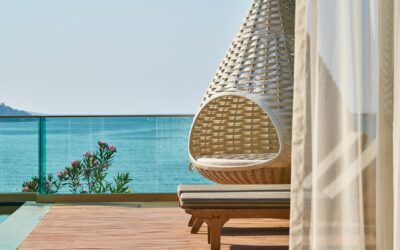
After the flooring is sorted, the right furniture makes all the difference. A set of poolside lounge chairs and a gazebo for shade can turn a basic pool deck into something that actually feels like a backyard retreat.
We may earn a commission when you purchase through our links.
Travertine Pavers
Travertine is the runaway favorite for premium pool decks because it stays cooler underfoot than almost any other natural stone. French-pattern travertine averages 95 to 110 degrees F at peak summer afternoon, roughly 30 degrees cooler than standard concrete. The natural pitting in unfilled travertine provides excellent slip resistance even when wet.
Plan on $14 to $22 per square foot installed for honed and filled travertine, or $18 to $28 for chiseled-edge tumbled travertine. Seal every two to three years with a penetrating sealer like Miracle 511 Impregnator at $50 per quart, which covers about 150 sq ft.
Poured Concrete with Modern Finishes
Standard broom-finished concrete is the budget option at $6 to $9 per square foot installed but heats up to 140 degrees F in direct summer sun and reads dated against modern architecture. Upgrading the same poured slab with one of these finishes transforms both look and performance:
- Knockdown texture in light gray or buff for slip-resistant matte feel
- Salt finish using rock salt broadcast and washed for subtle texture
- Integral color in light buff or bone white to reflect heat
- Acid-stained for variegated marbled color without raised texture
A light-colored integral color drops surface temperature by 15 to 25 degrees compared to standard gray. Add slip-resistant SharkGrip from H and C in the topcoat seal for extra wet traction.
Porcelain Pavers
Outdoor 2 cm porcelain pavers have grown from niche to mainstream over the last five years. Brands like Belgard Dimensions, Mirage Evo 2.0, and Cambridge Pavers offer porcelain pool deck pavers in wood-look, stone-look, and concrete-look textures. The material stays cool because the surface reflects rather than absorbs solar energy, and the dense porcelain rejects all chlorine, salt, and UV damage.
Costs run $16 to $26 per square foot installed for the 24×24 or 24×48 inch large-format formats. Porcelain pavers can install dry-set over a polymer-sand base or wet-set over a poured slab. The dry-set method lets you replace individual pavers if cracking ever occurs.
Composite Wood Decking
Trex, TimberTech, and Fiberon all manufacture composite decking rated for pool deck use. Composite resists chlorine, salt, splinters, and rot without the splinter risk of natural wood. Modern caps use polyethylene shells that read like real wood at typical viewing distance. Surface temperature on dark composites can hit 145 degrees F in summer sun, so stick with light gray, bleached oak, or sand-tone colors for poolside applications.
Plan on $18 to $32 per square foot installed for premium capped composite. Add another $4 to $6 per linear foot for matching fascia and stair nosing. Composite decks installed over framing rather than slab also provide a softer feel underfoot.
Natural Stone Options
Beyond travertine, several natural stones perform well around pools:
- Coral stone, dense limestone with natural pitting, $15 to $22 per sq ft
- Bluestone in thermal finish, $14 to $20 per sq ft, runs cooler in shade
- Limestone like Champagne or Shellstock, $12 to $18 per sq ft
- Quartzite, the hardest natural option, $20 to $32 per sq ft
Avoid polished granite and slate, both of which become slippery when wet. Skip any stone darker than medium gray in hot climates because dark stone absorbs solar energy and burns feet.
Stamped and Decorative Concrete Overlays
Decorative concrete overlays let you transform an existing pool deck without demolition. Spray-down systems from SunDek, Spray-Pave, and Cool Deck apply a 1/16 to 1/4 inch concrete layer in a textured pattern over sound existing concrete. The systems include reflective pigments that keep surface temperature 20 to 35 degrees cooler than uncoated concrete.
Costs run $5 to $9 per sq ft installed over a sound existing slab. Plan on resealing every two to three years and full refinishing every 8 to 12 years depending on UV exposure and chlorine splash.
Materials to Avoid Around Pools
Some materials simply do not belong near a pool no matter how good the price:
- Untreated pressure-treated lumber, which checks and splinters within three years
- Standard ceramic tile rated for indoor use, which fails freeze-thaw cycles
- Polished marble or granite, which becomes a slip hazard wet
- Brick pavers without sealant, which absorb chlorine and stain permanently
- Rubber roof membrane sold as cheap pool decking, which heats to 160 degrees F
Total Cost and Lifespan Comparison
For a typical 600 sq ft pool deck, expect these total installed costs and lifespans:
- Stamped concrete with cool-deck coating: $4,500 to $6,200, 12 to 18 years
- Travertine pavers: $9,200 to $13,800, 25 to 40 years
- Porcelain pavers: $10,500 to $16,200, 30 to 50 years
- Composite decking: $11,800 to $19,800, 25 to 30 years
- Standard broom concrete: $3,800 to $5,800, 15 to 25 years
Travertine remains the best blend of look, comfort, longevity, and resale value for most US homeowners. Porcelain pavers earn the win for contemporary architecture and zero-maintenance buyers.