Window blinds seem like a simple purchase until you are staring at a hundred options that range from $20 to $400 per window. Finding the best window blinds for your home is less about a single top product and more about matching the blind type to the room’s light, privacy needs, moisture, and your budget. The best window blinds for a steamy bathroom differ completely from what belongs in a sun-drenched living room, so the smart approach is choosing by function first.
Part of our Windows & Doors guide — explore the full guide →
- Faux Wood Blinds: The Practical All-Rounder
- Cellular Shades for Energy Efficiency
- Roller Shades for Modern Simplicity
- Roman Shades for a Softer Look
- Vertical Blinds for Wide Openings
- Safety, Motorization, and Measuring
- Matching Blinds to the Room
- Caring for and Cleaning Your Blinds
- When to Repair Versus Replace
Faux Wood Blinds: The Practical All-Rounder
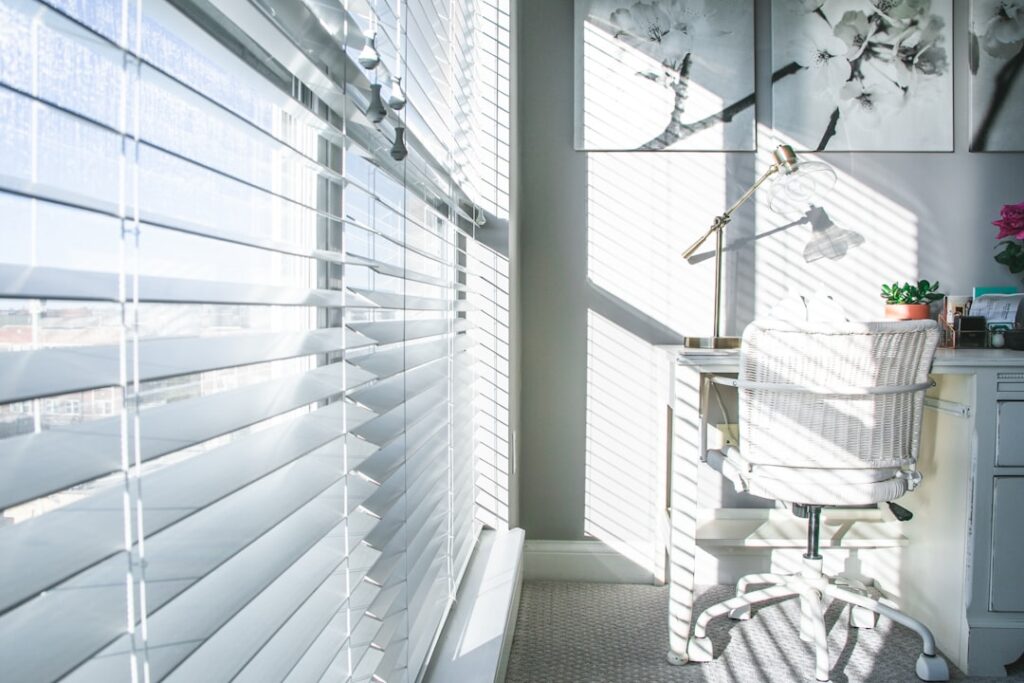
Faux wood blinds are the workhorse of the category and the right answer for most homes. Made from composite PVC or a wood-polymer blend, they mimic the look of real wood but resist warping from humidity and heat, which makes them ideal for kitchens, bathrooms, and any room with temperature swings. They cost roughly $25 to $80 per standard window and clean with a damp cloth.
The 2-inch slat is the most popular size because it offers a good balance of view-through when open and privacy when closed. Real wood blinds look slightly richer and weigh less on large windows, but they cost more, around $50 to $150 per window, and can bow in humid conditions. For 90 percent of rooms, faux wood delivers the classic slatted look at a fraction of the price without the warping worry.
Cellular Shades for Energy Efficiency
If lowering energy bills is a priority, cellular shades, also called honeycomb shades, are the standout choice. Their pleated fabric forms hexagonal air pockets that trap air and insulate the window, cutting heat loss in winter and heat gain in summer. Double-cell versions insulate best, and studies show quality cellular shades can reduce window heat loss by around 40 percent.
They come in light-filtering and full blackout versions, so you can soften daylight in a living room or fully darken a bedroom or nursery. Prices run about $30 to $120 per window depending on cell count and opacity. The main drawback is that the fabric does not tilt like slats, so light control is all-or-partial rather than adjustable by angle. For bedrooms and any room where comfort and utility bills matter, cellular shades are hard to beat.
Roller Shades for Modern Simplicity
Roller shades wrap a single panel of fabric around a tube at the top and pull down flat, giving a clean, minimalist look that suits contemporary interiors. They span a huge range of opacities, from sheer solar screens that cut glare while preserving the view to full blackout fabrics for media rooms and nurseries. Solar shades are rated by openness factor, from 1 percent for maximum privacy to 14 percent for a more open view.
Prices start around $20 for basic models and climb past $150 for motorized or premium fabrics. Because they are a single flat panel, roller shades are the easiest window covering to clean and among the least expensive to motorize. They pair beautifully with drapery for layered light control, and their simple mechanism means fewer parts to break over years of daily use.
Roman Shades for a Softer Look
When you want the warmth of fabric rather than the crispness of slats or rollers, Roman shades deliver. They fold into neat horizontal pleats as they rise and lie flat when lowered, adding softness and a decorator’s touch to living rooms, dining rooms, and bedrooms. Available in countless fabrics and patterns, they let you introduce color and texture that hard blinds cannot.
Roman shades run $40 to $200 per window depending on fabric and lining. Add a blackout or thermal liner for bedrooms to gain both room darkening and modest insulation. Their fabric construction makes them less suited to high-moisture bathrooms and kitchens, where they can absorb humidity and odors. But in dry, formal spaces, few coverings look as polished for the money.
Vertical Blinds for Wide Openings
Sliding glass doors and wide picture windows call for a different solution, and vertical blinds are purpose-built for them. Their vanes hang from a top track and slide sideways, so they clear a doorway cleanly rather than piling up at the bottom like horizontal slats would. They tilt to control light and privacy and stack compactly to one side when fully open.
Modern versions come in PVC, fabric, and faux wood vanes, a far cry from the dated plastic verticals of decades past. Prices run about $50 to $150 for a patio-door width. For any opening you walk through, verticals or a comparable panel-track system are the most functional choice, letting you pass without fighting a stack of cords or slats.
Safety, Motorization, and Measuring
Cord safety is non-negotiable in homes with children or pets. Corded blinds pose a strangulation hazard, and the industry has largely shifted to cordless and motorized options for good reason. Cordless lift, continuous-loop wands, and motorized controls all eliminate dangling cords. Motorized blinds, once a luxury, now start around $80 to $150 per window and integrate with smart-home systems and timers for automated privacy and shade.
Measure carefully before ordering, because ill-fitting blinds are the most common regret. For an inside mount, measure the exact window opening width at top, middle, and bottom and use the narrowest dimension. For an outside mount, add a few inches on each side for coverage and light blocking. Confirm you have enough depth inside the frame for an inside mount, and when in doubt, order a sample to check color against your walls in daylight.
Matching Blinds to the Room
Put faux wood in kitchens and bathrooms for moisture resistance, cellular shades in bedrooms for darkness and insulation, roller or solar shades in living rooms and home offices for glare control, Roman shades in formal spaces for warmth, and verticals on sliding doors. Set a realistic budget of $40 to $120 per window for good mid-range coverings, spend more only where a room truly needs premium fabric or motorization, and always choose cordless in a home with kids. Decide by function first and the best window blinds practically pick themselves.
Caring for and Cleaning Your Blinds
Blinds last longer and look better with a little routine care, and the method depends on the material. Faux wood and aluminum slats wipe clean with a damp microfiber cloth; close the slats one way, wipe, then reverse them to catch both sides. For a fast weekly touch-up, run a vacuum with a soft brush attachment along the closed slats to lift dust before it builds into grime. Avoid soaking real wood blinds, which can warp and discolor, and instead dust them dry or use a barely damp cloth.
Fabric shades need gentler treatment. Vacuum cellular and Roman shades on low suction with an upholstery attachment, and spot-clean stains with a little mild soap and water, blotting rather than rubbing. Roller shades usually wipe down with a damp sponge. For deeply soiled fabric shades, some manufacturers allow careful cleaning with compressed air or professional service, so check the care instructions before attempting anything aggressive. Regular light dusting prevents the deep cleaning most people dread.
When to Repair Versus Replace
Not every blind problem means buying new. A stuck cordless lift, a slat that will not tilt, or a frayed lift cord can often be fixed with inexpensive replacement parts or a restring kit for a few dollars. Bent aluminum slats, however, rarely straighten cleanly, and a sun-faded or water-damaged shade is usually not worth restoring. If more than a couple slats are broken or the mechanism repeatedly jams, replacement is the smarter spend. Buying quality blinds sized correctly from the start, and caring for them consistently, is what gets you 10 to 15 years of service rather than a frustrating replacement every few years.
When you do replace, consider whether your needs have changed before buying the same thing again. A room that gets uncomfortably hot may benefit from switching to insulating cellular shades, while a home office plagued by screen glare might call for solar roller shades you did not have before. Treat a replacement as a chance to right-size the covering to how you actually use the room now, not just a like-for-like swap, and each new set of blinds improves the space rather than simply maintaining it.