Blinds do more visual work than almost any other element in a room, yet most homeowners default to the cheapest white slats and never think about it again. Choosing stylish window blinds that suit the room’s proportions, light, and use is what makes a space feel designed rather than builder-basic. The good news is that a set of genuinely stylish window blinds does not have to cost a fortune; it comes down to matching the right style and material to each window’s job.
Part of our Windows & Doors guide — explore the full guide →
Matching Stylish Window Blinds to the Room
Style starts with function, and different rooms ask different things of a window covering. A bedroom needs darkness and privacy; a kitchen needs moisture resistance and easy cleaning; a living room wants light control that still lets in daytime brightness. Before you fall for a look, define what the window has to do.
Scale is the next consideration. Wide, tall windows carry bold, substantial treatments like wood blinds or roman shades, while small windows look best with slim, unfussy options. Color should relate to the trim and walls: blinds that match the trim recede and make windows feel larger, while a contrasting color makes them a feature. Keeping the same style across one exterior wall gives the house a coherent look from the street.
Real Wood and Faux Wood Blinds
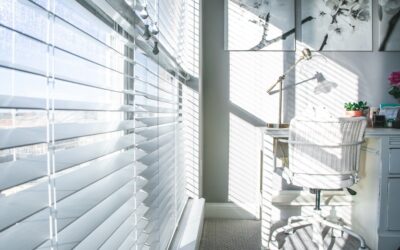
Horizontal wood-look blinds are the enduring classic, and they come in two flavors. Real basswood blinds are light, warm, and premium, with rich stains and paint finishes that suit living rooms, dining rooms, and bedrooms. They run roughly $30 to $60 per square foot custom and should be kept out of damp rooms, where they can warp.
Faux wood blinds mimic the look in PVC or composite and cost far less, around $15 to $30 per square foot. They are fully moisture-resistant, which makes them the smart pick for bathrooms, kitchens, and laundry rooms. The tradeoff is weight; faux wood is heavier, so very wide windows may need an extra slat support or a split into two blinds. A 2-inch slat reads as more upscale than a 1-inch slat and lets in more light when tilted open.
Cellular and Honeycomb Shades
When energy efficiency is the priority, cellular shades earn their keep. Their honeycomb-shaped cells trap a layer of air at the window, cutting heat loss in winter and heat gain in summer. In a drafty older home or a room with a big glass expanse, that insulation is noticeable on both comfort and the utility bill.
Cellular shades come in single, double, and even triple cell constructions, with the extra layers adding insulation, and in light-filtering or blackout fabrics. A top-down/bottom-up option lets you lower the shade from the top for daylight while keeping the bottom closed for privacy, which is ideal for street-facing windows. They fold up compactly, showing very little at the top of the window when raised, so they suit modern, minimal rooms.
Roman Shades and Soft Styles
For a softer, more decorative look, roman shades bridge the gap between hard blinds and drapery. They are fabric panels that fold into neat horizontal pleats as they raise, bringing texture, pattern, and warmth that slatted blinds cannot. They suit formal living rooms, dining rooms, and bedrooms where you want a tailored but soft feel.
Roman shades come in flat-fold styles for a crisp modern look and hobbled or teardrop styles for a fuller, more traditional cascade. Line them for privacy and light control; an interlining adds body and insulation. Because they use real fabric, they cost more than basic blinds, typically $150 to $500 per window custom, and they need occasional dusting or gentle vacuuming to stay fresh. Choose a fabric weight appropriate to the window size so the folds hang cleanly.
Roller, Solar, and Vertical Options
A few more styles round out the choices. Roller shades give the cleanest, most minimal line, disappearing into a slim roll at the top; solar roller versions cut glare and UV while preserving the view, perfect for a sunny great room. Both suit contemporary interiors and pair well with drapery.
For sliding glass doors and very wide windows, vertical blinds and their modern cousin, panel-track shades, remain the practical answer. Vertical louvers rotate for light control and slide open to clear the doorway, and today’s fabric-wrapped or faux-wood verticals look far better than the rattly plastic slats of decades past. Panel-track systems use wide fabric panels that stack neatly to one side, giving a clean, architectural look on a big opening.
Cordless and Motorized for Safety and Convenience
Whatever style you choose, seriously consider cordless or motorized operation. Corded blinds pose a strangulation hazard to young children and pets, and cordless spring systems and motorized options eliminate the risk while looking cleaner without a dangling cord and wand. This is now the default recommendation for homes with kids.
Motorization adds real convenience for high windows, skylights, and banks of shades you want to move together. Rechargeable battery motors add roughly $100 to $300 per window and pair with remotes, wall switches, or smart-home apps and schedules. Automating shades to close against the hot afternoon sun even trims cooling costs. For a handful of hard-to-reach windows, it is money well spent.
Measuring, Mounting, and Budget
A stylish blind that fits poorly looks cheap no matter its price, so measure carefully. Decide between an inside mount, which sits within the window recess for a built-in look, and an outside mount, which overlaps the opening to block light gaps and make a window appear larger. For an inside mount, measure width at top, middle, and bottom and use the narrowest, and height at both sides and center.
On budget, off-the-shelf standard-size blinds start under $30, big-box custom lines run $50 to $200 per window, and boutique custom treatments climb from there. A practical strategy is to spend on the rooms guests see, living, dining, and the primary bedroom, with real wood or roman shades, and use quality faux wood or cellular shades in the utility and secondary rooms. That mix delivers a stylish, cohesive home without overspending on windows nobody notices.
Layering Blinds With Drapery for a Finished Look
The single trick designers use most to make blinds look expensive is layering. A functional blind or shade handles light and privacy, while a pair of stationary drapery panels flanking the window adds softness, height, and color. The panels do not need to close; they frame the window and break up the hard line of the slats. Hang the drapery rod 4 to 6 inches above the window trim and let the panels extend a few inches past the frame on each side, and a standard window instantly reads as taller and more grand.
Keep the palette disciplined. Choose a blind in a neutral that recedes, then let the drapery carry the pattern or the accent color, or reverse it, but do not make both compete. Fabric weight matters for the drapery: linen and cotton blends fall softly, while heavier textured weaves add formality to a dining room. This layered approach costs more than blinds alone but transforms the look, and it also improves insulation and sound dampening at the window. In a bedroom, a blackout roller shade paired with light drapery gives both total darkness and a soft daytime feel, the best of both worlds in one window.
A few common mistakes undercut even a well-chosen blind. Mounting the treatment too low or too narrow makes a window look smaller and cheaper; hang outside-mount hardware high and wide so the glass is fully exposed when the covering is open. Skimping on operation is another regret, because a wand or chain that binds turns a daily task into an annoyance, so test the mechanism before buying if you can. Finally, resist chasing a trend color on a permanent fixture; blinds are a five-to-fifteen-year purchase, so choose a timeless neutral for the hardware and express trends through pillows and drapery you can swap cheaply. Get the fit, the operation, and the palette right, and a modest blind reads as a deliberate design choice rather than an afterthought.
Consistency across the house is the last piece that separates a styled home from a patchwork one. Aim to keep no more than two or three window-covering styles throughout the main living areas, since a different treatment on every window reads as chaotic from both inside and out. A common approach is one style for the public rooms, wood or faux-wood blinds or roller shades, and one for the private rooms, cellular or blackout shades in bedrooms, with drapery layered where a room needs softness. From the street, matching the covering type and color across each facade gives the exterior a clean, cohesive look that quietly signals a well-kept home. Plan the whole house at once rather than window by window, and even budget-friendly blinds pull together into a finished, intentional design.