
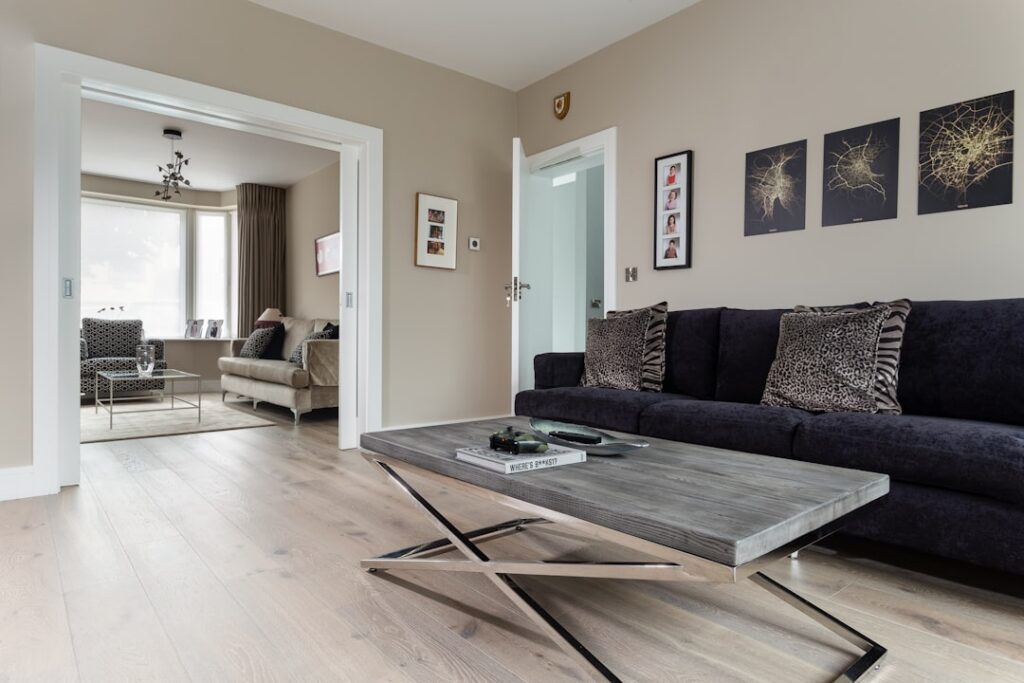
Real birch hardwood is finicky, scratch-prone, and surprisingly expensive given how soft the wood actually is. Birch laminate flooring sidesteps every one of those drawbacks while delivering the bright, pale Scandinavian look that drives homeowners to consider birch in the first place. The HDF core is harder than real birch, the aluminum-oxide topcoat resists scratches better than any site-applied finish, and the cost lands at roughly one-quarter of solid birch. For homeowners who want the look without the headaches, this is the smart category.
Why the Birch Look Sells
Birch produces some of the brightest, palest looks in the wood-look flooring category. The cream-to-light-tan color reflects light beautifully, making small or dim rooms feel larger and more open. The relatively subtle grain pattern reads contemporary and clean, pairing well with both modern and Scandinavian-traditional interiors. It is the visual antidote to dark-stained hardwoods that dominated the 2000s.
Real birch as flooring has fallen out of favor because the wood dents easily (Janka rating around 1260, on the lower end for hardwood floors). Laminate solves the durability problem entirely while preserving the aesthetic.
Pros of Birch Laminate
The advantages cluster around durability, cost, and ease of installation. The HDF core is mechanically harder than real birch, the aluminum-oxide wear layer (typically AC3 for residential and AC4 for light commercial) resists abrasion at industrial levels, and the click-lock floating installation suits DIY skill levels.
- $1.50 to $4 per square foot, roughly 25 percent of solid birch
- AC3 to AC4 wear ratings exceed real birch durability
- Click-lock floating install over imperfect subfloors
- Pre-attached underlayment on premium SKUs saves time
- Compatible with radiant heat up to 84°F surface temperature
The Cons to Plan Around
Realism varies by price point. Budget birch laminates ($1.50 to $2 per sq ft) often look obviously like printed paper, especially under bright direct lighting. Premium products use embossed-in-register texture aligned to the print pattern and include 30 plus unique plank designs to mask repetition. View samples in your actual room before committing.
Water resistance remains the laminate Achilles heel. Even the best birch laminate is water-resistant rather than waterproof. Standing water at the seams will eventually swell the HDF core. For full-bath, kitchen, and basement installs where water risk is real, consider rigid-core SPC with a birch print instead of true laminate.
AC Ratings Explained
Laminate is rated AC1 through AC5 for abrasion resistance. The right rating for your room matters more than headline thickness specs.
- AC1: very light residential, closets and bedrooms only
- AC2: standard residential, bedrooms and dining rooms
- AC3: heavy residential, all rooms including kitchens (most common consumer grade)
- AC4: light commercial, plus high-traffic residential like entries
- AC5: heavy commercial, retail and offices
For most homeowners, AC3 is the right call. AC4 is worth the upcharge for entryways, mudrooms, and homes with multiple dogs.
Plank Width and Length Choices
Standard birch laminate planks come in widths from 4.7 inches (traditional) to 7.6 inches (wide-plank contemporary) and lengths from 47 inches (traditional) to 72 inches (long format). The wider and longer the plank, the more contemporary the visual.
For small rooms, narrower planks read better because they avoid the look of one or two giant planks dominating a tight space. For open great rooms, wide and long planks create the seamless, expansive feel modern interiors target.
Color and Finish Variations
Birch laminate comes in a wider color range than real birch supports. Natural birch (cream-tan) is the bestseller. Whitewashed birch leans further Scandinavian. Smoked or fumed birch reads as a warm caramel. Bleached birch (almost pure white) is a contemporary trend that suits minimalist interiors.
Surface finish options include matte, satin, and gloss. Matte hides foot traffic and dust best and reads most contemporary. Gloss reflects light dramatically but shows every fingerprint and pet hair. Satin is the practical compromise most homeowners pick.
Installation Tips
Acclimate boxes for 48 hours minimum in the install room with HVAC running at normal temperature. Skip this step in winter and gaps appear within weeks. Test subfloor flatness with a 10-foot straightedge; deviations over 3/16 inch require self-leveling compound.
- Lay boxes flat-stacked in the install room for 48 plus hours
- Verify subfloor flatness within 3/16 inch over 10 feet
- Install underlayment per manufacturer spec (or use pre-attached)
- Cut tongue off first row’s wall side for a clean wall start
- Stagger end joints by at least 8 inches between rows
- Maintain 1/4 inch perimeter expansion gap at all walls
- Use tapping block, not direct mallet hits, to seat clicks
Best Brands to Consider
Pergo, Mohawk RevWood, Quick-Step, and Shaw Repel all offer birch and birch-look laminates in the AC3 to AC4 range at $2 to $4 per square foot. Premium European brands like Krono Original and Kaindl push to $4 to $6 per square foot with deeper textures and broader pattern variation.
For value, the Pergo Outlast+ Birch in 7.5 inch wide planks delivers strong realism at typical retail prices around $2.40 per square foot. Home Depot and Lowes both stock variations of this product line.
Maintenance Care
Sweep or microfiber dust mop weekly. Damp mop monthly with a laminate-specific cleaner like Bona Pro Series Laminate Cleaner. Avoid steam mops, vinegar solutions, and oil soaps; all three damage the wear layer over time. Place felt pads under furniture and walk-off mats at exterior doors to control grit.
Common Issues and Fixes
Two problems show up in birch laminate installations more than any other. Edge swelling at seams happens when water sits too long; replace affected planks via the unclick method or invest in waterproof rigid-core SPC for water-prone rooms. Lifting at joints in winter happens when expansion gaps were undersized during install; pulling baseboards and adding shoe molding can hide minor lifts without ripping up the floor.
Squeaking is rare in laminate (more common in nail-down hardwood) but does happen when the underlayment compresses unevenly. Fix by lifting the affected section, replacing the underlayment, and reinstalling. Use a denser, higher-quality underlayment than the original.
Birch laminate flooring is one of the strongest value propositions in modern flooring. The right product delivers premium aesthetics at budget pricing, with durability that will outlive most kitchen remodels and rental tenant cycles.
Prefer to explore on your own?
See how new flooring looks in your actual room in seconds — free, no signup.
Try the free Floor Studio →

