If you want the look and strength of real hardwood without paying maple or cherry prices, birch kitchen cabinets are one of the smartest values on the market. Birch is a tight-grained, hard domestic wood that takes stain and paint beautifully, resists dents, and holds up to the daily abuse of a busy kitchen. This guide walks through the grades, finishes, costs, and buying decisions so you can spend confidently.
Part of our Kitchen Remodeling guide — explore the full guide →
- What Is Birch Wood?
- Solid Birch vs. Birch Plywood vs. Birch Veneer
- The Look: Grain and Color
- Why Birch Takes Paint So Well
- Staining Birch: What to Know
- Birch Cabinet Costs
- Birch vs. Maple vs. Oak
- How to Judge Cabinet Quality
- Stock, Semi-Custom, or Custom?
- Installation Basics
- Caring for Birch Cabinets
- Common Mistakes to Avoid
- Door Styles That Suit Birch
- Finish and Topcoat Options
- Environmental and Sourcing Notes
- Are Birch Cabinets Right for You?
- White Birch Cabinets: Natural Pale Birch or Painted White
What Is Birch Wood?
Birch is a hardwood harvested mostly from the northern United States and Canada. The two common species used in cabinetry are yellow birch and white (paper) birch, with yellow birch being the harder and more prized of the two. On the Janka hardness scale, yellow birch rates around 1,260 pounds-force, which is harder than red oak (1,290 is oak, birch is close) and noticeably tougher than pine or poplar. That density is why birch resists scratches, dents, and the constant knocks that cabinet doors take.
Solid Birch vs. Birch Plywood vs. Birch Veneer
The word “birch” on a spec sheet can mean several different things, and the difference matters for both price and quality:
- Solid birch: Milled boards used for door frames, face frames, and drawer fronts. Strong and repairable, but prone to slight seasonal movement.
- Birch plywood: Cross-laminated layers with a birch face. This is the gold standard for cabinet boxes because it resists warping and holds screws far better than particleboard.
- Birch veneer: A thin birch layer glued over MDF or particleboard. Fine for flat panels and budget lines, but it cannot be sanded and refinished the way solid wood can.
Many quality cabinets combine these: solid birch frames, birch plywood boxes, and veneered center panels. That mix keeps costs reasonable while putting solid wood where the wear happens.
The Look: Grain and Color
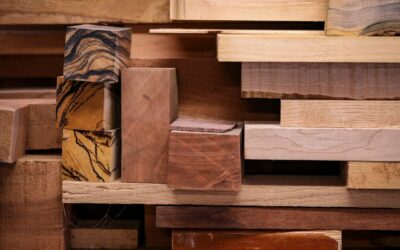
Birch has a fine, relatively straight grain with subtle figure. The sapwood is pale cream to light yellow, while the heartwood ranges from light reddish-brown to tan. Because a single tree yields both, unstained birch can show noticeable color variation from door to door. Some buyers love this natural character; others prefer a uniform look, which is easy to achieve with a pigmented stain or paint.
Why Birch Takes Paint So Well
One of birch’s biggest advantages is how smoothly it accepts a painted finish. Its tight, even grain means painted birch doors look glass-smooth without the pronounced open grain you see on oak. If you want a crisp white or a deep navy shaker kitchen, birch delivers a factory-smooth result at a lower cost than paint-grade maple. This is a big reason birch has become the workhorse wood behind many affordable painted cabinet lines.
Staining Birch: What to Know
Staining birch is trickier than painting it. Like maple and pine, birch is prone to blotching because its dense areas absorb stain unevenly. To get a clean result, applicators use a pre-stain conditioner or a gel stain that sits more on the surface. Well-finished birch can convincingly mimic pricier woods, but avoid very dark stains on bargain cabinets where the prep may be rushed and blotching can show.
Birch Cabinet Costs
Birch sits in the affordable-to-midrange tier. Expect these rough figures for stock and semi-custom cabinets, installed pricing excluded:
- Stock birch cabinets: roughly $100 to $300 per linear foot.
- Semi-custom birch: roughly $150 to $450 per linear foot.
- Full custom birch: $500 and up per linear foot.
For a typical 10-by-10 kitchen (about 25 linear feet of cabinetry), a stock birch order often lands between $4,000 and $8,000 before installation. Compare that to maple, which usually runs 10 to 20 percent higher for equivalent construction.
Birch vs. Maple vs. Oak
Birch is frequently cross-shopped against these two woods:
- Birch vs. maple: Very similar in hardness and smooth grain. Maple is slightly harder and more uniform, but birch costs less and looks nearly identical once painted.
- Birch vs. oak: Oak has a bold, open grain and a more traditional look; birch is smoother and more contemporary. Oak hides scratches in its grain; birch shows a cleaner face.
For a painted kitchen on a budget, birch usually wins on value. For a natural wood-grain statement, oak has more character.
How to Judge Cabinet Quality
Species is only half the story; construction is the rest. When shopping birch cabinets, inspect these points:
- Box material: Look for 1/2-inch or thicker plywood, not thin particleboard.
- Drawer boxes: Solid-wood dovetailed drawers outlast stapled particleboard.
- Glides and hinges: Full-extension soft-close undermount glides and six-way adjustable hinges signal quality.
- Face frame joints: Mortise-and-tenon or dowel joinery beats staples.
- Finish: A catalyzed or conversion-varnish finish resists moisture and cleaning chemicals better than a basic lacquer.
Stock, Semi-Custom, or Custom?
Stock birch cabinets come in fixed sizes, usually in 3-inch width increments, and ship fast. Semi-custom lines add more sizes, door styles, and finish options with a modest price bump and a two-to-six-week lead time. Full custom birch is built to your exact dimensions and any finish, but it costs the most and can take eight weeks or longer. For most kitchens, semi-custom birch offers the best balance of flexibility and value.
Installation Basics
Birch cabinets install like any other. Uppers hang first, screwed through the back rails into wall studs; then base cabinets are set, leveled with shims, and fastened. Because birch plywood holds fasteners well, a solid install stays tight for decades. Budget one to three days of labor for an average kitchen, and expect professional installation to add roughly $200 to $500 per cabinet or a flat $2,000 to $6,000 for a full kitchen.
Caring for Birch Cabinets
Birch is low-maintenance but not maintenance-free. Wipe spills promptly, since standing water can lift a finish over time. Clean with a damp cloth and mild dish soap, avoiding ammonia, bleach, and abrasive pads that dull the topcoat. Keep cabinets away from direct heat and steam paths, and use exhaust ventilation while cooking. Painted birch may show hairline cracks at joints as the wood expands and contracts seasonally; this is normal and can be touched up.
Common Mistakes to Avoid
- Assuming all “birch” means solid wood, when it is often veneer over MDF.
- Choosing a very dark stain on budget cabinets where blotching may show.
- Skipping soft-close hardware to save money, then living with slamming doors.
- Ignoring color variation on natural-finish birch, then being surprised by mismatched doors.
- Installing without checking that boxes are plywood, not particleboard.
Door Styles That Suit Birch
Because birch is smooth and paint-friendly, it works with nearly every door style, but a few pairings shine. Flat-panel shaker doors are the most popular, giving painted birch a clean, modern-classic look. Slab doors highlight birch’s tight grain when clear-coated, suiting contemporary kitchens. Raised-panel doors lean traditional and hide seasonal movement well. Glass-front upper doors in birch frames add display space without overwhelming a small kitchen. If you’re clear-finishing rather than painting, request sequenced or color-matched doors so the natural variation reads as intentional rather than random.
Finish and Topcoat Options
The topcoat determines how well birch survives kitchen life. Factory-applied conversion varnish and catalyzed lacquer are the toughest, resisting water, grease, and cleaning chemicals far better than a brushed-on polyurethane. If you’re refinishing birch yourself, sand to 180 grit, apply a pre-stain conditioner if staining, and finish with at least two coats of a durable water-based or oil-based polyurethane. For painted birch, a bonding primer followed by a cabinet-grade enamel gives a factory-smooth, chip-resistant surface. Whatever you choose, the smoother the birch is sanded, the better the final result looks.
Environmental and Sourcing Notes
Birch is a domestically grown North American hardwood, so it carries lower shipping impact than imported species and is widely available from sustainably managed forests. Look for cabinets built with low-formaldehyde or CARB2-compliant plywood and adhesives if indoor air quality matters to you. Because birch grows relatively fast and is abundant, it’s considered a responsible choice compared with slow-growing exotic hardwoods. Ask your dealer whether the plywood cores and finishes meet current low-emission standards.
Are Birch Cabinets Right for You?
Birch is an excellent pick if you want durable real-wood construction, plan to paint or lightly stain, and care about stretching your budget. It is less ideal if you specifically want a dramatic natural wood grain, in which case oak or hickory suits better. For the majority of remodels, though, birch hits the sweet spot of strength, looks, and price.
Ultimately, birch kitchen cabinets give you hardwood performance and a smooth, paint-ready surface without the premium of maple or cherry. Focus on plywood box construction, dovetailed drawers, and quality soft-close hardware, and a birch kitchen will look sharp and function well for 20 years or more. Buy the best construction your budget allows, and birch will reward you with a kitchen that stays solid through years of daily use.
White Birch Cabinets: Natural Pale Birch or Painted White
White birch cabinets can mean two different things: cabinets built from pale, light-toned birch with a clear finish, or birch cabinets painted white. Both are popular, but they age, cost and clean differently. Ask a dealer which one a listing means before comparing prices.
The Natural Look
In the lumber and plywood trade, “white birch” often refers to the creamy sapwood, sorted from the darker heartwood of the same trees, rather than only to the paper birch species. Sorting for uniform pale wood takes extra selection, so a white or sap-selected grade usually costs a bit more than standard birch with mixed color. The payoff is a light Scandinavian or modern look with far less of the door-to-door color swing that natural birch can show.
The topcoat decides whether pale birch stays pale. Oil-based finishes add an amber tone right away and deepen it over time, while clear water-based finishes and many factory conversion varnishes stay closer to the raw color. Pale wood also darkens somewhat with light exposure, so uppers near a sunny window may shift tone slightly faster than lowers.
The Painted Look
Birch’s tight grain gives white paint a smooth face, which is why it shows up so often in painted shaker kitchens. Painted white birch hides color variation entirely and lets you pick the exact shade, from bright white to warm off-white. The tradeoff is touch-up: chips show the wood underneath, and hairline cracks can appear at frame joints as the wood moves with the seasons.
| Factor | Natural white birch | Painted white birch |
|---|---|---|
| Appearance | Pale wood with visible fine grain | Solid, uniform color |
| Color variation | Low if sap-selected, some if not | None |
| Aging | Can yellow under oil-based finishes | Can show joint cracks and chips |
| Repairs | Light sanding and recoating possible on solid parts | Spot touch-up with matching paint |
| Best for | Scandinavian, modern, coastal kitchens | Shaker, transitional, farmhouse kitchens |
Keeping White Birch Looking Clean
- Wipe grease and splatter near the range often, since pale surfaces show residue sooner than mid-tone stains.
- Use mild dish soap and a soft cloth, never bleach or abrasive pads, which can dull or discolor the finish.
- Keep a small jar of matching paint or a touch-up marker for painted doors.
- Ask for sequenced doors on natural-finish orders so the pale tones run evenly across the room.