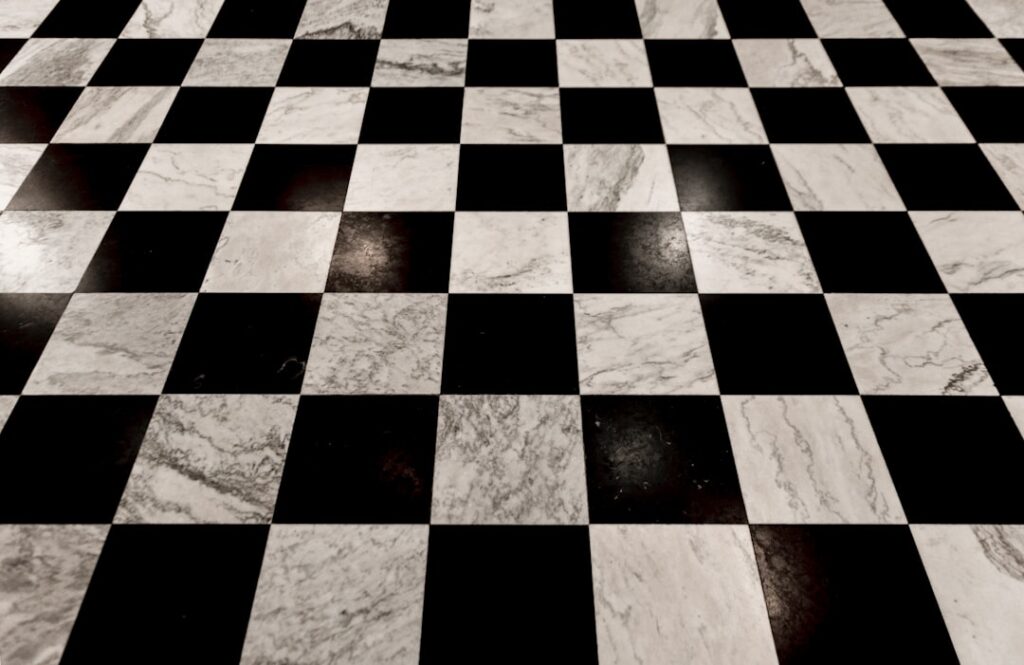
Some floors never go out of style, and the checkerboard is one of them. Black and white check vinyl flooring conjures 1950s diners, classic French bistros, and cheerful farmhouse kitchens all at once, delivering timeless graphic energy at a fraction of the cost of real marble or porcelain checker tile. It is bold, nostalgic, and surprisingly versatile, working in retro and modern rooms alike. The trick is choosing the right format and laying it out so the pattern feels intentional rather than dizzying.
Why the Checkerboard Endures
The alternating grid has been a design staple for centuries, from grand European halls to Route 66 diners. Its appeal is simple geometry: high contrast, perfect symmetry, and a rhythm that feels both formal and fun. In a kitchen it reads playful and vintage; in an entry hall it feels crisp and architectural. Because black and white pair with virtually any color scheme, a checker floor becomes a flexible foundation you can restyle above without ever replacing the floor.
Vinyl makes the look accessible. It is waterproof, warm underfoot, forgiving of dropped dishes, and dramatically cheaper than the stone or ceramic checkerboards it imitates.
Sheet Vinyl Versus Vinyl Tile
You can get the checker look two ways, and the choice affects both installation and durability. Sheet vinyl prints the entire checkerboard on a continuous roll, so there are no physical seams between squares and no grout lines to clean. It installs fast, seals out water completely, and is the most budget-friendly, but a tear or burn means patching a large section.
Vinyl tile, whether peel-and-stick squares or glued LVT, lets you build the pattern from individual black and white pieces. That gives you a slight embossed texture, the ability to replace one damaged tile, and the option to rotate the grid or add a border. It takes longer to lay and demands precise alignment, since crooked tiles are glaringly obvious on a checker floor.
- Sheet vinyl: fastest, cheapest, seamless, fully waterproof, harder to repair
- Vinyl tile: textured, repairable, customizable layout, more labor and precision
Getting the Layout Right
Layout is where checker floors succeed or fail, so plan before you cut anything. First decide on orientation. A straight grid aligned to the walls feels classic and orderly, while a diagonal (on-point) layout feels more dynamic and can make a small room look larger. Diagonal also hides slightly out-of-square walls better.
Next, find the center. Snap chalk lines to locate the room’s midpoint and dry-lay the pattern so you end up with balanced, similarly sized squares at opposite walls rather than a full square on one side and a sliver on the other. The most common rookie mistake is starting from one wall and ending with awkward cuts against the most visible wall. Center the pattern, and always keep the black and white squares perfectly square to each other.
Choosing Your Scale and Shade
Two details quietly shape the whole effect: tile size and the exact shades. Larger squares, say 12 by 12 inches, feel bold and modern and suit bigger rooms, while smaller squares read more vintage and busy, which can overwhelm a tiny space. Consider the room’s size before locking in a scale.
The colors matter too. A true jet black with a bright white is the sharpest, most diner-classic combination. Softer pairings, like off-black charcoal with cream, feel warmer and more farmhouse, and hide dust and footprints noticeably better than stark black. If you love the look but dread constant cleaning, a slightly muted black-and-cream check is the practical compromise.
Styling the Checkerboard Room
Because the floor is doing so much visual work, keep the rest of the room relatively calm and let it be the star. In a kitchen, pair black and white check vinyl flooring with white shaker cabinets, marble-look counters, and a pop of color from a red retro fridge, teal bar stools, or brass hardware. In an entry or bathroom, white beadboard, black fixtures, and simple lighting lean into the timeless feel.
Avoid competing patterns on the walls or window treatments; solid colors and simple textures let the floor breathe. A checker floor is a commitment, but styled with restraint above it, it stays charming for decades.
Cleaning and Maintaining a Checker Floor
A high-contrast floor is honest about dirt, so it pays to know what you are signing up for. The white squares show grime, coffee splashes, and scuffs, while the black squares reveal dust, lint, and footprints. Neither hides much, which means a checkerboard floor looks its best with regular attention rather than occasional deep cleans.
The good news is that vinyl makes upkeep easy. A daily or every-other-day sweep or dust-mop keeps the black squares crisp, and a damp mop with a pH-neutral vinyl cleaner handles the white ones. Avoid abrasive scrubbers and harsh chemicals that can dull the finish and cause the colors to fade unevenly. If constant cleaning sounds exhausting, remember that a charcoal-and-cream version disguises daily debris noticeably better while keeping the classic look.
Rooms Where the Checkerboard Shines
While kitchens are the classic home for this pattern, the checkerboard earns its keep in several spaces. Entryways and foyers get an immediate hit of timeless character, and vinyl shrugs off the wet shoes and grit that come with a front door. Bathrooms, especially powder rooms, suit the retro charm and benefit from the waterproof surface.
Laundry rooms, mudrooms, and sunrooms are also strong candidates, since the playful pattern livens up utilitarian spaces and hides the busyness of a working room. In larger areas, use the checker to define a zone, such as a breakfast nook or a bar area, rather than covering an entire open floor plan, which can feel overwhelming. Matching the pattern’s boldness to the room’s size and function is the key to loving it long term.
Is It Right for Your Home?
Choose black and white check vinyl flooring if you want a fun, timeless, high-impact floor that costs far less than stone and stands up to a busy kitchen or entry. Go with sheet vinyl for speed and easy cleaning, or tile for texture and repairability. Just respect the layout: center the pattern, keep it square, and pick a scale that fits the room. Do that, and you get a floor with genuine personality that never quite goes out of fashion. Before you buy, order physical samples to judge the exact black and white shades in your own light, measure carefully so you can center the pattern, and pick up about 10 percent extra material for cuts and future repairs. With a little planning up front, a checkerboard floor rewards you with decades of cheerful, timeless style that few other patterns can match.
Prefer to explore on your own?
See how new flooring looks in your actual room in seconds — free, no signup.
Try the free Floor Studio →