
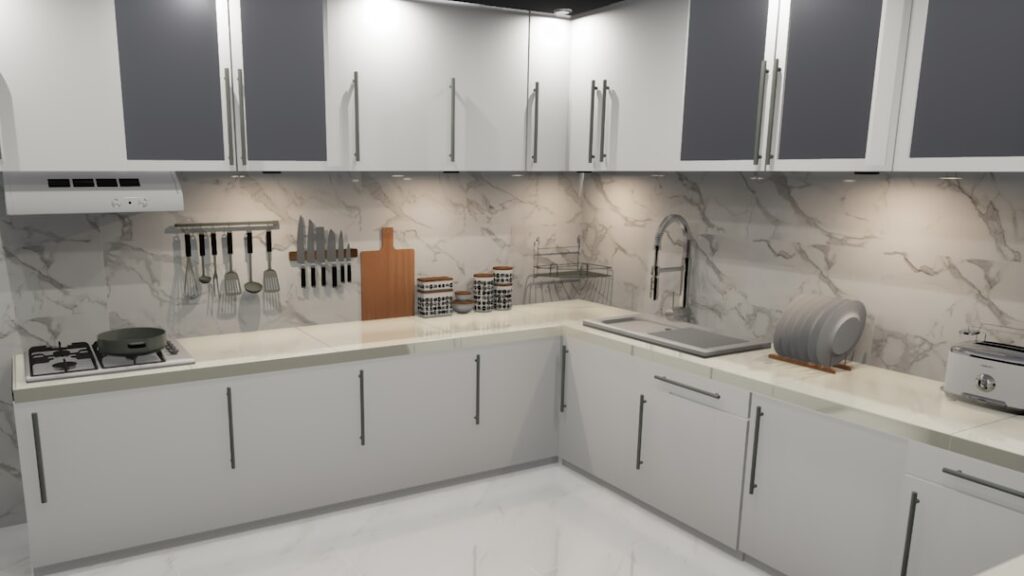
Nothing anchors a kitchen quite like a black granite kitchen island. The deep, glossy surface reads as both modern and timeless, hides everyday crumbs better than light stone, and stands up to decades of hard use. But black granite is not one single thing, and the difference between a flawless install and one that shows every fingerprint comes down to choosing the right slab, finish, and surrounding palette. Here is what to know before you commit.
Part of our Countertops guide — explore the full guide →
- The Look: Not All Black Granite Is the Same
- Finish Changes Everything
- Sealing and Everyday Maintenance
- Pairing a Black Island With the Rest of the Kitchen
- Counters Versus Island: Match or Contrast?
- Lighting and Backsplash Considerations
- Cost and Edge Profiles
- Pros and Cons at a Glance
- The Honest Bottom Line
The Look: Not All Black Granite Is the Same
Granite is a natural stone, so even within the black family the variation is enormous. Some slabs are nearly solid jet black with a fine, even grain, while others carry sweeping veins, gold or copper flecks, or a salt-and-pepper speckle. Common varieties you will see at slab yards include near-solid blacks prized for a clean, contemporary look, and speckled or veined blacks that add movement and forgiveness against smudges.
Always pick your actual slab in person if you can. Two pieces sold under the same trade name can differ noticeably, and an island is a focal point where the pattern truly shows. Look at the slab standing up, under good light, and imagine it horizontal at counter height.
Finish Changes Everything
The finish you choose has as much impact as the stone itself:
- Polished: The classic high-gloss look. Mirror-like, rich, and dramatic, but it shows fingerprints, water spots, and dust most readily on solid black.
- Honed: A smooth matte finish that reads softer and more contemporary. It hides smudges far better than polished but can show oils and may need sealing more often.
- Leathered: A textured, low-sheen finish with a subtle tactile surface. Excellent at hiding fingerprints and water marks, and increasingly popular for black islands.
If your biggest worry is the maintenance of a fingerprint magnet, honed or leathered black granite solves most of that complaint while keeping the depth of color.
Sealing and Everyday Maintenance
Granite is durable but porous, so sealing matters. Most black granites are denser and less absorbent than lighter stones, and some very dark slabs barely take a sealer at all. Test absorbency by leaving a few drops of water on the surface for 15 to 30 minutes. If the stone darkens where the water sat, it is absorbing and should be sealed. If it beads and sits on top, the existing seal is doing its job.
Day to day, care is simple:
- Wipe with warm water and a few drops of mild dish soap, or a cleaner labeled safe for natural stone.
- Avoid acidic cleaners like vinegar and lemon, plus harsh degreasers and abrasive pads, which can dull the finish over time.
- Blot spills promptly, especially oils, wine, and anything brightly colored.
- Use trivets under very hot pans as a habit, even though granite tolerates heat well, and cutting boards to protect both the stone and your knives.
Reseal as needed based on the water test, often every one to three years for surfaces that take a sealer. A leathered or honed top may benefit from an enhancing sealer that deepens the black tone.
Pairing a Black Island With the Rest of the Kitchen
A dark island is a strong design move, so the surrounding choices should give it room to shine. A few combinations that consistently work:
White or Light Cabinets
The crispest, most popular pairing. White shaker cabinets with a black granite island create high contrast that feels clean and intentional. Carry a hint of black elsewhere, perhaps in hardware or pendant lights, to tie it together.
Two-Tone Cabinetry
Light perimeter cabinets with a black or dark-stained island base reinforce the island as the centerpiece. Topping that dark base with black granite gives a monolithic, furniture-like look that reads high-end.
Wood Tones and Warm Neutrals
Black granite is surprisingly warm-friendly. Pair it with natural oak or walnut cabinets and brass or bronze hardware for a layered, organic feel rather than a stark modern one.
Counters Versus Island: Match or Contrast?
You do not have to run black granite throughout. Many kitchens use a lighter perimeter countertop and reserve the black for the island, letting it stand out. If you do want continuity, repeating the same black stone on the perimeter creates a seamless, dramatic kitchen, just be aware it makes a darker overall room that benefits from strong lighting. Either approach is valid; it comes down to whether you want the island to be a contrast piece or part of a unified surface.
Lighting and Backsplash Considerations
Dark surfaces absorb light, so a black granite kitchen island deserves good overhead and task lighting. Pendant lights above the island add both function and a chance to introduce metal finishes. For backsplashes nearby, lighter tile, white subway, or a soft veined stone keeps the room from feeling heavy, while a matching dark backsplash leans bold and moody. There is no wrong answer, only the mood you are after.
Cost and Edge Profiles
Pricing varies widely by stone, but black granite spans a broad range. Common imported blacks tend to sit in the lower-to-mid tier of granite pricing, while rarer veined or premium slabs cost more, and fabrication, edging, and installation add to the total. An island also typically requires a single large slab with minimal seams, which can influence the price. Always get an installed quote rather than a per-square-foot sticker, since template, cutout for the sink or cooktop, and edge work are real costs.
Edge profile is a small choice with a big visual effect on a black island. A simple eased or square edge reads modern and minimizes chipping risk, a beveled edge adds a crisp line, and a fuller ogee or bullnose leans traditional. On a thick black slab, a mitered edge that makes the stone look extra deep is a popular high-end touch. Discuss profiles with your fabricator and view samples, because the way light catches a polished black edge differs noticeably from finish to finish.
Pros and Cons at a Glance
- Pros: Dramatic focal point, extremely durable, heat- and scratch-resistant, hides crumbs and everyday wear, pairs with nearly any palette.
- Cons: Polished solid black shows fingerprints and water spots, dark surface needs good lighting, and some slabs require periodic sealing.
For most kitchens the durability and impact outweigh the upkeep, especially when you choose a forgiving finish.
The Honest Bottom Line
A black granite island delivers drama, durability, and decades of service, and it is genuinely practical because dark stone hides daily wear. The honest trade-off is fingerprints and water spots on a polished solid-black slab, which is easily solved by choosing a honed or leathered finish or a speckled pattern. Pick your actual slab in person, test it for sealing, keep cleaning gentle and pH-neutral, and pair it with lighter cabinets or warm wood to let it command the room. Done thoughtfully, it is one of the most rewarding centerpieces a kitchen can have.


