Black laminate flooring is one of the boldest choices in the flooring market. It creates an undeniably dramatic statement — a dark, grounding surface that transforms any room into a high-contrast design showcase. But it is also one of the most high-maintenance flooring colors you can choose, because every speck of dust, every pet hair, every footprint, and every micro-scratch is visible on a black surface.
This guide covers everything about black laminate flooring — the different looks available, realistic pros and cons, the best brands to consider, cost, room pairing strategies, maintenance expectations, and alternatives if you love the look but want easier upkeep.
Black Oak-Look vs Black Marble-Look
Black laminate flooring generally falls into two visual categories, each with a different aesthetic and ideal application.
Black oak-look laminate features a dark wood grain pattern that mimics ebony-stained hardwood. The grain texture is visible through the dark finish, giving the floor a more natural, organic appearance. This is the more popular option for residential living spaces because the visible grain provides visual warmth that pure black lacks, and the texture helps disguise dust and small scratches better than a smooth surface.
Textured and embossed-in-register (EIR) versions of black oak-look laminate are the most realistic, with surface texture that aligns with the printed grain pattern. These higher-end products are nearly indistinguishable from real dark hardwood floors at a fraction of the cost.
Black marble-look laminate mimics polished black marble with subtle veining in white, gray, or gold tones. This look is dramatic in entryways, formal dining rooms, and modern bathrooms (where moisture-resistant laminate is used). The smooth, glossy surface of marble-look laminate is visually striking but shows dust and footprints even more than the wood-look version.
Marble-look laminate is best used in low-traffic accent areas rather than entire open-concept floors. The glossy surface amplifies every imperfection, and the pattern can look repetitive in large installations where the same printed tile repeats visibly.
Pros and Cons of Black Laminate Flooring
Pros
- Dramatic visual impact. Black floors create a statement that no other color can match. They anchor a room and make lighter furniture, walls, and decor stand out.
- Affordable luxury look. Black laminate achieves the look of ebony-stained hardwood or black marble at $1 to $4 per square foot — a fraction of the real material cost.
- High contrast design. Paired with white walls, light furniture, and metallic accents, black laminate creates the kind of high-contrast interior that defines modern luxury design.
- Available in multiple looks. From dark wood grain to polished marble to industrial slate, black laminate flooring offers style variety within a single color palette.
- Standard laminate benefits. Scratch-resistant wear layer, easy click-lock installation, and compatibility with underfloor heating make black laminate as practical as any laminate color.
Cons
- Shows everything. Dust, pet hair, lint, water spots, and footprints are immediately visible on black surfaces — especially glossy ones. This is the single biggest downside and the reason most people eventually regret choosing black flooring.
- Scratches are highly visible. Laminate scratches expose the lighter core material beneath the dark wear layer, creating white or light-colored marks that stand out dramatically against the black surface.
- Can darken small rooms. In rooms without abundant natural light, black floors can create a cave-like atmosphere that makes the space feel smaller and heavier.
- Fading over time. Direct sunlight can cause black laminate to fade unevenly, creating lighter patches in sun-exposed areas. UV-protective window treatments are a necessity.
- Difficult to match. If you need to replace damaged planks later, color-matching black laminate is notoriously difficult because even slight batch variations are visible on a dark surface.
Best Brands for Black Laminate Flooring
Not all black laminate is created equal. The quality of the print layer, surface texture, and wear resistance varies significantly between brands.
| Brand | Notable Black Collection | AC Rating | Thickness | Price (per sq ft) | Key Feature |
|---|---|---|---|---|---|
| Quick-Step | Impressive / Envique | AC4 | 8 – 12 mm | $2.50 – $4.00 | Realistic EIR texture |
| Pergo | TimberCraft / WetProtect | AC4 – AC5 | 10 – 12 mm | $2.50 – $4.50 | Water-resistant core |
| Mohawk | RevWood Plus | AC4 | 10 mm | $2.00 – $3.50 | Waterproof surface |
| Kronotex | Mammut / Exquisit | AC4 – AC5 | 8 – 12 mm | $1.50 – $3.00 | German-made, durable |
| Swiss Krono | Grand Selection | AC5 | 12 mm | $2.00 – $3.50 | Commercial-grade durability |
What to look for: Choose AC4 or AC5 rated black laminate for maximum scratch resistance. Select textured or EIR surfaces over smooth or glossy finishes — the texture hides dust and micro-scratches significantly better. Thicker planks (10 to 12 mm) feel more substantial underfoot and reduce hollow sound.
Cost of Black Laminate Flooring
Black laminate flooring costs the same as other laminate colors — the black color does not carry a premium. Budget and mid-range options are widely available.
| Cost Component | Price Range |
|---|---|
| Budget black laminate (7 – 8 mm, AC3) | $0.80 – $1.50 per sq ft |
| Mid-range black laminate (10 – 12 mm, AC4) | $1.50 – $3.00 per sq ft |
| Premium black laminate (12 mm, AC5, EIR) | $2.50 – $4.50 per sq ft |
| Underlayment | $0.25 – $0.75 per sq ft |
| Professional installation | $2.00 – $4.00 per sq ft |
| Total installed (mid-range) | $3.75 – $7.75 per sq ft |
Room Pairing and Design Tips
Where you install black laminate flooring — and what you pair it with — determines whether the result looks stunning or oppressive.
Living rooms with large windows are the best candidates. Natural light balances the dark floor and creates the dramatic contrast that makes black flooring worthwhile. White or light gray walls are essential to prevent the room from feeling like a cave.
Bedrooms can work well with black laminate if the room is spacious and well-lit. A black floor with white bedding, light wood furniture, and warm lighting creates a boutique-hotel aesthetic. Avoid black floors in small, dark guest rooms.
Home offices and studios are surprisingly good candidates. The dramatic backdrop makes screens easier on the eyes (less glare reflection) and creates a focused, professional atmosphere.
Kitchens should be avoided. Crumbs, flour, water drops, and foot traffic create a constant visible mess on black floors. If you insist, pair with grey laminate in the kitchen and transition to black in adjacent living areas.
Design rules for black floors:
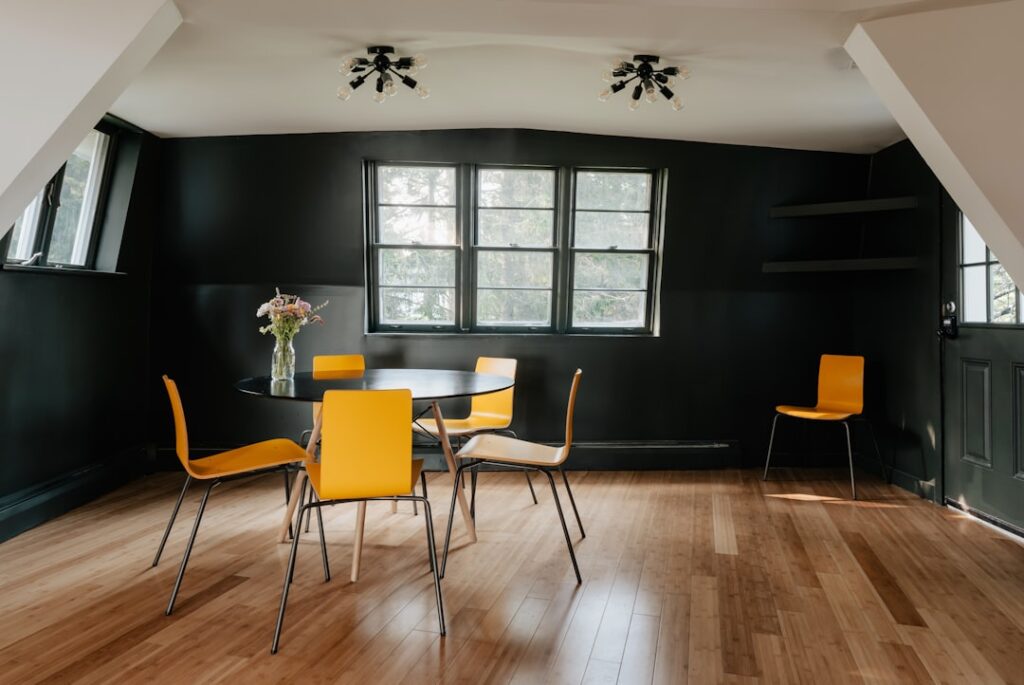
- Pair with white, cream, or light gray walls — never dark walls with dark floors.
- Use light-colored area rugs to break up the dark surface and add warmth.
- Add metallic accents (gold, brass, chrome) for visual interest against the black backdrop.
- Ensure adequate lighting — both natural and artificial — to prevent the space from feeling heavy.
- Use matte or satin finishes, never high-gloss, for practical maintenance reasons.
Maintenance Reality
Let us be direct: maintaining black laminate flooring requires more effort than any other laminate color. Here is the realistic maintenance commitment.
- Daily dust-mopping is mandatory. Not optional, not “a few times a week” — daily. Every 24 hours of foot traffic deposits visible dust and hair on a black floor. A microfiber dust mop takes 5 minutes and is the difference between a floor that looks great and one that looks neglected.
- Damp-mop weekly with a laminate-safe cleaner. Spray sparingly and dry immediately. Water spots are visible on dark surfaces, so buff dry after mopping.
- Use doormats at every entrance. Grit and outdoor debris scratch the wear layer, and those scratches show white against the black surface. Doormats are your first line of defense.
- Keep pet nails trimmed. Dog and cat scratches are the most common source of visible damage on black laminate. Regular nail trimming reduces this risk significantly.
- Place felt pads on all furniture legs. Replace every 6 months as they collect grit particles.
- Avoid rubber-backed rugs. Rubber can discolor dark laminate over time, leaving a visible ghost imprint.
Alternatives to Black Laminate
If you love the dark floor aesthetic but want easier maintenance, consider these alternatives to black laminate flooring.
| Alternative | Cost (per sq ft) | Pros vs Black Laminate | Cons vs Black Laminate |
|---|---|---|---|
| Dark charcoal LVP | $2 – $5 | Waterproof, less scratch-visible, slightly warmer tone hides dust better | Softer surface, can dent |
| Ebony-stained hardwood | $6 – $12 | Refinishable, natural depth, ages beautifully | Much more expensive, still shows dust |
| Dark gray laminate | $1 – $4 | Almost as dramatic but significantly easier to maintain, dust less visible | Not as bold or high-contrast |
| Espresso-toned laminate | $1 – $4 | Warm undertones hide dust better than pure black, still dramatic | Not a true black look |
Dark charcoal or espresso tones deliver 80% of the drama of black with 50% less visible dust and scratching. For most homeowners, this compromise offers the best balance of impact and livability.
Frequently Asked Questions
Does black laminate flooring show dust?
Yes — significantly more than any lighter color. Dust, pet hair, lint, and footprints are immediately visible on black surfaces, especially in direct sunlight. Daily dust-mopping is essential to keep black laminate looking clean.
Is black laminate flooring a bad idea?
It depends on your maintenance tolerance. If you are willing to dust-mop daily and accept that the floor will always show some debris between cleanings, black laminate can look stunning. If you prefer low-maintenance flooring that looks clean with minimal effort, choose a lighter or medium-toned color instead.
What color walls go with black laminate floors?
White, off-white, light gray, and cream are the best wall colors for black floors. These light tones create the high-contrast look that makes black flooring dramatic rather than oppressive. Avoid dark walls with black floors — the combination makes rooms feel small and heavy.
Can you put black laminate in a bathroom?
Only if you use water-resistant or waterproof laminate specifically rated for bathroom use. Standard laminate will swell and warp from bathroom moisture. Even with waterproof laminate, a black bathroom floor will show every water drop and soap splash — prepare for frequent cleaning.
How do you hide scratches on black laminate?
Minor scratches can be concealed with a black laminate touch-up marker or crayon (available from most laminate manufacturers). For deeper scratches that expose the white core, fill with a color-matched laminate repair putty. Preventing scratches with felt pads, doormats, and regular sweeping is far easier than repairing them.
Is dark LVP better than black laminate?
For most homeowners, yes. Dark luxury vinyl plank (LVP) is waterproof, slightly softer underfoot (which makes it quieter), and scratches are less visible because the vinyl core is typically darker than laminate’s HDF core. LVP also handles moisture better, making it suitable for kitchens and bathrooms where black laminate would be risky.
Prefer to explore on your own?
See how new flooring looks in your actual room in seconds — free, no signup.
Try the free Floor Studio →