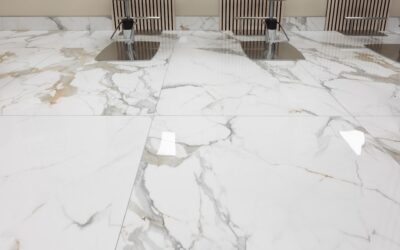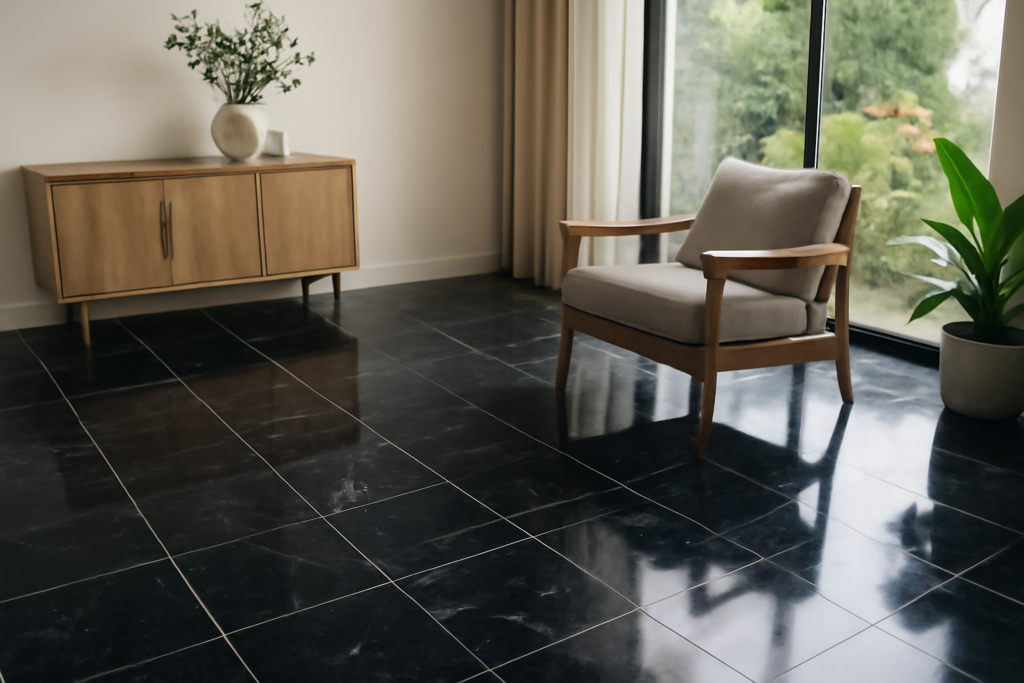
Nothing signals luxury quite like black marble tile. The deep, glossy surface threaded with white or gold veining brings instant drama to a foyer, bathroom, or feature wall. Marble has graced grand homes for centuries, and the black varieties carry a particularly bold, sophisticated weight. It is a natural stone, though, which means it rewards careful selection and proper maintenance. Understanding the types, the costs, and the care involved will help you decide if it belongs in your home.
Part of our Countertops guide — explore the full guide →
- What Makes Black Marble Special
- Popular Types of Black Marble
- Where to Use Black Marble Tile
- Finish Options
- What Black Marble Tile Costs
- Sealing Is Essential
- Daily Care and Maintenance
- Marble Versus Porcelain Look-Alikes
- Design Ideas and Pairings
- Is Black Marble Tile Right for You?
- Understanding Etching and Patina
What Makes Black Marble Special
Marble is a metamorphic stone prized for its depth, veining, and ability to take a high polish. In black varieties, the dark base makes contrasting veins of white, gray, or gold stand out dramatically. Each slab and tile is unique, so no two installations look exactly alike. That natural variation is part of the appeal, but it also means you should view tiles in person or request samples before committing to a large project.
Popular Types of Black Marble
Several distinct marbles fall under the black umbrella, each with a signature look:
- Nero Marquina: deep black with crisp white veining, the classic and most recognized choice
- Portoro: black with luxurious gold and white veins, dramatic and high-end
- Black and Gold (Marron): warm gold streaks across a dark field
- Negro Marquina blends: regional variations with varying vein density
Veining ranges from heavy and bold to subtle and sparse, so choose based on how much movement you want in the finished surface.
Where to Use Black Marble Tile
Black marble shines in spaces where you want a focal point. It is popular for bathroom floors and walls, shower surrounds, kitchen and bathroom backsplashes, fireplace surrounds, and grand entryway floors. Because the dark color absorbs light, it works best in rooms with good natural or layered lighting, and it pairs beautifully with white, brass, and warm wood to keep a space from feeling too dark.
Finish Options
The finish changes both the look and the practicality of the tile. Polished marble has a mirror-like shine that maximizes drama and reflects light, but it shows etching and water spots more readily and can be slippery underfoot. Honed marble has a soft matte finish that hides minor wear better and offers more slip resistance, making it a smart choice for floors and wet areas. A honed finish often suits busy households, while polished is ideal for walls and low-traffic showpieces.
What Black Marble Tile Costs
Marble is a premium material, and prices reflect that. Tile typically runs $10 to $40 per square foot, with rare varieties like Portoro reaching $50 or more. Professional installation adds roughly $10 to $20 per square foot because natural stone requires careful handling, precise layout to match veining, and sealing. Factor in the cost of sealer and ongoing maintenance when you budget, since marble is not a set-it-and-forget-it surface.
Sealing Is Essential
Marble is porous and reacts to acids, so sealing is not optional. A penetrating stone sealer slows absorption of water, oil, and stains, giving you time to wipe up spills before they soak in. Reseal floors and countertops periodically, typically once or twice a year depending on use and the sealer type. Even sealed marble can etch from acidic substances like lemon juice, wine, or harsh cleaners, so prompt cleanup is the best protection.
Daily Care and Maintenance
Caring for black marble is about gentleness and consistency. Follow these basics:
- Wipe spills immediately, especially anything acidic
- Clean with a pH-neutral stone cleaner, never vinegar or general-purpose products
- Use soft cloths and mops; avoid abrasive pads that dull the polish
- Place mats at entries and coasters on countertops to limit grit and rings
- Dust-mop floors regularly so sand and grit do not scratch the surface
Marble Versus Porcelain Look-Alikes
Today’s porcelain manufacturers produce remarkably convincing black marble look-alikes, and the choice between real stone and porcelain is worth careful thought. Genuine marble offers unmatched depth, a cool natural feel, and the prestige of authentic stone, but it requires sealing, careful cleaning, and tolerance for etching and patina over time. Porcelain that mimics black marble captures much of the look at a lower price, never needs sealing, resists stains and etching, and stands up to heavy use without special care. If you love the authenticity of stone and will maintain it, choose marble. If you want the look with minimal upkeep, a high-quality porcelain is the smarter pick for busy kitchens and bathrooms.
Design Ideas and Pairings
Black marble tile pairs best with elements that brighten and warm the dark surface. Combine it with white walls, brass or gold fixtures, and warm wood vanities for a classic, luxurious look. In a bathroom, a black marble floor with white subway walls and a freestanding tub reads as timeless and elegant. For a backsplash, black marble with veining behind light cabinetry creates a striking focal point. Keep lighting generous, since dark stone absorbs light, and use the bold veining as the room’s natural artwork rather than competing with it through busy patterns elsewhere.
Is Black Marble Tile Right for You?
Black marble tile delivers unmatched elegance, but it asks for commitment. If you love the look and are willing to seal it, clean spills promptly, and accept that natural stone develops character over time, it will reward you with a striking, high-value surface. If you want a maintenance-free option, a porcelain tile that mimics black marble offers a similar look with far less upkeep. Either way, going in with clear expectations ensures you will be happy with the result for years.
Understanding Etching and Patina
One characteristic that surprises new marble owners is etching, which is different from staining. Etching happens when acidic substances react chemically with the calcium in the marble, leaving dull spots where the polish has been eaten away, regardless of whether the stone is sealed. Sealing slows staining but does not fully prevent etching, so wiping up wine, citrus, vinegar, and acidic cleaners quickly is essential. Over years of use, many homeowners come to appreciate the soft patina that develops, viewing it as part of the character of authentic stone, much like a well-loved leather or copper surface. If a flawless, uniform finish matters to you, a honed finish hides minor etching better than a high-polish one, and a porcelain look-alike avoids the issue entirely.
Prefer to explore on your own?
See how new flooring looks in your actual room in seconds — free, no signup.
Try the free Floor Studio →