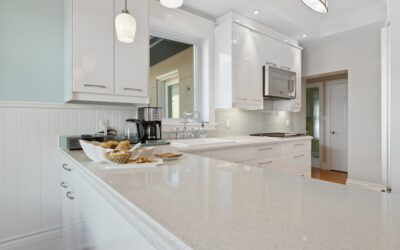
Polished black granite shows every fingerprint, water spot, and crumb, which is exactly why more homeowners are choosing a different finish on the same gorgeous stone. Black Pearl leathered granite takes one of the most popular dark granites and gives it a soft, matte, textured surface that hides smudges, resists glare, and adds a tactile, organic feel that polished stone can’t match. The result is a countertop that looks sophisticated, reads contemporary, and proves far more forgiving in a busy kitchen. Here’s what makes this stone and finish combination so appealing, and what you should know before committing.
Part of our Countertops guide — explore the full guide →
What Black Pearl Granite Is
Black Pearl is a natural granite quarried primarily in India, prized for its deep charcoal-to-black background flecked with shimmering silver, gray, and pearlescent minerals. Those reflective specks give the stone subtle depth and movement, especially as light shifts across the surface throughout the day.
Because it’s a genuine natural stone, every slab varies. Some lean nearly solid black with fine sparkle, while others show more pronounced gray clouding and larger mineral flecks. That variation is part of the appeal, but it also means you should view your actual slabs before purchase.
Understanding the Leathered Finish
The finish is what sets this option apart. A leathered finish is created by running diamond-tipped brushes over the honed stone, producing a soft sheen and a gently textured surface that feels almost like fine leather. It sits between a glossy polished finish and a flat matte honed finish.
Functionally, this texture is a quiet superpower in a kitchen. It hides fingerprints, water spots, and minor smudges that would scream on a polished black counter. It cuts glare under bright lighting, and it deepens the stone’s color, making Black Pearl look richer and more saturated than its polished version.
Why People Choose It
The advantages add up quickly for anyone who actually cooks and lives in their kitchen:
- Hides smudges: Fingerprints, dust, and water marks practically disappear.
- No glare: The matte texture reads softer and more modern than high-gloss black.
- Richer color: Leathering intensifies the dark tone and brings out the mineral sparkle.
- Hides minor wear: Small scratches and etching are far less visible than on polished stone.
- Tactile appeal: The subtle texture adds a high-end, custom feel.
Durability and Performance
Granite is one of the hardest countertop materials available, and Black Pearl is no exception. It resists scratches and heat well, standing up to hot cookware better than engineered quartz, though using trivets is still wise to protect any sealer. The leathered texture does an excellent job camouflaging the everyday nicks that would show on a polished surface.
One thing to know: the textured surface can collect a bit more dust or crumbs in its micro-valleys than a slick polished top, so it benefits from regular wiping. That’s a minor trade for the smudge-hiding payoff, and most owners find the texture cleans easily with a simple cloth.
Sealing and Maintenance
Like all natural granite, Black Pearl is porous and needs sealing, though dark, dense granites like this one tend to be less absorbent than lighter stones. Apply a quality penetrating stone sealer at installation and reseal periodically, typically every one to three years depending on use. Test by dropping water on the surface; if it soaks in and darkens the stone within a few minutes, it’s time to reseal.
For daily cleaning, use warm water with a pH-neutral stone cleaner or a drop of mild dish soap, and wipe with a soft cloth. Avoid acidic cleaners like vinegar and lemon, harsh abrasives, and bleach, all of which can degrade the sealer and dull the finish over time. Wipe spills promptly, especially oils and acidic foods, even though leathered surfaces hide marks better than polished ones.
Cost Expectations
Black Pearl is generally considered a mid-range granite, more affordable than exotic imported stones but priced above the most basic options. Installed costs typically run somewhere in the range of $50 to $90 per square foot, with the leathered finish often adding a modest premium over a standard polished finish because of the extra fabrication step.
Final pricing depends on your region, the slab thickness, the edge profile, and the complexity of your layout, things like cutouts, seams, and overhangs all factor in. Always get an itemized quote from a fabricator and confirm whether the leathered finish carries an upcharge. Ordering a small overage isn’t usually relevant for slab counters, but you should view and approve your specific slabs given the natural variation.
Is It Right for Your Kitchen?
Choose Black Pearl leathered granite if you love the drama of a dark countertop but can’t stand the maintenance of polished black, which shows everything. It pairs beautifully with white, gray, or natural wood cabinets and suits both modern and transitional kitchens. If you prefer a high-shine, reflective look or want the absolute lowest-maintenance surface, polished granite or quartz might serve you better. But for a forgiving, richly textured dark counter, this combination is hard to beat.
Leathered vs. Polished vs. Honed
Choosing the finish is as important as choosing the stone, so it helps to compare your three options directly. Polished gives a glossy, reflective surface that shows off the mineral sparkle but also reveals every fingerprint, water spot, and crumb, a high-maintenance look on dark stone.
Honed produces a flat, matte surface with no shine, soft and contemporary but prone to showing oils and watermarks on dark granite. Leathered splits the difference: a soft, low sheen with subtle texture that hides smudges, cuts glare, and deepens the color. For a dark stone like Black Pearl that lives in a busy kitchen, leathered is usually the most practical and forgiving choice of the three.
Edge Profiles and Design Pairings
The edge profile shapes how the finished counter reads. A simple eased or straight edge complements the modern, textured look of leathered granite and is easy to keep clean. A more decorative ogee or bullnose edge leans traditional and can pair well in a transitional kitchen, though it adds fabrication cost.
As for design, Black Pearl’s dark, neutral tone is remarkably flexible. It pairs crisply with white shaker cabinets for a high-contrast, classic look, warms up beautifully against natural wood, and creates a sleek, monochromatic feel with gray cabinetry. A light backsplash keeps the space from feeling heavy, while a waterfall island edge showcases the stone’s depth. The leathered texture adds a tactile, custom quality that elevates almost any cabinet style.
Final Thoughts
Black Pearl leathered granite delivers the bold elegance of dark stone with a soft, practical finish that hides the smudges and glare that frustrate polished-black owners. It’s durable, heat-resistant, and reasonably priced, asking only for periodic sealing and routine cleaning in return. View your actual slabs, confirm any finish upcharge, and seal it on schedule, and you’ll get a striking, low-fuss countertop that looks custom and lives easy.