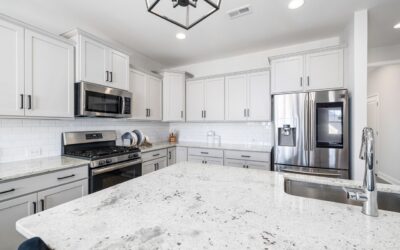
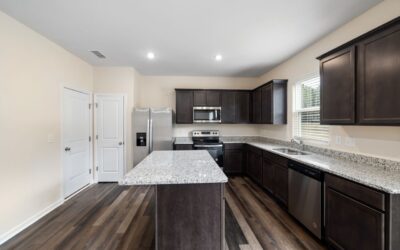
Walk into any stone yard and you will see hundreds of slabs stacked like giant playing cards, and every one of them looks like a good idea until you try to narrow it down. The truth is that the best granite options for your kitchen depend on far more than color. Grade, finish, edge profile, thickness, and how the veining flows across a slab all change the final look and the price. This guide breaks down the real choices so you can shop like a fabricator instead of guessing.
Part of our Countertops guide — explore the full guide →
- Slab Granite vs. Granite Tile
- Understanding Granite Grades
- Color and Pattern Choices
- Finish Options: Polished, Honed, and Leathered
- Edge Profiles That Fit Your Style
- Thickness and Overhangs
- Sealing and Long-Term Care
- Granite vs. Other Countertop Materials
- Where to Buy and How to Inspect a Slab
- Matching Granite Options to Your Budget
Slab Granite vs. Granite Tile
Your first decision is format. Full slabs are cut from a single block of stone and typically run 9 to 10 feet long by 5 to 6 feet wide. They give you that seamless, high-end countertop with few or no visible joints. Granite tile, usually 12 by 12 inches or 18 by 18 inches, costs far less and can be installed by a confident DIYer, but you live with grout lines that collect grime and interrupt the pattern.
For a primary kitchen counter, most homeowners go with slabs because resale value and durability justify the expense. Tile makes sense on a laundry room counter, a small bar top, or a budget flip where every dollar counts. Expect slab granite installed to land between $50 and $120 per square foot, while tile can come in under $15 per square foot if you do the labor yourself.
Understanding Granite Grades
Granite is sold in loose grades that reflect rarity, thickness, and the amount of soft filler minerals in the stone. There is no single governing body, so grades vary by supplier, but the general tiers hold up across the industry.
- Entry level (commercial grade): Common colors like Uba Tuba, Santa Cecilia, and speckled tans. Often thinner at around 3/4 inch and sometimes backed for extra support. Best pricing.
- Mid grade: More consistent color, better thickness at 1 1/4 inch, and cleaner veining. This is where most kitchens end up.
- Premium and exotic: Rare colors, dramatic movement, blues, reds, and translucent stones sourced from limited quarries. Prices climb quickly and slabs may be sold as one-of-a-kind.
A higher grade is not automatically better for your project. A tight, uniform mid-grade slab often photographs and wears better than a busy exotic that fights your cabinets.
Color and Pattern Choices
Color drives the emotional decision, and granite offers a genuinely wide range. Cool grays and blacks like Steel Gray and Absolute Black read modern and hide crumbs. Warm browns and golds such as Baltic Brown and Giallo Ornamental pair well with cherry and oak cabinetry. Whites and creams with gray veining, including Alaska White and Colonial White, mimic marble at a lower maintenance cost.
Pattern matters as much as color. Speckled or “salt and pepper” granite hides seams and everyday mess, making it forgiving for busy families. Stones with long, sweeping veins or large mineral clusters demand careful slab layout so the movement lands where you want it. Always view the actual slabs you will receive, not just a sample chip, because a two-inch sample cannot show how a pattern behaves across a six-foot run.
Finish Options: Polished, Honed, and Leathered
Finish changes both the look and the feel of the stone. A polished finish is the classic glossy surface that reflects light, deepens color, and resists staining best because the pores are sealed tight by grinding. It is the most popular choice and the easiest to wipe down.
Honed granite has a matte, satin surface with no shine. It looks soft and contemporary, but it shows fingerprints, water spots, and oil more readily and needs more diligent sealing. Leathered granite falls in between, with a textured, slightly rippled surface that hides smudges beautifully and adds grip. Leathered finishes have become a favorite on darker stones where a high polish can look severe.
Edge Profiles That Fit Your Style
The edge is a small detail that quietly sets the tone of the whole counter. Fabricators offer a menu of profiles, and some cost more because they require extra grinding passes.
- Eased or straight: A clean square edge with a tiny softened corner. Modern and usually included in base pricing.
- Bullnose: A fully rounded edge that is soft to the touch and kid friendly.
- Bevel: A 45-degree cut that adds a crisp, tailored line.
- Ogee: An S-shaped curve for traditional and formal kitchens. Expect an upcharge of several dollars per linear foot.
Match the edge to the room. A sleek beveled edge suits a contemporary space, while an ogee flatters raised-panel cabinetry and ornate hardware.
Thickness and Overhangs
Granite slabs come in two standard thicknesses: 2 centimeters (about 3/4 inch) and 3 centimeters (about 1 1/4 inch). Three-centimeter stone is now the default for kitchen counters because it can span cabinet runs and moderate overhangs without a plywood substrate. Two-centimeter stone is lighter and cheaper but usually needs a support layer, which can add labor.
If you want a raised bar or an island overhang beyond 10 to 12 inches, plan for steel corbels or flat metal brackets to prevent cracking. Talk to your fabricator about support before you fall in love with a dramatic cantilever.
Sealing and Long-Term Care
Granite is porous, so most slabs need a penetrating sealer to resist stains from wine, oil, and citrus. Many fabricators apply a factory-quality sealer at installation, and you can refresh it every one to three years. To test whether your counter needs sealing, drip a tablespoon of water on the surface. If it soaks in and darkens within a few minutes, it is time to reseal.
Daily care is simple. Wipe with a soft cloth and a pH-neutral stone cleaner or a splash of dish soap in warm water. Skip vinegar, bleach, and abrasive pads, which dull the finish over time. Use a cutting board and trivets even though granite tolerates heat and knives better than most surfaces.
Granite vs. Other Countertop Materials
Understanding how granite stacks up against the alternatives helps you decide whether it is the right choice at all. Compared with engineered quartz, granite offers unique, natural veining and better heat resistance, but it requires periodic sealing that quartz does not. Against marble, granite is harder, more scratch resistant, and far less prone to etching from acidic spills, which is why kitchens lean granite while marble stays in lower-use bathrooms.
Laminate and solid surface counters cost less than granite, but they lack the durability, heat tolerance, and resale appeal of natural stone. Granite also generally boosts home value more than budget surfaces because buyers recognize it as a premium material. If you cook often, want a surface that shrugs off hot pans, and value a one-of-a-kind look, granite earns its place. If you never want to seal a counter again, quartz may edge it out.
Where to Buy and How to Inspect a Slab
You have two main buying paths: a full-service stone yard or a big-box retailer that bundles fabrication and installation. Stone yards let you walk the warehouse and hand-select the exact slab you want, which matters most for dramatic or exotic stones where movement varies wildly from piece to piece. Retailers offer convenience and simpler pricing but usually a narrower selection.
When you inspect a slab in person, look at it under good light and stand it upright rather than judging from a small sample. Check for hairline cracks, fissures, and pits, and run your hand across the surface to feel for weak spots or soft filler. Tag the specific slab so the fabricator cuts the piece you approved. Photograph it next to your cabinet and floor samples so you can confirm the color works before the templating crew arrives.
Matching Granite Options to Your Budget
To keep costs predictable, decide which granite options you truly need before you shop. A common color in a 3-centimeter slab with an eased edge and a polished finish delivers a durable, attractive counter for the lowest realistic price. Upgrades like exotic colors, leathered finishes, ogee edges, and thick mitered aprons each add up.
Get quotes from at least two fabricators and confirm what is included: template, cutting, sink cutouts, backsplash, edge profile, and sealing. Ask about remnants for small vanities or a coffee bar, since leftover pieces from larger jobs often sell at a steep discount. With a clear grasp of the choices, you can pick granite that looks custom, fits your kitchen, and stays within budget for decades of daily use.