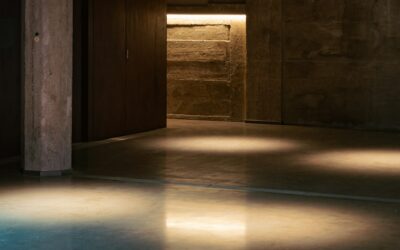
Here is the mistake that ruins most dark concrete floors: homeowners buy an acid stain labeled “black” and end up with a mottled brown or charcoal gray. Black stained concrete is achievable, but true black almost always comes from a dye or a water-based penetrating stain, not a reactive acid stain. Product choice, surface prep and the sealer decide whether the floor looks like polished stone or a patchy garage slab.
The short answer: for a deep, even black, open the surface with grinding or a mild etch, apply a solvent or water-based concrete dye (or a black water-based stain) in two thin, cross-hatched coats, then lock it in with a sealer that adds depth, such as a solvent-based acrylic, a penetrating densifier with guard, or a clear epoxy or urethane system. If you want variation and an aged look, an acid stain in a dark tone can serve as a base layer under black dye.
- Why Black Stained Concrete Is Hard to Get Right
- Choosing the Right Product: Acid Stain vs Dye vs Water-Based Stain
- Tools and Materials
- Safety Before You Start
- Step-by-Step: Staining Concrete Black
- Layering for Depth and Richness
- Sealing Black Stained Concrete for Lasting Color
- Troubleshooting Common Problems
- Cost Overview
- When to Call a Pro
- Frequently Asked Questions
Staining concrete black is popular in modern lofts, basements, retail spaces and garages, and it pairs well with light walls, warm wood and metal accents. It also hides dirt better than you might expect, though dust and scuffs show on high-gloss finishes.
Why Black Stained Concrete Is Hard to Get Right
Acid stains are not paints. They contain metallic salts that react with the calcium hydroxide in cured concrete, and the color they produce depends on the slab’s lime content, age, aggregate and finishing history. The reaction can produce rich browns, ambers and green-blacks, but there is no metal salt chemistry that produces a pure, neutral black on every slab. That is why a “black” acid stain often dries to a dark brown, charcoal or blotchy gray.
Concrete is also uneven by nature. Troweled areas near walls are denser than the middle of the floor, patches absorb differently, and sealers, adhesives or curing compounds left on the surface block any stain. A dark color magnifies all of these differences. With light stains, mottling looks like character; with black, it looks like a mistake unless you plan for it.
Choosing the Right Product: Acid Stain vs Dye vs Water-Based Stain
Acid Stain
Best for variegated, marbled color. In black or near-black tones it gives a dramatic, aged, almost leather-like finish but rarely a uniform black. It works only on bare, reactive concrete and must be neutralized and rinsed afterward.
Concrete Dye
Dyes use very fine colorants dissolved in solvent, acetone or water. They penetrate the pores without relying on a chemical reaction, so black dye produces a true, saturated black on almost any concrete. Dyes are the go-to for black polished concrete because they work hand in hand with grinding and densifying. Their weakness is UV: some dyes fade in direct sun, so check the label before using them near large windows or outdoors.
Water-Based Penetrating Stain
These contain finely ground pigments in an acrylic or similar carrier. They give a predictable, opaque to semi-transparent color, are UV stable, low odor and easy to apply with a sprayer or roller. They suit garages, basements and patios. Because pigment sits partly at the surface, they rely more on the sealer for durability.
For most homeowners chasing a solid black, a water-based stain or a dye is the right concrete stain. Acid stain is the choice only if you want variation and accept that the result will lean dark brown or charcoal.
Tools and Materials
- Black concrete dye or water-based black concrete stain (enough for two coats)
- Concrete cleaner or degreaser, and an etching solution or grinder with 30 to 100 grit diamonds for prep
- Pump-up sprayer with a cone tip (plastic, acid-resistant if using acid stain)
- Microfiber pad, short-nap roller or soft brush for back-rolling
- Low-speed buffer or floor scrubber (helpful for large areas)
- Wet vacuum, mop and buckets for rinsing
- Painter’s tape and plastic sheeting to protect walls
- Sealer: solvent or water-based acrylic, densifier with guard, or clear epoxy/urethane
- Safety gear: chemical-resistant gloves, safety goggles, respirator rated for the product, rubber boots
Safety Before You Start
Staining products and sealers can release strong vapors. Ventilate thoroughly with open doors and box fans pulling air outside, and wear the respirator the product label calls for. Use chemical-resistant gloves and eye protection, especially with acid stains and solvent dyes. Never mix stains, etching acids, cleaners or neutralizers together unless the manufacturer instructs it; some combinations release toxic gases.
Solvent and acetone-based dyes and many sealers are flammable. Turn off pilot lights on water heaters and furnaces in basements and garages, keep vapors away from any open flame or spark source, and do not run gas-powered equipment in the space while applying them. Store rags in a sealed metal container or lay them flat outside to dry.
Step-by-Step: Staining Concrete Black
- Test the slab. Sprinkle water on the floor. If it darkens and soaks in within a minute, the concrete is porous enough to stain. If it beads, a sealer or curing compound remains and must be removed by grinding or a stripper.
- Clean and prep. Remove paint, mastic and oil. For a dye or polished finish, grind with metal-bond diamonds and progress through resin grits to the sheen you want. For a water-based stain on a basic slab, scrub with a degreaser and lightly profile with a mild etch or 80 grit sanding, then rinse well and let dry at least 24 hours.
- Do a test patch. Stain a 2 by 2 foot area in a closet or corner, seal it, and look at it dry. Black can read blue, brown or green depending on the slab and dye base.
- Mask the room. Tape baseboards, walls and fixtures. Dye spatters are nearly impossible to remove from drywall.
- Apply the first coat. Spray in overlapping circles, keeping a wet edge, then back-roll or wipe with a microfiber pad to even out the color. Work in manageable sections.
- Apply the second coat. After the first coat dries per the label, usually 1 to 4 hours for water-based products, spray the second coat in a cross direction. Two thin coats beat one heavy coat that leaves puddles and lap marks.
- Remove residue. For acid stain, neutralize and rinse until the water runs clear. For dyes, buff off any loose colorant with a dry pad so it does not smear into the sealer.
- Seal. Apply your sealer in thin, even coats. A solvent-based acrylic or clear epoxy deepens black dramatically and gives a wet look; a matte water-based sealer keeps it softer and more modern.
Layering for Depth and Richness
A flat, single-tone black can look like paint. Many installers layer to add depth. One approach is to apply a dark brown or charcoal acid stain first, neutralize, then mist black dye over it. The acid stain creates subtle variation underneath while the dye pulls everything toward black. Another approach is to apply black dye, then lightly mist a dark gray or deep blue over selected areas before sealing.
For dark polished concrete, the dye is typically applied after a mid-grit polish (around 400 grit), then densified and polished further. The higher the polish, the deeper and more reflective the black appears. Exposing a little aggregate before dyeing also gives a speckled granite-like effect that hides wear.
Sealing Black Stained Concrete for Lasting Color
The sealer does as much work as the stain. Black shows white haze, scuffs and dust more than any other color, so pick a sealer that is non-yellowing and suited to the traffic. Acrylic sealers are affordable and easy to recoat but wear in high-traffic zones and can blush white if moisture is trapped. Epoxy and polyurethane systems are far tougher and suit garages and kitchens; urethane resists hot-tire pickup and UV better than epoxy alone. On polished floors, a densifier plus a penetrating guard keeps the natural look.
Add a thin coat of floor wax or finish in high-traffic interiors so that the sacrificial layer, not the sealer, takes scratches. Use a slip-resistant additive in garages, entries and wet areas.
Troubleshooting Common Problems
Color came out brown or gray: Typical of acid stain on black. Mist a black dye or water-based stain over it before sealing.
Blotchy patches: Usually leftover sealer, glue or a dense troweled area. Spot-grind and re-dye those areas, feathering into the surrounding color.
White haze after sealing: Moisture trapped under a solvent acrylic. Often fixed by re-wetting with the correct solvent per the label; otherwise strip and reseal.
Lap marks: Caused by uneven coverage. Add a light third coat applied in a different direction and back-rolled.
Fading near windows: A non-UV-stable dye. Switch to a UV-stable stain or a sealer with UV inhibitors for sunny rooms.
Cost Overview
DIY materials for staining concrete black generally run around $0.50 to $2 per square foot including dye or stain, cleaner and sealer, rising if you rent a grinder or choose an epoxy topcoat. Professional stained floors commonly fall around $3 to $8 per square foot, while black polished concrete with grinding, dye, densifier and polishing usually costs more, often $5 to $12 per square foot, depending on slab condition and region.
When to Call a Pro
Hire a decorative concrete contractor for polished finishes, large open floor plans, slabs with heavy coatings or glue, or exterior work where moisture and UV exposure complicate the system. A pro also helps if the slab has moisture problems or cracks that need repair first. If you are removing old floor coverings from a pre-1980s home, have the adhesive and flooring tested for asbestos before grinding or scraping.
Frequently Asked Questions
Can acid stain turn concrete solid black?
Rarely. Acid stain reacts with the slab’s lime, which usually yields dark brown, charcoal or green-black. Use a dye or water-based stain for a solid black.
How many coats does black stained concrete need?
Plan on two thin coats applied in crossing directions. A third light coat can fix uneven spots before sealing.
Is black polished concrete hard to maintain?
It is durable, but dust, footprints and scratches show more on dark gloss. Dust mop daily in busy areas and use a pH-neutral cleaner.
What sealer makes black concrete look deeper?
A solvent-based acrylic or clear epoxy or urethane gives the richest wet look. Matte water-based sealers give a softer finish.
Can I stain a garage floor black?
Yes. Use a UV-stable water-based stain or dye, then seal with a hot-tire-resistant urethane or epoxy system and add slip-resistant grit.