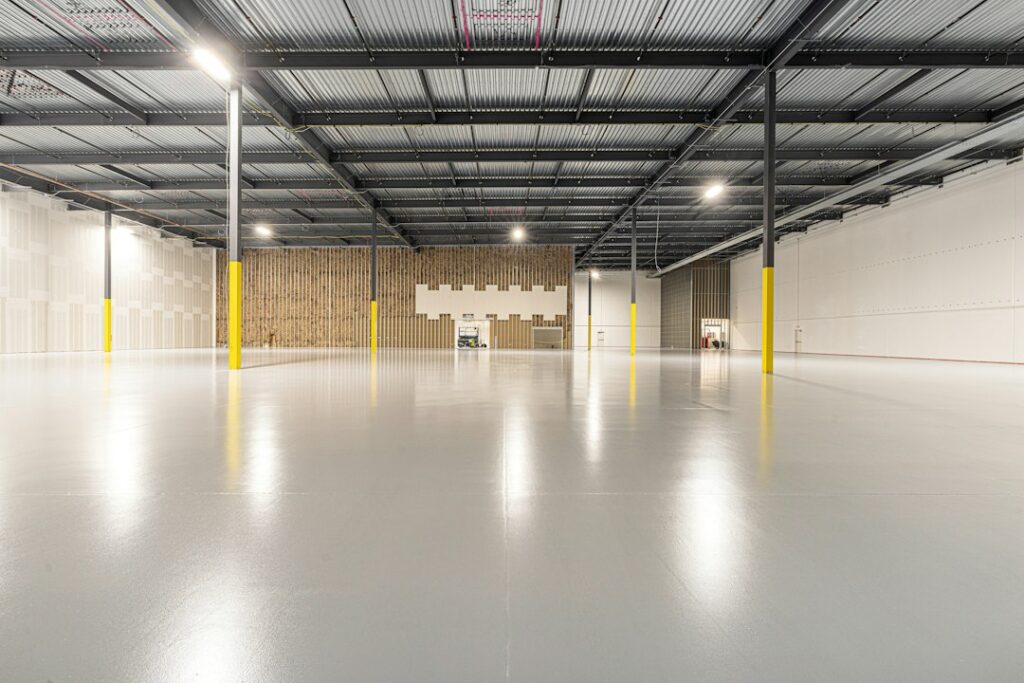
A gray floor sounds like the easiest stain job there is, since concrete is already gray. In practice, gray stained concrete is one of the harder looks to get right: acid stains drift toward brown and green, translucent stains let the slab’s own blotches show through, and the wrong sealer can turn a cool gray into a yellowed beige within a year. The product you choose, and the topcoat you put over it, matter more than the color name on the label.
The short answer: for a predictable cool gray, greige or white-gray on an interior slab, use a water-based concrete stain (semi-transparent for variation, more opaque for uniformity), test it on the actual floor, and seal it with a non-yellowing water-based polyurethane or acrylic rather than a solvent-based acrylic. Acid stain can produce gray only in limited, mottled versions and is better for warm earth tones.
- How Gray Stained Concrete Gets Its Color
- Choosing Your Tone: Cool Gray, Greige and White Gray
- Testing the Color Before Staining the Whole Floor
- Tools and Materials
- Step-by-Step: Staining an Interior Slab Gray
- Sealing Gray Stained Concrete Without Yellowing
- Chemical Safety
- Troubleshooting and Costs
- Frequently Asked Questions
How Gray Stained Concrete Gets Its Color
Two very different chemistries go by the name concrete stain, and they behave differently with gray.
Acid (reactive) stain
Acid stains contain metallic salts and a mild acid that react with the lime in cured concrete. The result is permanent, variegated and translucent, but the color palette is limited by chemistry. Most acid stains produce browns, tans, amber and blue-green. A few “black” or “gray” acid stains exist, but the outcome on an average slab tends to look charcoal-brown or mottled green-gray. Every slab reacts differently, so results are hard to predict.
Water-based (non-reactive) stain
Water-based stains carry pigment or dye particles that penetrate the surface and bond to it without a chemical reaction. They are available in almost any color, including cool grays, warm greiges, near-whites and charcoals, and the color you test is close to the color you get. You can thin them for translucency or apply additional coats for more opacity.
Dyes and tinted sealers
Solvent- or water-based concrete dyes give vivid, translucent color and are popular on polished floors. Tinted sealers add a light wash of color in the sealer itself, but the color wears with the topcoat, so they are better for refreshing a floor than for a primary color.
Choosing Your Tone: Cool Gray, Greige and White Gray
Grey stained concrete comes in more variations than most people expect. Think about undertone before you pick a sample.
- Cool gray has a blue or green undertone and reads modern and crisp, especially with white walls and black metal. It can feel cold in rooms with little natural light.
- Greige blends gray and beige. It warms the room, hides dust and dog hair, and pairs well with wood furniture.
- Charcoal hides scuffs and creates drama but shows lint, dust and water spots.
- White gray brightens basements and narrow rooms. White grey stained concrete floors usually need a semi-opaque water-based stain, since translucent products cannot lighten a slab that is darker than the stain.
Remember that stain is translucent to some degree. The natural shade of the concrete, trowel marks, patches and old adhesive residue all show through. On a dark or patchy slab, a lighter gray requires more opacity, which can approach a painted look.
Testing the Color Before Staining the Whole Floor
Always make test patches on the actual slab, in a closet or under a future rug. Prepare the test area exactly as you will prepare the floor, apply the stain at the planned dilution and number of coats, let it dry, then apply the sealer you intend to use. Sealer darkens and saturates color, so an unsealed test is misleading. Look at the patch in daylight and under the room’s lights, morning and evening.
Tools and Materials
- Water-based concrete stain in your chosen gray, or acid stain if you accept variation
- Concrete cleaner or degreaser, and a pH-neutral rinse
- Floor scrubber or stiff brush, wet vacuum, and a grinder or sanding pad for coatings
- Pump sprayer with acid-resistant parts if using acid stain, or a dedicated sprayer for water-based stain
- Microfiber pads, brushes and rollers sized for the sealer
- Non-yellowing water-based sealer or polyurethane topcoat
- Painter’s tape and plastic to protect walls and trim
- Chemical-resistant gloves, eye protection and a respirator rated for the product
Step-by-Step: Staining an Interior Slab Gray
- Check the slab. New concrete should cure for about 28 days. On existing floors, remove carpet, tile and adhesive. Sprinkle water on the surface: if it soaks in within a few minutes, the floor is porous enough to accept stain. If it beads, grind or sand off old sealers and coatings.
- Clean thoroughly. Scrub with a concrete cleaner, remove grease, paint drips and drywall mud, then rinse with clean water until no residue remains. Let the floor dry completely, typically 24 hours.
- Repair and patch. Fill cracks and holes. Patches absorb stain differently, so test the color over a patched area too.
- Mask and ventilate. Tape the base of walls and cover anything you do not want stained. Open windows and run fans.
- Apply the stain. Spray in overlapping circular or random passes for a mottled look, or spray and back-roll for uniform color. Keep a wet edge and work from the far corner toward the exit.
- Build color. Let the first coat dry per the label, often 1 to 4 hours, then add a second coat if needed. For a lighter, more translucent gray, dilute the stain with water within the maker’s limits.
- Neutralize and rinse acid stain. If you used acid stain, neutralize with a baking soda or ammonia solution as directed, then rinse until the water runs clear. Skipping this step causes sealer failure.
- Seal. Apply two thin coats of sealer, allowing the specified dry time between coats. Avoid heavy puddles, which can turn cloudy.
- Protect while curing. Allow light foot traffic after about 24 hours and furniture after several days. Most water-based topcoats reach full cure in 7 days or more.
Sealing Gray Stained Concrete Without Yellowing
Yellowing is the most frequent complaint on gray floors. Solvent-based acrylic sealers and some epoxies amber with UV exposure and age, and that faint yellow cast pushes gray toward tan. For a light or cool gray, choose:
- Water-based acrylic sealer for low-traffic rooms. It is inexpensive and easy to recoat but needs periodic reapplication.
- Water-based polyurethane for kitchens, living areas and hallways. It resists scuffs and stays clear.
- Aliphatic urethane or polyaspartic topcoats for maximum durability. These are UV-stable and do not yellow, but they are harder for DIYers to apply.
Pick a satin or matte sheen if you want the floor to look like natural stone. High gloss intensifies color and shows every scratch.
Chemical Safety
Acid stains, cleaners, neutralizers and solvent sealers release vapors that can irritate lungs, eyes and skin. Ventilate the space with open windows and fans, wear a respirator suitable for the product (check the label and safety data sheet), plus chemical-resistant gloves and eye protection. Never mix acid stains with bleach, ammonia-based cleaners or other chemicals. Keep flammable solvent sealers away from pilot lights, furnaces, water heaters and sparks, and shut off gas appliances in the area while vapors are present. Store and dispose of leftover products according to local rules.
Troubleshooting and Costs
- Blotchy or patchy color: old adhesive or sealer residue. Grind the affected spots and re-stain, or switch to a more opaque water-based stain.
- Floor looks greenish: common with acid stain. Overlay a water-based gray or apply a lightly tinted sealer.
- Color rubs off: stain applied over a sealed or dirty surface, or acid stain residue left on the floor. Clean, rinse and re-apply.
- Sealer turns white or cloudy: moisture trapped under solvent sealer or coats too thick. Strip the sealer and recoat in thin layers.
A DIY stain and seal job on an existing slab usually costs well under a few dollars per square foot in materials. Professional staining typically ranges from a few dollars to several dollars per square foot, more if the slab needs heavy grinding, crack repair or a high-performance topcoat.
Hire a pro for large open areas, slabs with old mastic that may contain asbestos, polished concrete, or when you want an aliphatic urethane or polyaspartic topcoat. A specialist can also blend multiple grays for a custom, stone-like gray stained concrete finish.
Frequently Asked Questions
Can you acid stain concrete gray?
Only partially. A few acid stains produce gray or black tones, but results often lean charcoal-brown or green-gray and vary across the slab. Water-based stain is the reliable route to a clean gray.
Why did my gray concrete floor turn yellow?
Most likely the sealer. Solvent-based acrylics and some epoxies amber with age and sunlight. Strip the sealer if needed and use a non-yellowing water-based polyurethane or UV-stable urethane.
Can you stain dark concrete a lighter gray?
Translucent stains cannot lighten concrete. To get a lighter white-gray on a darker slab, use a semi-opaque water-based stain or a concrete coating.
How long does stained concrete last?
The stain itself is long lasting because it penetrates the surface. The sealer wears with traffic and usually needs a maintenance coat every 1 to 3 years for acrylics and longer for urethanes.
Do I need to seal gray stained concrete?
Yes. Sealing protects the color from wear, stains and moisture, and deepens the tone. Choose a non-yellowing water-based sealer for gray and white-gray finishes.