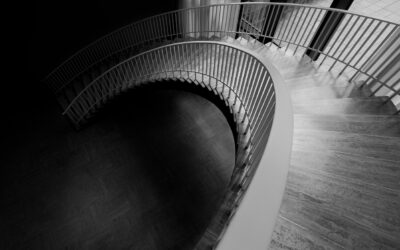
Dark stairs make a bold first impression, but they also reveal dust, dog hair, and scuffs faster than almost any other finish. Black stair treads are a popular choice in modern farmhouse, industrial, and contemporary homes because they create strong contrast against white risers and light walls. Whether they become the best design decision in your house or a daily cleaning chore depends on the material, sheen, and safety details you choose. Here is what you should know before you commit.
Part of our Stairs & Stair Flooring guide — explore the full guide →
Why Choose Black Stair Treads
Black treads anchor a staircase visually. Paired with white or light gray risers, they create a crisp graphic rhythm that makes the stairs a focal point instead of an afterthought. They also tie in easily with matte black light fixtures, iron balusters, and dark window frames, which have become common in new construction since about 2018.
Practically, black treads hide stains well. Coffee drips, muddy footprints, and grease marks that would stand out on natural maple are nearly invisible on a dark surface. They can also help disguise older treads with mismatched species or patches after a remodel.
The trade-off is visibility of light-colored debris. Dust, lint, sand, and pet hair from light-coated breeds show up clearly, particularly in direct sunlight from a stairwell window. If you have a golden retriever or a white cat, be ready to vacuum more often or choose a slightly softer charcoal instead of true jet black.
Material Options for Black Treads
You can get a black finish on almost any tread material. The material decides durability, cost, and how the finish ages.
Stained or Painted Hardwood
Red oak and white oak are the most common tread species. Oak’s open grain takes an ebony stain well, and the grain still shows through, giving depth instead of a flat painted look. Expect $50 to $120 per tread for unfinished 36-inch oak, plus finishing. Painted maple or poplar produces a smoother, more uniform black but chips at the nosing over time, exposing lighter wood underneath.
Prefinished Hardwood
Factory-finished treads with an aluminum oxide topcoat are harder than site-applied polyurethane and arrive ready to install. Prices run $80 to $180 per tread. The finish is tough but difficult to touch up invisibly if scratched.
Metal
Powder-coated steel treads suit industrial and open-riser stairs, especially exterior or basement stairs. Diamond-plate or perforated steel adds grip. Custom fabricated treads often cost $100 to $300 each.
Luxury Vinyl and Laminate Stair Nose Kits
Black or near-black LVP stair treads are an affordable option for covering existing carpet-grade stairs. Kits typically cost $30 to $70 per step, including the nosing. They resist moisture and scratches but look less authentic up close than real wood.
Rubber
Commercial rubber treads in black are nearly indestructible and slip resistant. They fit basement, garage, and utility stairs well but look out of place in a finished living area.
Finish and Sheen: The Detail That Matters Most
Sheen is the single biggest factor in how black stair treads live day to day. High-gloss black looks dramatic in photos but shows every scratch, footprint, and swirl. It is also slipperier, particularly in socks.
Matte and satin finishes are the practical sweet spot. A satin polyurethane at roughly 25 to 35 percent gloss softens reflections, hides micro-scratches, and offers better traction. Matte finishes (10 to 20 percent) hide the most but can show oily footprints and require more careful cleaning.
For stained oak, a common sequence is: sand to 120 grit, apply a water popping step to open the grain, apply an ebony or jacobean stain, allow 24 hours to dry, then apply three coats of an oil-modified or waterborne commercial-grade polyurethane. Waterborne finishes stay clearer and won’t amber, which keeps the black truly black rather than drifting toward brown over the years.
If painting, use a urethane-fortified floor and porch enamel or a two-component floor coating rather than standard wall paint. Wall paint will wear through at the nosing in months.
Safety Considerations on Dark Stairs
Dark stairs present a real visibility problem. When every tread is black and the lighting is dim, the edge of each step can blend into the one below, especially for older adults and anyone with reduced depth perception. Building codes generally require stairs to be lit, but good design goes further.
- Contrast the risers: White or light risers define each step edge clearly. This is the classic and most effective approach.
- Add stair lighting: Low-voltage LED riser lights or wall-mounted step lights spaced every two or three steps dramatically improve nighttime safety. Budget $40 to $120 per light installed.
- Consider nosing contrast: Some homeowners add a narrow, subtle anti-slip strip or a slightly lighter nosing edge to mark the lip of each step.
- Improve traction: Clear anti-slip tread tape, a grit additive in the final coat of finish, or a runner in the center of the staircase all reduce slips.
Most residential codes, based on the International Residential Code, call for a minimum tread depth of 10 inches and maximum riser height of 7.75 inches, with nosing projection between 3/4 inch and 1-1/4 inches. Keep those numbers in mind if you are replacing treads, since new material thickness can alter the rise of the top and bottom steps.
Design Pairings That Work
Black treads are versatile, but a few combinations are proven.
- Black treads, white risers, white balusters, black handrail: Classic modern farmhouse. Works with nearly any floor.
- Black treads, black risers, glass or cable railing: Sleek and contemporary, but requires strong lighting and a slip-resistant finish.
- Black treads with natural oak floors: The contrast frames the staircase against warm wood. Make sure the transition at the bottom step is deliberate, not accidental.
- Black treads with a patterned or striped runner: The runner softens the look and adds grip while the black edges frame it neatly.
- Black treads and white oak risers: An unusual reverse combination that feels Scandinavian and warm.
Avoid pairing black treads with dark gray floors of a slightly different undertone. Near-matches look like mistakes. Either match closely or contrast deliberately.
Cost to Install Black Stair Treads
For a typical 13-step straight staircase, here is what to expect.
| Project Type | Typical Total Cost |
|---|---|
| Refinish existing oak treads to black | $900 to $2,200 |
| Paint existing treads and risers | $400 to $1,200 |
| New oak treads, stained black, installed | $2,000 to $4,500 |
| Vinyl or laminate stair kits | $800 to $2,000 |
| Custom steel treads | $2,500 to $6,000 |
Converting a carpeted staircase adds cost. Carpet-grade stairs are usually built from construction plywood or particleboard with no nosing overhang meant to be seen, so you will either cap them with retrofit treads or replace them outright. Retrofit treads are thinner, around 5/8 inch, and designed to sit over existing structure.
Installing and Refinishing Tips
If you are refinishing existing treads, sand every step fully to bare wood. Dark stain exaggerates blotches, leftover finish, and sanding marks. A random orbital sander handles the flat treads, while a detail sander or card scraper handles corners near the skirt board.
Test the stain on the back of a spare tread or the underside of the bottom step first. Oak species vary, and ebony stain can read slightly blue or brown depending on the wood. Some finishers layer a dark walnut stain first, then ebony, to get a rich, deep black that doesn’t look painted.
Work in a sequence that keeps the stairs usable. Finish every other step on day one and the remaining steps on day two, so family members can still climb the stairs by skipping steps. Allow full cure, typically 3 to 7 days for polyurethane, before placing rugs or runners on the treads.
Cleaning and Long-Term Care
Dust is the main enemy of black stairs. A microfiber dust mop or a cordless handheld vacuum used two or three times a week keeps them looking sharp. For deeper cleaning, use a pH-neutral hardwood cleaner sprayed onto the cloth, not directly on the tread, to avoid streaks. Skip vinegar and oil soaps, which can dull the finish and leave a film that shows on dark surfaces.
Expect the nosing to wear first. Plan to lightly screen and recoat the treads every 3 to 5 years in a busy home. A recoat, done before wear reaches the stain layer, costs a fraction of a full refinish and keeps your black stair treads deep and uniform. Keep a small bottle of matching touch-up stain or a black furniture marker on hand for minor chips between recoats.
With the right sheen, good lighting, and a routine cleaning habit, black treads deliver a striking, durable staircase that ages well and anchors the entire entry of your home.