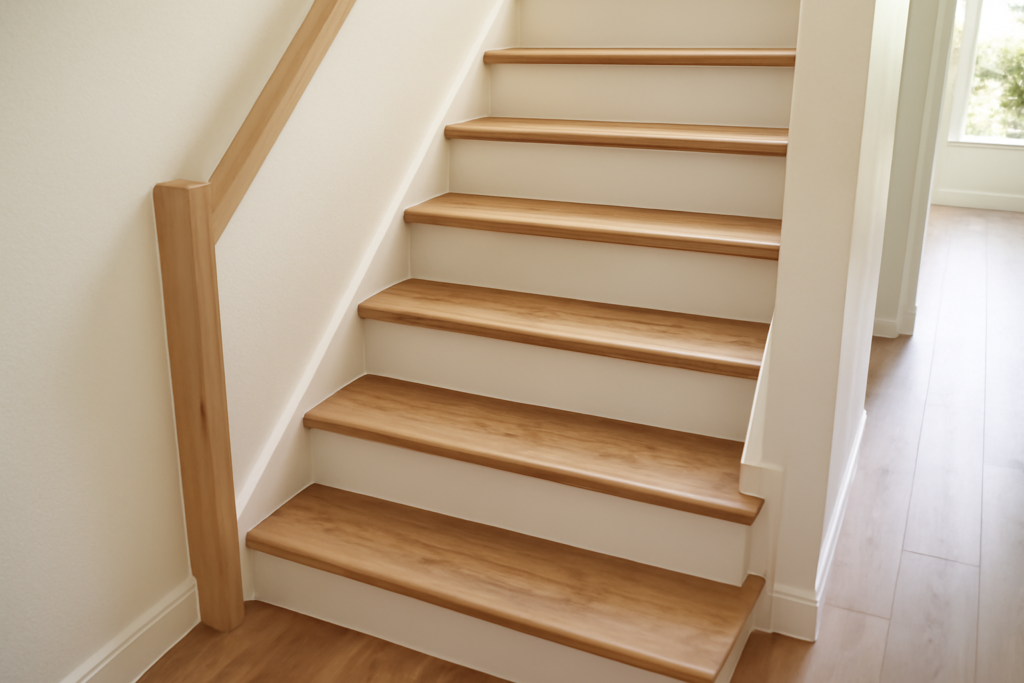
Stairs are one of the trickier parts of any flooring project, and the surface you walk on, the tread, takes the most wear in the whole house. Laminate stair treads give you the wood-look appearance of laminate flooring with the durability and scratch resistance the material is known for, all at a fraction of the cost of solid hardwood treads. They are a popular way to update worn, carpeted, or dated stairs without a major renovation.
This guide explains the types of laminate treads, how installation works, the safety details that matter on stairs, and what the project costs.
What Laminate Stair Treads Are
A stair tread is the horizontal board you step on; the riser is the vertical face between treads. Laminate treads are made from the same high-density fiberboard core and printed wear-layer construction as laminate flooring, formed or finished with a rounded front edge called a bullnose or nosing. They are designed to match laminate floors so a staircase flows seamlessly into adjoining rooms. You can buy pre-made laminate treads or build them from laminate planks plus a matching stair-nose molding.
Types and Components
There are a few ways to surface stairs with laminate:
- Pre-finished laminate treads: ready-made boards cut to standard tread depth with the nosing already shaped.
- Retro-fit or overlay treads: thinner treads designed to install over existing stairs without major demolition.
- Plank plus stair nose: standard laminate flooring planks laid on the tread, finished at the front with a coordinating stair-nose molding.
You will also need matching riser pieces if you want the vertical faces to coordinate, plus the right adhesive and trim. Overlay treads are the easiest route for refreshing existing stairs.
Installation Overview
Laminate stair treads can be a DIY project, but stairs demand precision because the pieces are walked on and must not move. The general process:
- Remove old carpet, tack strips, staples, and any damaged material, then clean and level the bare stair.
- Measure each tread and riser individually; stairs are rarely uniform, so cut pieces to fit each step.
- Dry-fit each piece before gluing to confirm a tight fit at the back and sides.
- Apply a strong construction adhesive rated for the material to the stair, set the riser first, then the tread.
- Secure with a J-roller and weight or finish nails where appropriate, then add the stair-nose molding at the front edge.
- Caulk seams as needed and let the adhesive cure fully before using the stairs.
Unlike a floating laminate floor, stair treads should be fully glued and fastened so there is no movement underfoot.
Safety on Laminate Stairs
Stairs are a leading spot for slips, and laminate can be slick, so safety planning matters:
- Choose treads with a textured or matte finish for better grip rather than a high-gloss surface.
- Add anti-slip treads, strips, or stair runners in households with kids, older adults, or pets.
- Make sure the bullnose nosing is securely fastened, since a loose nose is a trip hazard.
- Keep treads consistent in depth and height so the stair rhythm feels predictable underfoot.
Take your time fastening everything tightly; a stair that creaks or shifts is both annoying and unsafe.
What the Project Costs
Laminate is one of the more affordable ways to finish stairs. Individual laminate treads commonly run $20 to $50 each, with matching risers and nosing adding to the total, while building from planks costs less per step but takes more labor. For a typical staircase of 12 to 15 steps, materials land in the low hundreds. Professional installation adds labor, often $40 to $100 per step depending on your area and the complexity, since stairs are slow, detailed work compared with a flat floor.
Laminate Treads Versus Other Options
It helps to see how laminate treads compare with the alternatives. Solid hardwood treads look and feel premium and can be refinished, but they cost considerably more and scratch more easily. Carpeted stairs are soft and quiet but trap dirt, wear in traffic lanes, and date a home quickly. Vinyl and engineered options offer water resistance for damp areas. Laminate sits in the sweet spot for many homeowners, delivering a convincing wood look with strong scratch resistance at a budget-friendly price.
The main caution with laminate is moisture; it does not love standing water, so for basements or entries that get wet, a waterproof vinyl tread may serve better. For typical interior stairs connecting living spaces, laminate offers an attractive, durable, affordable surface that coordinates seamlessly with laminate floors elsewhere in the home.
Matching Treads to Your Floors
One of laminate’s biggest advantages on stairs is the ability to match or coordinate with adjoining laminate flooring for a continuous, flowing look. If your stairs connect rooms with the same laminate, using matching treads makes the transition feel intentional and built-in. When an exact match is not available, choose a coordinating tone in the same color family rather than a clashing shade, and tie the look together with consistent risers and trim.
Risers deserve a decision too. White-painted risers paired with wood-look treads create a classic, clean contrast that brightens the staircase, while matching the risers to the treads gives a more uniform, modern appearance. Either approach works; the key is making it a deliberate choice rather than leaving mismatched materials behind.
Care and Maintenance
Laminate treads are easy to keep up. Sweep or vacuum regularly to remove grit that can scratch the wear layer, and damp-mop with a laminate-safe cleaner, never soaking the surface, since standing water can swell the core at seams. Wipe spills promptly, use felt pads under anything that sits on the stairs, and place a mat at the bottom landing to catch dirt before it reaches the treads.
Final Thoughts
Laminate stair treads deliver the warm look of wood stairs with strong durability and a budget-friendly price, making them an excellent upgrade over worn carpet or dated treads. Measure each step individually, glue and fasten everything tightly for safety, and choose a textured finish or add anti-slip strips. Done carefully, the result is a coordinated, hard-wearing staircase that ties your laminate floors together throughout the home.
Prefer to explore on your own?
See how new flooring looks in your actual room in seconds — free, no signup.
Try the free Floor Studio →