
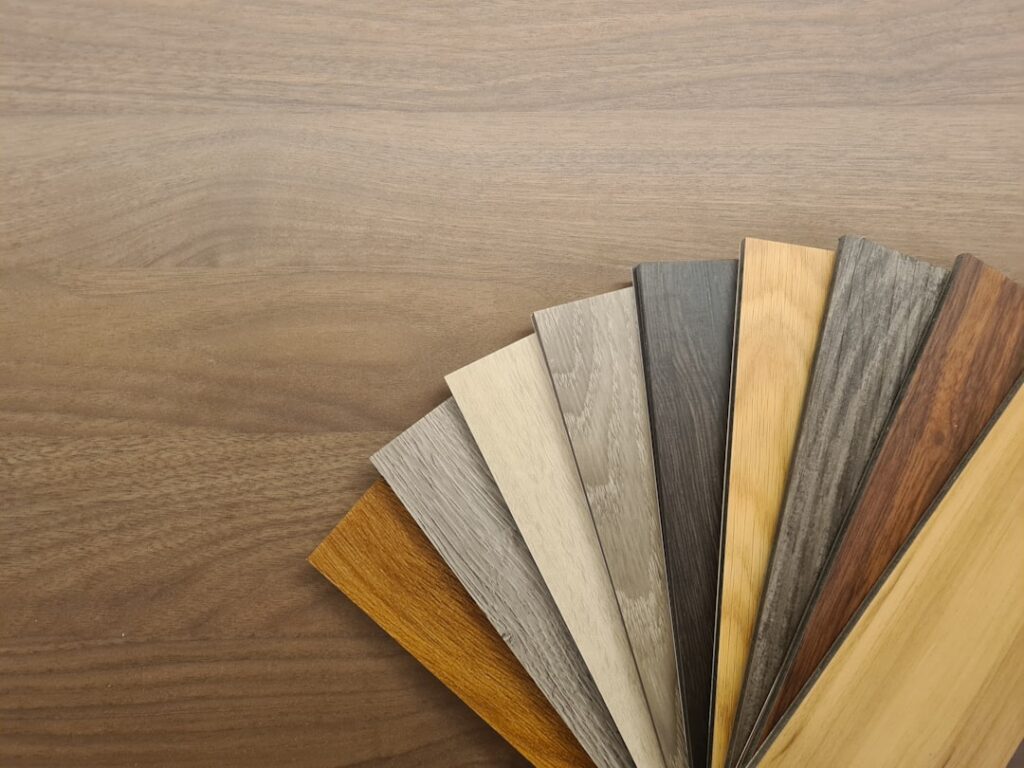
If you are shopping for new flooring in 2026, laminate planks deserve serious consideration. The technology has advanced dramatically, and today’s premium laminate delivers a wood or stone look that rivals far more expensive materials at a fraction of the cost. Having installed laminate in hundreds of homes and commercial spaces over my career, I can confidently say it is one of the smartest value plays in flooring.
This guide covers everything from plank sizes and thickness ratings to click-lock systems, brand comparisons, and step-by-step installation guidance.
Laminate Plank Sizes
Laminate planks come in a wider variety of sizes than most people realize, and the dimensions you choose have a significant impact on the final look of your floor.
Width: Standard laminate planks range from 5 inches to 8 inches wide. Narrow planks (5 inches) create a traditional hardwood strip appearance. Wide planks (7 to 8 inches) deliver the on-trend modern look and show off more of the printed pattern per board. Extra-wide options up to 9.5 inches are available from some premium brands.
Length: Most laminate planks measure 48 inches long, but premium lines offer 54-inch and even 72-inch planks. Longer planks reduce the number of visible end joints, which creates a more realistic wood appearance and makes rooms look larger. I always recommend the longest plank your budget allows.
Thickness: Ranges from 6mm at the budget end to 14mm for premium products. Thickness affects sound, feel underfoot, and the ability to bridge minor subfloor imperfections. I consider 10mm to 12mm the sweet spot for most residential applications.
When calculating how many laminate planks you need, measure your room’s square footage and add 10 percent for waste from cuts and fitting. Add 15 percent if you are installing diagonally or in rooms with many angles and obstacles.
Thickness Guide
Thickness is one of the most important specifications when shopping for laminate planks, and it directly correlates with performance and feel.
6mm to 7mm (budget tier): Entry-level laminate suitable for low-traffic areas like guest rooms and closets. These thin planks feel hollow underfoot, telegraph subfloor imperfections easily, and produce more noise. If you must use thin laminate, invest in a quality 3mm underlayment to compensate.
8mm to 10mm (mid-range): The most popular thickness range, offering a good balance of durability, sound performance, and cost. An 8mm plank with a 2mm attached underlayment pad performs comparably to a standalone 10mm product. This range works well in living rooms, bedrooms, and home offices.
10mm to 12mm (premium): These substantial planks feel solid underfoot, produce less hollow sound, and bridge minor subfloor irregularities without issue. Premium thickness laminate competes directly with LVP and even engineered hardwood in terms of walking comfort. I recommend this range for main living areas and open-concept spaces where the floor is a focal point.
12mm to 14mm (ultra-premium): The thickest laminate planks available, often featuring deep embossed textures and attached high-density underlayment. These products blur the line between laminate and hardwood in both appearance and feel. Expect to pay $4 to $6 per square foot at this tier.
Understanding AC Ratings
The AC (Abrasion Class) rating system is the industry standard for measuring laminate durability. Developed by the European Producers of Laminate Flooring (EPLF), it tests resistance to abrasion, impact, staining, cigarette burns, and moisture.
- AC1: Light residential use. Closets and bedrooms with minimal traffic. Rarely found in retail anymore.
- AC2: General residential use. Bedrooms and dining rooms with moderate foot traffic.
- AC3: Heavy residential and light commercial. Living rooms, hallways, and small offices. The minimum I recommend for any main living space.
- AC4: General commercial. Retail stores, offices, and high-traffic residential areas. This is the sweet spot for active households with kids and pets.
- AC5: Heavy commercial. Department stores, public buildings, and commercial spaces with extreme foot traffic. Overkill for most homes but offers maximum durability.
My recommendation: never buy laminate planks rated below AC3 for any room that sees regular foot traffic. The cost difference between AC3 and AC4 is often just $0.50 to $1.00 per square foot, and the durability improvement is substantial. Households with large dogs should target AC4 or AC5.
Click-Lock Systems Explained
Modern laminate planks use proprietary click-lock systems that allow glueless installation. Understanding the differences helps you choose a product that installs smoothly and stays locked tight.
Angle-angle systems: Both long and short edges connect by angling the plank and snapping down. This is the most common approach and works well for DIY installers. Planks must be connected in a specific sequence, typically long edge first, then short edge.
Angle-tap systems: Long edges connect by angling while short edges tap together horizontally with a tapping block. This allows more flexible installation sequences and is helpful in tight spaces like closets and hallways.
Drop-lock systems: Planks drop straight down and lock with a click. The fastest system for large, open rooms. Brands like Quick-Step Uniclic and Pergo PerfectFold are well-known examples.
Fold-down systems: A variation where the plank folds down to lock the long edge and then slides laterally to engage the short edge. Provides very tight seams and strong connections.
Regardless of the system, always follow the manufacturer’s specific installation instructions. A mismatch between your technique and the locking mechanism is the most common cause of gaps and peaking in laminate floors.
Wood-Look vs Stone-Look
While wood-look laminate planks dominate the market, stone-look options have gained significant traction in recent years. Here is how they compare:
Wood-look laminate planks remain the most popular choice by a wide margin. They pair well with virtually any decor style, from rustic farmhouse to mid-century modern. The printing technology reproduces oak, hickory, walnut, and exotic species with remarkable accuracy. Textured surfaces with wire-brushed and hand-scraped effects add tactile realism.
Stone-look laminate planks replicate marble, travertine, slate, and concrete. They are an excellent choice for kitchens, bathrooms (if water-resistant rated), entryways, and contemporary spaces where real stone would be prohibitively expensive or impractical. Stone-look planks often come in wider, more square-like formats to replicate tile layouts.
One important caveat: stone-look laminate is still laminate at its core. It offers the visual appeal of stone but not the cool-to-the-touch feel. If temperature underfoot matters, real tile or LVP with a stone pattern may be a better match. However, for visual impact at a low price point, stone-look laminate planks are hard to beat.
Best Laminate Plank Brands
The laminate market includes dozens of brands, but these consistently deliver the best combination of quality, realism, and value in 2026:
Pergo: The company that invented laminate flooring still sets the standard. Their TimberCraft and Defense+ lines offer water-resistant technology, realistic textures, and AC4/AC5 ratings. Widely available at Home Depot and independent retailers. Price range: $2.50 to $5.00 per square foot.
Quick-Step: A Belgian manufacturer known for excellent click-lock engineering (Uniclic system) and deep-registered embossing. Their NatureTek and Styleo collections are standouts. Price range: $2.00 to $4.50 per square foot.
Mohawk RevWood: Features a proprietary Uniclic MultiFit locking system and waterproof surface protection. Good value with reliable performance. Price range: $2.00 to $4.00 per square foot.
Shaw Repel: Water-resistant laminate with ScufResist Platinum technology. Available in a wide range of wood and stone looks. Strong warranty support. Price range: $2.50 to $4.50 per square foot.
Swiss Krono: A European manufacturer that produces some of the thickest, most realistic laminate planks on the market. Their 14mm products are exceptional. Price range: $3.00 to $6.00 per square foot.
Cost Breakdown
Laminate planks remain one of the most budget-friendly flooring options in 2026. Here is what to expect:
- Budget laminate (6-8mm, AC3): $1.00 to $2.00 per square foot
- Mid-range laminate (8-10mm, AC3-AC4): $2.00 to $3.50 per square foot
- Premium laminate (10-12mm, AC4-AC5): $3.50 to $5.00 per square foot
- Ultra-premium laminate (12-14mm, AC5): $4.50 to $6.50 per square foot
Additional costs to budget for:
- Underlayment (if not attached): $0.30 to $0.75 per square foot
- Transition strips and moldings: $3 to $8 per linear foot
- Professional installation: $1.50 to $3.00 per square foot
- Old flooring removal: $0.50 to $2.00 per square foot
For a typical 500-square-foot living area, expect to spend $1,500 to $4,000 fully installed with mid-range laminate planks. DIY installation can cut total costs by 25 to 40 percent.
Installation Tips
After installing thousands of laminate floors, here are the tips that make the biggest difference in the final result:
Acclimate your planks. Leave unopened boxes in the room where they will be installed for 48 to 72 hours. This allows the material to adjust to the room’s temperature and humidity, reducing post-installation expansion or contraction.
Check your subfloor. Use a 6-foot straightedge to verify the subfloor is flat within 3/16 inch over 10 feet. High spots can be ground down, low spots filled with self-leveling compound. This step takes time but prevents bouncy spots and locking failures.
Stagger end joints. Maintain a minimum 12-inch offset between end joints in adjacent rows, and vary the pattern to avoid a stair-step effect. Random staggering looks the most natural and realistic.
Leave expansion gaps. Maintain a minimum 1/4-inch gap at all walls, doorframes, pipes, and fixed objects. Laminate expands and contracts with humidity changes, and without adequate gaps, the floor will buckle and peak. Never nail or glue laminate planks to the subfloor.
Undercut door jambs. Use an oscillating multi-tool or jamb saw to undercut door casings so planks slide underneath cleanly. This produces a professional look that trim molding alone cannot achieve.
Use the right underlayment. If your planks do not have an attached pad, install a quality underlayment with a built-in moisture barrier. For concrete subfloors, a vapor barrier is essential regardless of whether the underlayment includes one.
Frequently Asked Questions
Are laminate planks waterproof?
Standard laminate planks are not waterproof. The HDF core will swell and warp if exposed to standing water. However, many 2026 products are labeled water-resistant with sealed edges that can handle splashes and spills for up to 24 to 72 hours. For truly wet areas like bathrooms and laundry rooms, consider waterproof LVP instead of laminate.
How long do laminate planks last?
With proper installation and care, quality laminate planks last 15 to 25 years in a typical residential setting. Premium AC4 and AC5 rated products can last even longer in moderate-traffic areas. Unlike hardwood, laminate cannot be refinished, so once the wear layer is through, replacement is the only option.
Can you install laminate planks over existing flooring?
In many cases, yes. Laminate can float over existing vinyl, tile, or hardwood as long as the surface is flat, clean, and structurally sound. Remove carpet and any flooring with excessive height variation. Always check the manufacturer’s subfloor requirements, as some void warranties for installation over certain surfaces.
What is the best thickness for laminate planks?
For most homes, 10mm to 12mm laminate planks provide the best experience. They feel solid underfoot, dampen sound effectively, and bridge minor subfloor imperfections. Thinner options (6-8mm) work for budget projects and low-traffic areas but sacrifice comfort and sound quality.
Prefer to explore on your own?
See how new flooring looks in your actual room in seconds — free, no signup.
Try the free Floor Studio →

