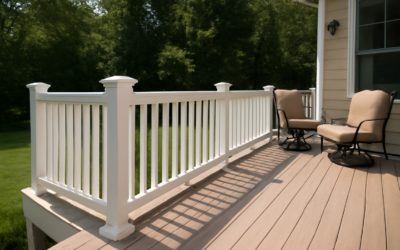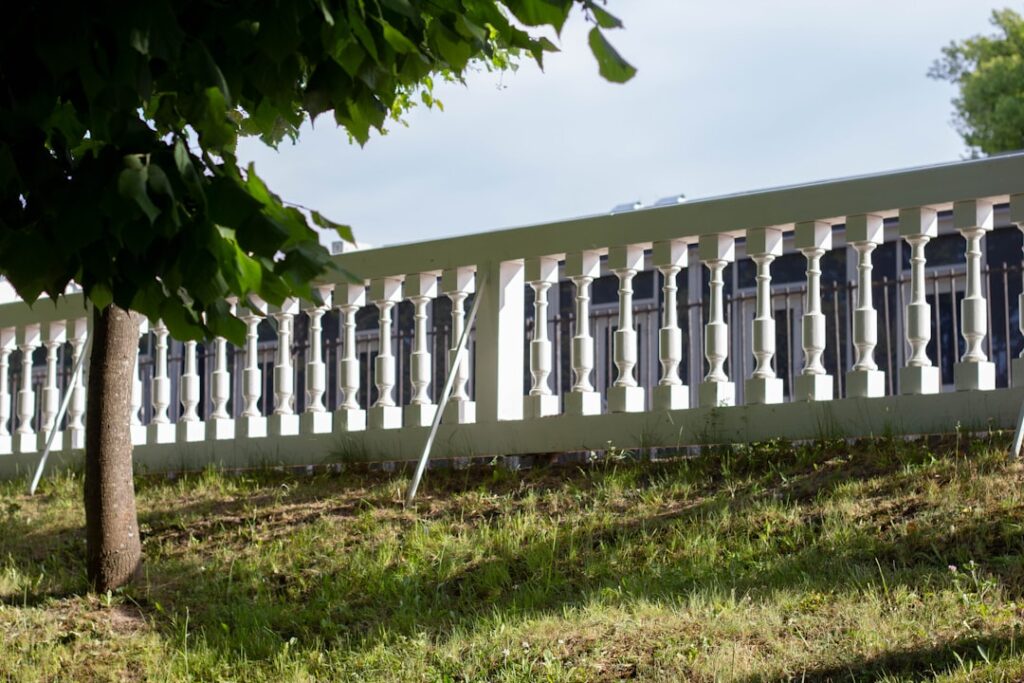
Black vinyl railing has become a go-to upgrade for decks, porches, and balconies because it pairs a crisp, modern look with the famously low maintenance of PVC. Unlike wood, it never needs sanding, staining, or painting, and the dark color delivers a clean contrast against light decking, brick, or siding. For homeowners weighing a railing replacement or a new build, it is worth understanding what you actually get for the price.
This guide breaks down the benefits, real trade-offs, cost ranges, installation basics, and care so you can decide whether black vinyl is the right fit.
What Black Vinyl Railing Is Made Of
Most vinyl railing is built from rigid PVC, the same family of durable plastic used in fencing and trim. The black color is typically integrated into the material or applied as a UV-stable coating designed to resist fading. Many systems use internal aluminum or galvanized steel reinforcement inside the rails and posts to meet building-code strength requirements, since PVC alone can flex.
That reinforcement matters. Quality black vinyl railing is engineered to pass load tests for guardrails, so always confirm a system is code-rated for your application, especially for elevated decks.
Key Benefits
- Low maintenance: No painting, staining, or sealing. Routine cleaning is usually all it needs.
- Weather resistance: PVC won’t rot, splinter, rust, or attract insects, making it well suited to humid and coastal climates.
- Consistent color: The black finish stays uniform without the touch-ups wood demands.
- Long lifespan: Many quality systems carry lengthy manufacturer warranties; check the specific terms of any product you buy.
- Clean look: Black reads as modern and pairs well with both contemporary and traditional homes.
The Trade-Offs to Know
Black is the one color where heat deserves a mention. Dark surfaces absorb more sunlight, so a black vinyl railing in full sun will run warmer to the touch than a white one. Quality products are formulated to handle this, but it is a real consideration in very hot, sunny climates, both for comfort and for long-term thermal expansion.
Vinyl also has a distinct look and feel that some homeowners find less premium than aluminum or natural wood up close. And while durable, a sharp impact can crack PVC, whereas metal tends to dent instead. Weigh these against the maintenance savings.
Black Vinyl vs. Other Railing Materials
Against wood, vinyl wins decisively on upkeep but lacks the natural grain and the ability to refinish in a new color later. Against aluminum, vinyl is often comparable or slightly cheaper and offers a chunkier, more substantial profile, while aluminum gives slimmer sightlines and superior heat tolerance. Composite railing splits the difference with a wood-like texture at a higher price. Your choice usually comes down to budget, climate, and the aesthetic you want.
Cost Expectations
Prices vary widely by brand, style, and region, so treat these as estimates. Materials for vinyl railing commonly fall somewhere in the range of $20 to $45 per linear foot, with decorative balusters, glass panels, or lighting pushing the high end up. Professional installation typically adds labor on top, and a full deck railing project can land anywhere from a few hundred to several thousand dollars depending on length and complexity.
Buying complete kits with posts, rails, balusters, and brackets often costs less than assembling parts piecemeal, and it ensures the components are engineered to work together.
Installation Basics
Vinyl railing systems are generally designed for straightforward assembly, but the posts are the critical structural element. They must be anchored securely, either bolted to the deck framing with the manufacturer’s hardware or set over reinforced post sleeves, never relying on the PVC alone for strength.
- Confirm post spacing meets the system’s span limits and your local building code.
- Mount and level the posts, anchoring into solid framing or properly set footings.
- Attach top and bottom rails using the supplied brackets, allowing for thermal expansion gaps as specified.
- Install balusters or infill panels, then secure end caps.
- Verify the finished guardrail height and that the assembly resists the required load.
Because guardrails are a safety feature, many homeowners hire a contractor or at least confirm the install passes inspection where permits apply.
Cleaning and Maintenance
Care is refreshingly simple. Wash the railing a couple of times a year with mild soap and water and a soft brush or cloth, rinsing thoroughly. For stubborn grime or mildew in shaded areas, a diluted vinyl-safe cleaner works well; avoid abrasive pads that can scratch the surface. Black can show dust and pollen more than lighter colors, so an occasional rinse keeps it looking sharp.
Style Options and Infill Choices
Black vinyl railing is not a single look. The infill between the top and bottom rails defines much of its character, and you have several options to match your home’s style.
- Square or round balusters: The traditional, most common infill, offering a classic, evenly spaced look.
- Glass panels: Tempered glass between black posts preserves views and feels modern, ideal where you want unobstructed sightlines.
- Cable infill: Horizontal stainless cables paired with black posts give an airy, contemporary appearance.
- Decorative balusters: Twisted or detailed balusters add a more ornate, custom feel.
The black framing makes glass and cable infill especially striking because the dark posts recede visually, letting the view take center stage. Consider how much privacy, wind protection, and openness you want when choosing.
Lifespan and What Affects It
Quality black vinyl railing is built to last many years, but several factors influence how long it stays looking new. Sun exposure is the biggest, since constant UV can eventually affect any dark surface; reputable manufacturers add UV inhibitors specifically to combat fading, so buying a quality product matters. Coastal salt air, which destroys many materials, is actually one of vinyl’s strengths because PVC does not corrode.
Proper installation also affects longevity. Posts anchored to solid framing resist the loosening that comes from years of leaning and weather, and allowing for thermal expansion prevents stress cracks as the material heats and cools. Routine cleaning rounds it out, keeping grime and mildew from dulling the finish over time.
Is Black Vinyl Railing Worth It?
For homeowners who want a striking, modern railing without the endless upkeep of wood, black vinyl railing is a smart, durable investment that holds its appearance for years with minimal effort. Just buy a code-rated, reinforced system, anchor the posts properly, and account for the extra warmth dark PVC picks up in strong sun. Get those basics right and you get a clean, weather-tough railing that earns its place on the deck.
Prefer to explore on your own?
See how new flooring looks in your actual room in seconds — free, no signup.
Try the free Floor Studio →