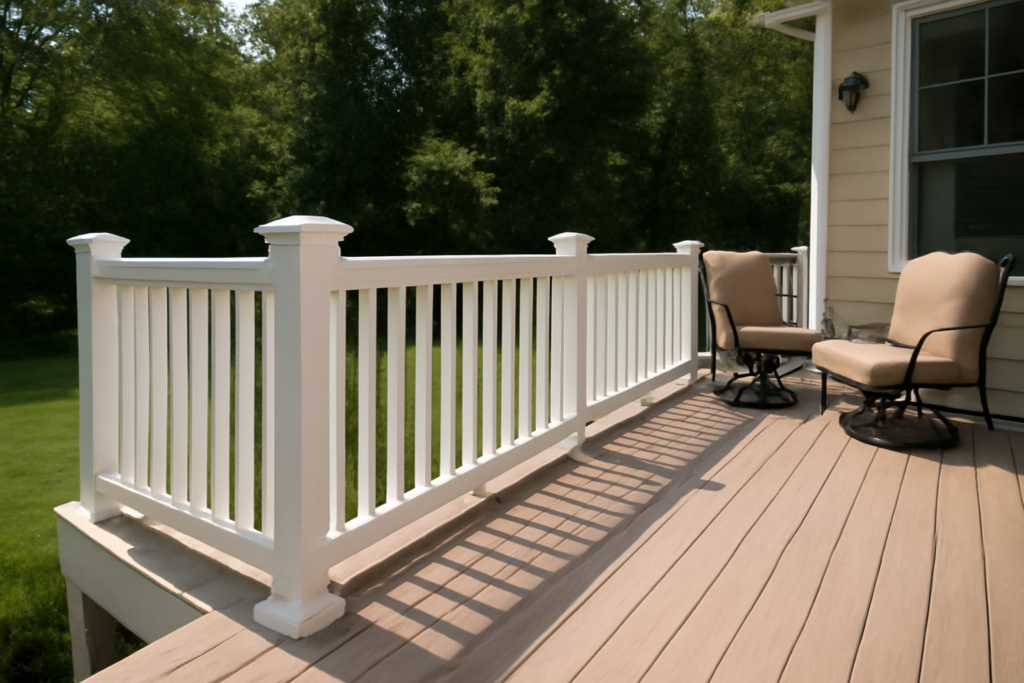
If you are tired of sanding, staining, and replacing rotted wood balusters every few years, vinyl deck railing is the upgrade that ends that cycle. Made from rigid PVC, it never needs paint, will not rot or splinter, and wipes clean with a hose. The white and tan profiles have a crisp, finished look that suits everything from a farmhouse porch to a modern deck. The catch is that railing is a safety system, not just decoration, so it must meet code for height, strength, and spacing. Done right, vinyl railing is one of the lowest-maintenance choices available.
Part of our Decks & Outdoor guide — explore the full guide →
What Vinyl Railing Is Made Of
Vinyl railing is built from extruded PVC components: top and bottom rails, balusters or panel infill, and posts or post sleeves. Because PVC is relatively flexible on its own, quality systems reinforce the rails with internal aluminum or galvanized steel inserts so the railing stays rigid and meets load requirements. When comparing products, ask about that internal reinforcement, since a railing without it can feel flimsy and may not pass inspection.
Railing Styles and Options
Vinyl systems offer more design choices than people expect.
- Traditional baluster railing: evenly spaced vertical pickets, the classic look
- Glass or acrylic panel infill: preserves a view while meeting safety codes
- Cable or metal baluster accents: a modern mix of vinyl posts with thin horizontal or vertical infill
- Lighted post caps: low-voltage caps that add nighttime visibility and style
Color choice is mostly white and tan, though some lines offer additional neutrals. Vinyl is not painted, so pick the color you can live with long-term.
Building Code Basics
Railing exists to prevent falls, so building codes set firm requirements. While exact rules vary by jurisdiction and you should confirm with your local building department, the widely used residential standards are a helpful starting point.
- Guardrail height: typically 36 in. minimum for residential decks, often 42 in. for taller decks and commercial settings
- Baluster spacing: a 4-inch sphere generally must not pass between balusters
- Load resistance: railings must withstand a specified horizontal force without failing
- Stair railing: graspable handrails are required on stairs at a set height
Decks above a certain height usually require a permit and inspection, so check before you build.
Installation Overview
Vinyl railing usually installs as a kit of pre-cut or cut-to-fit sections between posts. The posts carry the load, so their attachment to the deck framing is the most critical step. Posts are typically a structural wood or metal post wrapped in a vinyl sleeve, or a heavy-duty composite post bolted securely to the rim joist or blocking, not just to the decking surface. After posts are solidly anchored and plumb, the rail sections mount with brackets, and post caps finish the tops. Always follow the manufacturer’s bracket and fastener specifications, since they are what make the railing meet its rated strength.
Durability and Weather Performance
Vinyl railing handles sun, rain, and snow without rotting or rusting, and UV stabilizers in quality PVC resist yellowing. In very cold climates, PVC can become more brittle, and dark debris can make white railing look dingy, but neither affects structural performance when the system is properly reinforced and installed. Unlike wood, there is no annual stripping and re-staining, and unlike bare metal, there is no rust to chase.
Cleaning and Maintenance
Upkeep is genuinely minimal. Rinse the railing with a hose a couple of times a year, and scrub stubborn dirt or mildew with mild soap, water, and a soft brush. For tougher mildew, a diluted cleaner made for vinyl works well. Avoid abrasive pads and harsh solvents that can dull the surface. Check the post connections and bracket screws periodically, since the railing’s safety depends on those fasteners staying tight.
What Vinyl Deck Railing Costs
Pricing depends on style and reinforcement. Basic vinyl baluster railing often runs about $20 to $40 per linear foot for materials, while glass-panel or premium reinforced systems can reach $40 to $70 or more per linear foot. Professional installation typically adds roughly $20 to $50 per linear foot depending on deck height, layout, and local labor rates. Treat these as general ranges, since product grade and site conditions move the numbers. Over time, the savings on staining and replacement often offset the higher upfront cost compared with wood.
Vinyl vs. Other Railing Materials
It helps to see where vinyl sits among the alternatives. Wood is the cheapest upfront and easy to customize, but it demands regular staining or painting and eventually rots or splinters. Aluminum railing is strong, slim, and low-maintenance, though it costs more and has a more industrial look. Composite railing pairs well with composite decking and resists rot, but it can fade and is pricier. Cable and glass systems preserve views beautifully at a premium price. Vinyl’s sweet spot is low maintenance at a moderate cost, with a clean, classic appearance, which is why it remains a top choice for traditional decks and porches.
Planning Your Railing Layout
A little planning prevents wasted material and awkward gaps. Measure each run of your deck and note where posts, stairs, and corners fall, since posts must align with the deck’s structural framing for proper support. Standard rail sections come in set lengths, often 6 or 8 feet, and may need cutting to fit, so plan post spacing within the manufacturer’s maximum span to keep the railing rigid. Account for stair sections separately, as they require angled rails and a graspable handrail. Sketching the layout before ordering helps you buy the right number of sections, posts, caps, and bracket kits the first time.
The Bottom Line
Vinyl deck railing trades the endless upkeep of wood for a clean, weatherproof system that needs little more than an occasional rinse. Choose a reinforced product, confirm height and spacing requirements with your local code office, and anchor the posts to the deck framing exactly as specified. Built and inspected correctly, vinyl railing delivers safe, attractive, low-maintenance performance for many years.