Anyone who has spent a weekend scraping and repainting a peeling wood deck rail understands why vinyl railing has become so popular. Made from rigid PVC, vinyl railing delivers the clean look of painted wood without the rot, splinters, insect damage, or endless repainting. It never needs staining, resists moisture and UV fading, and wipes clean with a hose. For decks, porches, balconies, and stair runs, vinyl railing offers a low-maintenance, long-lasting alternative that pays off in saved weekends for years. Here is what to know before you choose a system.
What Vinyl Railing Is Made Of
Vinyl railing is manufactured from polyvinyl chloride (PVC), the same durable, weather-resistant plastic used in many exterior building products. Quality systems use rigid PVC reinforced internally, sometimes with aluminum or galvanized steel inserts in the top and bottom rails, to add the stiffness and load-bearing strength that building codes require. The PVC is formulated with UV inhibitors so it resists yellowing and fading in sunlight. The result is a railing that holds its shape, color, and structural integrity through heat, cold, rain, and snow without the maintenance wood demands.
Why Homeowners Choose Vinyl
The benefits cluster around low maintenance and longevity:
- No painting or staining: The color goes through the material, so it never needs refinishing
- Rot- and insect-proof: PVC will not rot, splinter, or attract termites
- Weather-resistant: Handles moisture, UV, and temperature swings without warping
- Easy cleaning: A hose-down or wipe with soapy water keeps it looking new
- Long lifespan: Quality vinyl railing can last decades, often backed by long warranties
For homeowners who want to enjoy their deck rather than maintain it, those advantages are the whole appeal.
Common Styles and Components
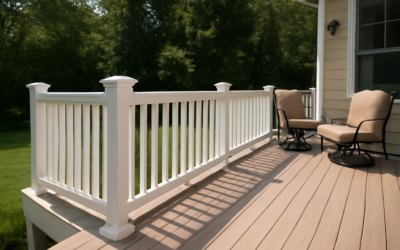
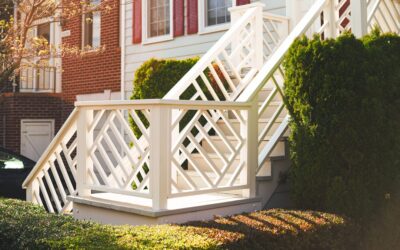
Vinyl railing systems are modular, assembled from a few standard parts. The top and bottom rails span between posts, with balusters (the vertical spindles) filling the space between. You can choose traditional square balusters, round ones, or upgrade to aluminum balusters for a slimmer, more contemporary look while keeping vinyl rails and posts. Glass-panel and cable infills are also available within some vinyl frame systems for an open, modern feel. Post caps, decorative or solar-lit, finish the look. White is the most common color, but tan, gray, and other neutrals are widely offered.
Understanding the Cost
Vinyl railing typically costs more upfront than basic wood but less than aluminum or composite systems in many cases, and it saves on long-term maintenance. Installed costs commonly fall in the range of roughly $20 to $40 or more per linear foot, depending on the style, baluster choice, height, and your region. Premium designs with aluminum balusters, glass panels, or lighted post caps run higher. Because vinyl never needs paint or stain, the lifetime cost is often lower than wood once you account for years of refinishing materials and labor you skip.
Installation Basics
Vinyl railing is designed for a manageable installation, often appealing to capable DIYers, though structural posts must be anchored correctly to meet code. The general sequence is to set and secure the posts first, either mounting them to the deck framing with brackets or sleeving them over structural wood or metal posts, then cut the top and bottom rails to length, install the balusters into the pre-routed rail channels, and fasten the rail assembly between posts. Many kits arrive pre-cut and pre-drilled to speed the job. Because the posts carry the load, their attachment is the part that must be done right.
Building Codes and Safety
Railing is a safety component, so codes are strict and worth respecting. Most residential codes require guardrails at least 36 inches high for decks and porches, with 42 inches common for elevated or commercial applications, and balusters spaced so a 4-inch sphere cannot pass between them to protect small children. Railings must also withstand a specified lateral load, which is why structural reinforcement in the posts and rails matters. Always check your local code and pull any required permits before building, and confirm the vinyl system you buy is rated to meet those load and spacing requirements.
Vinyl vs Wood vs Aluminum
Each material has a place. Wood is the cheapest upfront and easy to customize but demands ongoing staining or painting and eventually rots. Aluminum is strong, slim, and very durable but typically costs more and offers a more industrial look. Vinyl lands in the middle: lower maintenance than wood, often more affordable than aluminum, and available in clean, classic styles. The trade-off is that vinyl comes in a more limited color palette and can look less premium than high-end metal or composite up close. For most homeowners wanting a clean white rail they never have to repaint, vinyl is the practical sweet spot.
Care and Maintenance
Maintenance is minimal, which is the entire point. Wash vinyl railing once or twice a year with a garden hose and, for stubborn dirt or mildew, a soft brush with soapy water or a vinyl-safe cleaner. Avoid abrasive pads and harsh solvents that could dull or scratch the surface. Inspect the posts and rail connections periodically to confirm everything stays tight and secure, since the railing’s safety depends on solid anchoring. Beyond that, vinyl asks almost nothing, holding its color and finish through the seasons with no painting required. In regions with heavy pollen or coastal salt air, an extra rinse mid-season keeps surface buildup from dulling the finish, but even neglected vinyl railing cleans up like new with a simple wash.
How Long Vinyl Railing Lasts
Durability is one of vinyl railing’s strongest selling points. A quality system, properly installed and made from UV-stabilized PVC, commonly lasts 20 to 30 years or more, and many manufacturers back their products with limited lifetime warranties against rot, peeling, and significant fading. The main long-term enemy is sun exposure, which can slowly chalk or fade lower-grade vinyl, so choosing a reputable UV-treated product matters for color longevity. Unlike wood, which loses ground every year you skip maintenance, vinyl holds its condition with almost no effort. Inspect the post connections each year for tightness, and the railing will keep performing its safety job decade after decade.
The Bottom Line
For a deck or porch railing that looks clean and stays that way, vinyl railing delivers rot-proof, low-maintenance PVC construction that never needs paint or stain. Choose a system reinforced to meet your local code for height, baluster spacing, and load, anchor the posts properly, and you will have a safe, attractive railing that frees up the weekends you used to spend refinishing wood. It is one of the easiest upgrades to live with over the long haul.
Prefer to explore on your own?
See how new flooring looks in your actual room in seconds — free, no signup.
Try the free Floor Studio →