
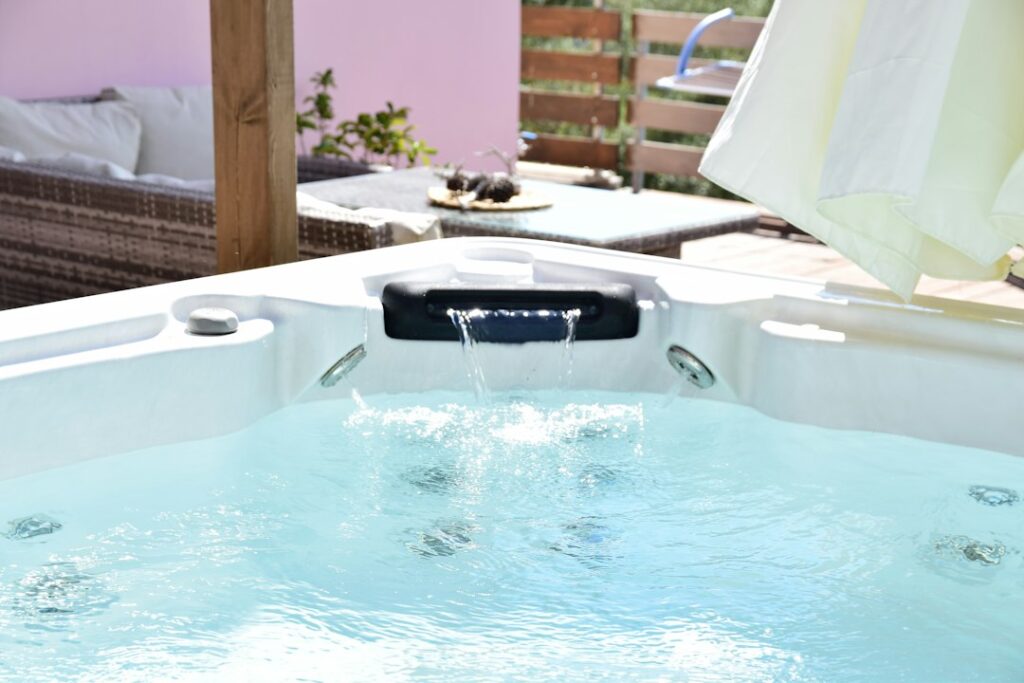
Inflatable hot tubs sold over a million units in the US during 2024 alone, and most of them ended up in suburban backyards on a wood deck or patio slab. They are not toys, but they are not full spas either. A blowup hot tub from brands like Coleman SaluSpa, Intex PureSpa, Bestway Lay-Z-Spa, and Aleko delivers real hot water, real jets, and seating for four to six people at a fraction of the price of a permanent acrylic spa. The catch is that they need realistic expectations on heat-up time, electrical capacity, and lifespan. Get those right, and a $400 to $1,200 inflatable can run for three to five years of weekly use.
What You Actually Get for the Money
Inflatable spas pack the heater, pump, filter, and control unit into a single portable box that connects to the tub by short hoses. The walls are reinforced PVC layered with mesh — typically called Tritech, Layered I-Beam, or DuraPlus depending on brand. Inflated, the walls are firm enough to sit on the edge briefly without collapsing.
Expect the following at three common price points:
- $300 to $500: Basic 4-person model, bubble jets only, vinyl liner. Coleman SaluSpa AirJet or Intex PureSpa Bubble.
- $600 to $900: 6-person, hydro jets plus bubble system, integrated cover. Bestway Lay-Z-Spa Hawaii HydroJet or Coleman Cali AirJet Plus.
- $1,000 to $1,500: 6 to 8 person, lighting, app control, harder-shell construction. Aleko Modern HotTub or Intex Greywood Deluxe.
For the average household, the mid-tier $600 to $900 bracket hits the value sweet spot. Bubble-only models feel too gentle within a few sessions; mid-tier hydro jets deliver a real massage.
Power Requirements and Energy Cost
Most inflatable hot tubs run on standard 110V household current and pull 12 to 15 amps. They demand a dedicated 15A circuit — sharing the line with a fridge, microwave, or any other appliance trips breakers consistently. The included 10 to 15 foot GFCI cord must plug directly into a wall outlet; extension cords are explicitly prohibited and void warranty coverage.
Energy cost varies wildly by climate and usage pattern. A typical 250 to 290 gallon inflatable maintained at 102°F runs $30 to $80 per month in moderate climates and $100 to $200 in cold-winter regions where the heater fights ambient temperatures below 40°F. Insulating the ground underneath with a foam pad and using the included cover religiously cuts costs by 30 to 50 percent.
Setup From Box to Soak
Plan a full afternoon for the first setup. The actual inflation takes 5 to 10 minutes, but heating from 50°F tap water to 102°F takes 12 to 24 hours depending on the model and ambient temperature. Three steps to do correctly the first time:
- Pick a level, supportive spot. Concrete patio is ideal. Wood deck must be rated for at least 100 lbs per square foot — a filled 6-person tub plus occupants weighs 3,500 to 4,500 pounds. Grass works only with a thick foam pad underneath.
- Inflate before adding water. Pump the walls to firm but not rock-hard. Overinflation stresses seams; underinflation lets walls sag once water is added.
- Fill, run, then heat. Use a garden hose, treat the water with starter chemicals (chlorine or bromine plus pH adjuster), then turn on the heater. Bubble or jet activation slows heating significantly, so leave them off until temperature is reached.
Skipping water treatment is the single biggest cause of early liner failure. Untreated water grows biofilm that stains and weakens the PVC.
Water Chemistry the Easy Way
Inflatable hot tub water needs the same chemistry as a permanent spa. Chlorine 1 to 3 ppm or bromine 3 to 5 ppm, pH 7.2 to 7.8, alkalinity 80 to 120 ppm. A starter chemical kit from Spa Choice or Leisure Time runs $30 to $60 and lasts three to four months at typical use levels.
Test strips work fine for casual users. The AquaChek 7-way strips ($12) read seven parameters at once. For more serious water management, the Taylor K-2106 reagent kit ($45) gives lab-quality precision but requires patience to use.
Drain and refill every 4 to 6 weeks during regular use. The water volume is too small to maintain indefinitely, and stabilizer buildup eventually breaks chemical balance.
Cover, Insulation, and Heat Retention
The included cover is the difference between a $40 monthly energy bill and a $150 one. Always cover when not in use. Most factory covers last 2 to 3 years before the foam waterlogs and the vinyl cracks. Replacement covers run $80 to $200.
For colder climates, add a layer of underneath insulation with a foam pad like the Costco interlocking gym tiles ($40) cut to fit the tub footprint. A thermal blanket floating on the water surface under the cover adds another 5 to 10 degrees of heat retention.
Common Problems and Lifespan
The two most common failures are the heater unit (typically year 2 to 4) and slow leaks in the liner (year 1 onward, often near the seat seams). Most manufacturers cover the heater for 1 year and the liner for 90 days, which is short. Buy through retailers like Costco that extend warranty coverage to 2 years on the full system.
Lifespan expectations:
- Liner: 2 to 5 years with proper chemistry, less with neglect.
- Heater pump unit: 2 to 4 years average. Replacement units sometimes available from manufacturer for $150 to $300.
- Cover: 2 to 3 years before water saturation.
- Hoses and fittings: 4 to 6 years before O-rings degrade.
Storing the tub deflated during winter in cold climates extends liner life significantly. Reinflate in spring, refresh chemistry, and the unit can keep running.
How They Compare to a Permanent Spa
An inflatable runs $400 to $1,500. A permanent acrylic spa runs $5,000 to $15,000 plus electrical work and a poured pad. The acrylic unit lasts 15 to 25 years and delivers stronger jets, better insulation, and a higher-end experience. The inflatable lasts 3 to 5 years and gives 70 percent of the experience for 10 to 15 percent of the cost.
The math favors inflatable for first-time hot tub buyers, renters, and people testing whether they will actually use it before committing to a permanent install. After two seasons of weekly use, most enthusiasts upgrade. Casual users can run the same inflatable for half a decade and never feel limited.
FAQ
How long does a blowup hot tub last?
Two to five years typically, depending on use frequency, climate, and water chemistry maintenance. Liners are usually the limiting factor.
Can a blowup hot tub stay outside in winter?
Only if kept full and operational at all times. Drained and stored deflated is safer. Frozen water inside the tub or pump destroys the unit.
Are inflatable hot tubs safe?
Yes when used with the included GFCI plug, dedicated outlet, and proper chemistry. Never run them on extension cords, and never let the heater run dry.
How much does an inflatable hot tub cost to run?
$30 to $80 per month in moderate climates, $100 to $200 in cold winters. Cover use, insulation pads, and lower set temperatures reduce the bill significantly.
Do you need a permit for an inflatable hot tub?
Generally no, since they are portable and not permanently installed. Some HOAs restrict visible spas; check before buying. Decks must be rated for the filled weight.


