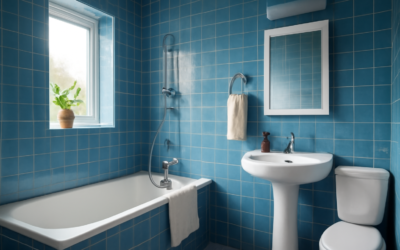
White and gray bathrooms are everywhere, which is exactly why a blue floor feels so refreshing. Blue bathroom flooring can read crisp and coastal, moody and luxurious, or playfully retro depending on the shade and material you choose. It is a bolder move than neutral tile, but blue happens to be one of the most natural fits for a bathroom, evoking water, calm, and cleanliness. The trick is balancing that color so the room feels designed rather than dated. This guide covers the best materials, the shades that work, and how to style blue underfoot.
Part of our Bathroom Remodeling & Flooring guide — explore the full guide →
- Why Blue Works So Well in Bathrooms
- Best Materials for Blue Bathroom Floors
- Choosing the Right Shade of Blue
- The Pros of Blue Bathroom Flooring
- The Cons to Consider
- Styling Blue Floors the Right Way
- Pairing Blue Floors With Walls and Fixtures
- How to Buy Blue Bathroom Flooring
- Maintaining a Blue Bathroom Floor
Why Blue Works So Well in Bathrooms
Blue has an inherent connection to water, so it feels at home in a space built around it. The color is calming and spa-like, which suits a room meant for relaxation, and it pairs beautifully with the white fixtures, chrome, and natural light common in bathrooms. From soft sky tones to deep navy, blue offers a huge range of moods without leaving the comfort zone of a classic palette.
It also photographs and resells better than many bold colors, since blue is widely loved and reads as tasteful rather than risky when done with restraint.
Best Materials for Blue Bathroom Floors
Bathrooms demand water resistance first, and blue comes in every suitable material:
- Porcelain and ceramic tile: The classic choice, fully waterproof, available in solid blues, blue patterned encaustic looks, and mosaics.
- Luxury vinyl plank or tile (LVP/LVT): Waterproof, warmer and softer underfoot than tile, with growing blue and blue-pattern options.
- Sheet vinyl: Budget-friendly and seamless, good for retro blue patterns.
- Mosaic and penny tile: Small blue tiles add texture and vintage charm, especially in classic baths.
Tile delivers the widest design range and ultimate water resistance; LVP wins on comfort, warmth, and easier DIY installation.
Choosing the Right Shade of Blue
The shade sets the entire mood, so choose with the room’s size and light in mind. Pale and powder blues feel airy and open, making small bathrooms feel larger and brighter. Mid blues like teal and turquoise bring coastal and retro energy. Deep navy creates drama and luxury but needs good lighting and lighter walls to avoid feeling closed in.
- Coastal: Soft sky blue, seafoam, or weathered blue-gray with white and sand tones.
- Retro: Classic mid-century turquoise or robin’s-egg blue, often in mosaic or patterned tile.
- Modern/luxe: Deep navy or slate blue with brass or matte black fixtures.
The Pros of Blue Bathroom Flooring
The advantages go beyond looks. Blue brings personality to a room that is too often beige, creates a calming, spa-like atmosphere, and pairs effortlessly with white fixtures and natural materials. Patterned and mosaic blues can hide minor water spots and dust better than plain light floors, and the color’s timeless associations help it age more gracefully than trend-chasing hues.
Because blue spans so many shades, you can achieve almost any style, from breezy beach house to dramatic powder room, all within a palette that resells well.
The Cons to Consider
Color commitment is the main downside. A blue floor is harder to change than blue towels, so you want to be confident in the choice. Very dark navy can make a small bathroom feel smaller and shows dust and water spots, while very glossy blue tile can be slippery when wet. Strong, saturated blues can also clash with warm-toned vanities or fixtures if the palette is not coordinated.
Trend risk exists too, especially with very of-the-moment teals. Sticking to classic shades like soft blue or navy, and keeping walls and fixtures neutral, hedges against the room feeling dated in a few years.
Styling Blue Floors the Right Way
The safest way to use a bold floor is to keep everything else calm. Pair blue flooring with white or light walls so the floor stays the star and the room feels open. Echo the blue subtly in towels, a shower curtain, or a vase to tie the scheme together without overdoing it.
A few reliable combinations:
- Blue + white + wood: Fresh, coastal, and warm.
- Navy + brass + cream: Elegant and modern-luxe.
- Turquoise + white subway tile: Cheerful retro.
Slip resistance matters in wet rooms, so choose a textured or matte finish, especially with tile, and consider a coordinating bath mat for safety and softness.
Pairing Blue Floors With Walls and Fixtures
The walls and fixtures around a blue floor make or break the scheme. The safest path is to keep walls light and neutral, white, soft cream, or pale gray, so the floor reads as the intentional focal point rather than competing for attention. White subway tile, beadboard, or a simple painted wall all let a blue floor breathe.
Fixtures and metals set the final tone. Chrome and polished nickel reinforce a fresh, coastal feel; brass and gold warm up navy for a luxe look; and matte black grounds brighter blues with a modern edge. Wood vanities in light oak or walnut add warmth that keeps cool blues from feeling chilly. Coordinate these elements before you commit, viewing samples together, so the whole room feels composed rather than accidental.
How to Buy Blue Bathroom Flooring
Always view large samples in your actual bathroom under both daylight and your fixtures’ artificial light, since blue shifts dramatically with lighting. Confirm the material is waterproof or fully water-resistant and rated for bathroom use, and check the slip rating for a wet floor. For tile, plan grout color carefully; a matching grout keeps the look seamless, while a contrasting grout emphasizes pattern.
Buy extra from the same batch for repairs, since blue tones can vary between production runs. Match the material to your priorities, tile for ultimate water resistance and design range, LVP for warmth and easy installation, and you will end up with a bathroom floor that feels fresh, personal, and far more memorable than another neutral.
Maintaining a Blue Bathroom Floor
Blue floors are easy to keep clean, but the shade you chose affects how often you will reach for the mop. Pale and bright blues, like all light floors, show hair, dust, and water spots quickly, so plan on frequent quick wipe-downs. Deep navy hides dust less than you might expect and can reveal soap film and hard-water spotting, especially in a glossy finish, which is another reason to favor matte or textured surfaces in a bathroom.
For tile, keep grout clean and sealed so it does not discolor and undermine a crisp blue floor; a grout color close to the tile minimizes the look of staining over time. For LVP and sheet vinyl, a damp mop with a pH-neutral cleaner is all you need, and you should avoid abrasive pads that can dull the finish. Whatever the material, a coordinating bath mat protects the most-used spots and adds a soft, safe landing underfoot.
Prefer to explore on your own?
See how new flooring looks in your actual room in seconds — free, no signup.
Try the free Floor Studio →