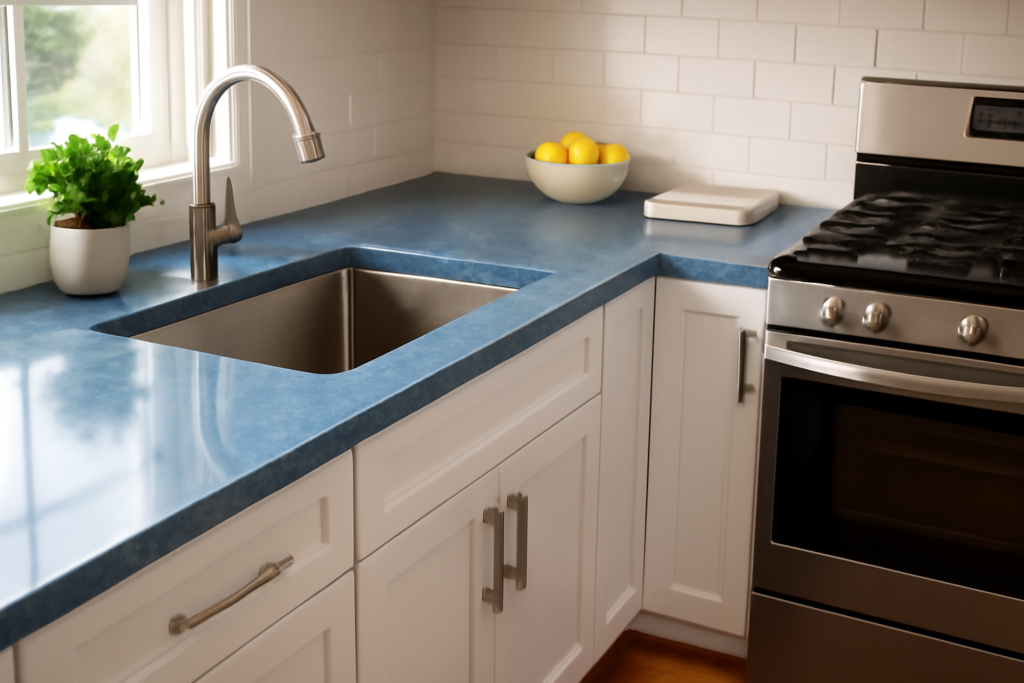
For homeowners who want a counter that makes a statement, blue quartz countertops deliver bold, unexpected color with the toughness and low maintenance that make quartz so popular. From soft seafoam to deep navy, blue quartz can serve as a striking focal point on an island or a serene backdrop in a bathroom. Because quartz is engineered, the color is consistent and the surface is non-porous and durable. This guide covers the shades available, the pros and cons, how to pair blue counters with your space, and what to expect in care and cost.
Part of our Countertops guide — explore the full guide →
What Quartz Countertops Are
Quartz countertops are engineered stone, made by combining roughly 90 percent ground natural quartz with resins and pigments, then forming the mixture into slabs. The pigments are what allow vivid colors like blue, which are rare in natural stone. The result is a hard, non-porous surface that resists scratches, stains, and bacteria without the sealing that natural stone requires.
Because the color and pattern are engineered, blue quartz offers consistency from slab to slab, which makes planning a kitchen or bathroom easier than with the natural variation of granite or marble.
Shades of Blue Quartz
Blue quartz spans a wide spectrum, so you can dial the drama up or down. The shade you choose sets the entire tone of the room.
- Light and seafoam blue: Soft and calming, ideal for bathrooms and airy kitchens.
- Mid blue and slate blue: Versatile and easy to coordinate, great for islands and full counters.
- Deep navy and royal blue: Bold and luxurious, perfect as a statement island or vanity.
- Blue with veining or sparkle: Marble-look blues or quartz with reflective flecks add depth and movement.
Pros of Blue Quartz
Blue quartz combines beauty with the practical strengths of engineered stone. The non-porous surface resists stains from coffee, wine, and oil and never needs sealing, unlike granite or marble. It is hard and durable, standing up to daily kitchen use, and it is easy to keep clean.
The color itself is a major draw. Blue is uncommon in countertops, so it gives a kitchen or bath a custom, designed feel that sets it apart from the ubiquitous white and gray. Because it is engineered, you also get reliable color consistency across your slabs.
Cons to Consider
No surface is perfect, and a few drawbacks deserve attention. Bold blue is a strong commitment; trends shift, and a deep navy that feels exciting today may feel dated sooner than a neutral. It can also be harder to coordinate with future cabinet or paint changes.
Quartz is not heatproof, so always use trivets, since hot pans can damage the resin. Direct, prolonged sunlight can fade some quartz over time, making blue quartz less ideal for sun-drenched outdoor or heavily lit areas. And quartz is heavy and best installed by professionals.
Pairing Blue Quartz With Your Space
The right surroundings let blue quartz shine. White cabinets create crisp, classic contrast that keeps a blue counter feeling fresh and bright. Natural wood cabinets pair beautifully with blue for a warm, balanced look, while gray cabinets give a sophisticated, tonal feel.
For a bold scheme, deep navy counters with brass or gold hardware read luxurious and current. Keep backsplashes relatively simple so the counter remains the star, and bring in metallics, white, and natural textures to balance the color.
Where Blue Quartz Works Best
Blue quartz makes an excellent island top, where it can anchor a kitchen as a focal point while perimeter counters stay neutral. It also suits bathroom vanities, where softer blues create a spa-like calm. Laundry rooms, bar areas, and powder rooms are great spots to experiment with bolder blues in smaller doses.
If you love the color but worry about commitment, using blue quartz on an island or vanity rather than every surface gives you the impact with more flexibility.
Caring for Blue Quartz
One of quartz’s biggest advantages is easy care. Clean with mild soap and water or a gentle non-abrasive cleaner, and wipe up spills as they happen, though staining is rarely an issue on the non-porous surface. Avoid abrasive pads and harsh chemicals like bleach and high-alkaline cleaners, which can dull the finish over time.
Always use trivets and hot pads for hot cookware, and use cutting boards to protect both the surface and your knives. With this simple routine, blue quartz stays beautiful for many years.
What Blue Quartz Costs
Quartz countertops generally run about $50 to $120 per square foot installed, depending on the brand, color, thickness, and edge profile. Bold and designer colors like deep blues can sit at the higher end of the range, and intricate edges or large islands add to the total.
Get quotes that include fabrication and installation, and ask to see full slabs rather than small samples, since color and any veining read differently across a large surface.
Blue Quartz Versus Other Materials
It helps to see how blue quartz compares to natural stone in the same color family. Blue granite and blue stones like sodalite or quartzite offer genuine natural beauty but are rarer, often more expensive, and require sealing. Blue marble is striking but soft and prone to etching and staining, demanding careful maintenance. Engineered blue quartz, by contrast, gives you consistent color, no sealing, strong stain resistance, and a wide selection of shades at a more predictable price.
If you want authentic natural variation and are willing to maintain it, natural stone has its appeal. If you want dependable color and easy care, blue quartz is the practical winner.
Choosing Edge Profiles and Thickness
Small details shape the final look of your counter. Edge profiles range from clean, modern square or eased edges to more traditional bullnose, beveled, and ogee shapes; simpler edges suit contemporary kitchens while detailed profiles fit classic designs. Thickness also matters: standard slabs are common, but a thicker mitered edge creates a bold, substantial look that emphasizes a statement island. Discuss these options with your fabricator, since edge work affects both the appearance and the final cost of your blue quartz installation.
Final Thoughts
Blue quartz countertops offer a rare combination of bold color and the durable, low-maintenance performance quartz is known for. Choose a shade that fits your long-term taste, pair it with white, wood, or gray for balance, protect it from heat and prolonged sun, and care for it with gentle cleaners. Used thoughtfully, blue quartz gives your kitchen or bath a distinctive, lasting look.