A blue tile kitchen delivers one of the most versatile color statements in home design, ranging from crisp coastal whites-and-navies to moody, saturated cobalt walls. Choosing the right blue tile means balancing shade, finish, material, and placement so the color reads as intentional rather than dated. This guide walks through every decision, from picking a hue that flatters your cabinetry to estimating what the project will actually cost per square foot.
Part of our Kitchen Remodeling guide — explore the full guide →
- Why Blue Works So Well in Kitchens
- Choosing the Right Shade of Blue
- Backsplash vs. Floor: Where to Use Blue Tile
- Tile Materials That Suit a Blue Kitchen
- Pairing Blue Tile With Cabinets and Counters
- Layout Patterns and Grout Choices
- What a Blue Tile Kitchen Costs
- Keeping Blue Tile Timeless, Not Trendy
- Common Mistakes to Avoid
Why Blue Works So Well in Kitchens
Blue occupies a rare sweet spot: it feels both calming and fresh, and it pairs with warm woods, cool grays, brass hardware, and stainless appliances without clashing. Unlike trend colors that spike and fade, classic blues such as navy, slate, and cornflower have stayed in rotation for decades, which protects your resale value.
Designers favor blue because it grounds a room that gets a lot of natural light while adding depth to darker kitchens. A backsplash in glossy blue subway tile bounces light around a small galley kitchen, while a matte navy floor anchors a large open-concept space. The color also hides minor splashes and coffee drips better than pure white, a practical bonus in a high-traffic room.
Choosing the Right Shade of Blue
Shade selection is the single biggest factor in whether your kitchen looks polished or overwhelming. Lighter blues open up compact spaces, while deep blues create drama best reserved for larger rooms or accent zones.
- Navy and indigo: Sophisticated and timeless. Ideal for island bases, lower cabinets, or a full accent wall paired with white counters.
- Cobalt and royal blue: Bold and energetic. Use sparingly, typically as a backsplash feature, since large expanses can feel intense.
- Sky and powder blue: Airy and cottage-friendly. Perfect for farmhouse or coastal kitchens with white shaker cabinets.
- Slate and teal blue: Muted, transitional tones that bridge blue and green, working beautifully with gray or greige palettes.
Test at least three samples on the actual wall or floor and view them at morning, midday, and evening. North-facing rooms cool colors down, pushing blues toward gray, while west-facing light warms them in the afternoon.
Backsplash vs. Floor: Where to Use Blue Tile
Placement changes the entire feel of the space. A blue backsplash is the lowest-commitment, highest-impact option, typically covering 30 to 40 square feet and costing far less to replace later if tastes change. Floors demand more caution because blue underfoot in a large kitchen can dominate; a subtle patterned encaustic-look tile or a slate-blue porcelain plank often works better than a solid bright field.
Countertops in blue are rare and best executed in quartz or a blue-veined natural stone, but the backsplash remains the go-to canvas. Many homeowners split the difference: a neutral floor, white or wood cabinets, and one blue element that carries the color story.
Tile Materials That Suit a Blue Kitchen
Not every material holds blue pigment the same way, and durability matters in a kitchen that sees heat, moisture, and dropped pans.
- Ceramic and porcelain: The workhorses. Porcelain is denser, rated for floors, and resists staining. Expect $2 to $8 per square foot for standard lines, $10 to $20 for designer collections.
- Glass tile: Stunning for backsplashes with a luminous depth of color, running $15 to $30 per square foot. Reserve it for walls, not floors.
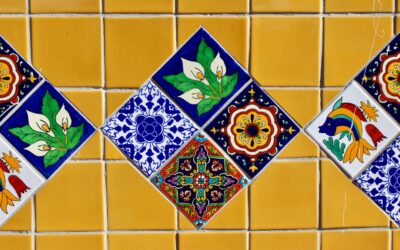
- Zellige and handmade ceramic: Moroccan-style tiles with irregular, glossy surfaces that create shimmering color variation. Premium pricing, often $25 to $50 per square foot.
- Cement and encaustic: Patterned tiles that combine blue with white or terracotta motifs; durable but need sealing.
For a backsplash, glossy finishes amplify the blue and wipe clean easily. For floors, choose a slip-resistant matte or textured porcelain with a rating of at least DCOF 0.42 for wet areas.
Pairing Blue Tile With Cabinets and Counters
Getting the surrounding palette right prevents the blue from feeling isolated. White cabinets are the safest and most popular partner, letting blue tile become the star. Natural wood tones, especially white oak and walnut, warm up cooler blues and create a modern, organic look.
Countertops should generally stay neutral: white quartz, marble-look surfaces, or light gray granite let the tile breathe. If you want a monochromatic scheme, pair navy lower cabinets with a lighter blue backsplash and keep counters and uppers white. Metal finishes matter too. Brass and gold hardware add warmth against cool blue, while matte black delivers a crisp, contemporary contrast.
Layout Patterns and Grout Choices
The pattern you set the tile in can either modernize or traditionalize the same blue. A running-bond subway layout reads classic, a vertical stack looks contemporary, and a herringbone adds movement and a custom feel. For floors, a large-format 12-by-24-inch plank minimizes grout lines and makes small kitchens feel larger.
Grout color is an underrated design lever. White grout with blue tile creates crisp definition and a clean, graphic look, while a matching blue or gray grout softens the grid and lets the color feel seamless. In kitchens, avoid pure white grout on floors since it shows dirt quickly; a mid-gray hides traffic and grease far better. Always use a stain-resistant epoxy or well-sealed cementitious grout near cooking zones.
What a Blue Tile Kitchen Costs
Total cost depends on scope, material, and whether you hire a pro. A DIY backsplash of 35 square feet using $8-per-square-foot tile might run $500 to $800 including thinset, grout, and tools. Professional installation typically adds $8 to $15 per square foot in labor.
A full blue tile floor for a 200-square-foot kitchen using mid-grade porcelain lands between $2,000 and $5,000 installed. Handmade or glass tile can double those numbers. Budget an extra 10 to 15 percent for waste, cuts, and future repairs, and buy an extra box to store since dye lots vary and matching later is nearly impossible.
Keeping Blue Tile Timeless, Not Trendy
To ensure your investment ages well, anchor the bold color with neutral permanent elements like cabinets, counters, and flooring, and let the blue live in easily changeable spots. A navy backsplash paired with white cabinetry has looked current for generations. Avoid pairing multiple loud colors at once; let blue lead and support it with soft neutrals.
Maintain the finish by sealing natural stone and cement tiles annually, cleaning glossy surfaces with a pH-neutral cleaner, and resealing grout every one to two years. Done thoughtfully, a well-planned blue kitchen offers the rare combination of personality and longevity, giving you a space that feels both current and enduring for years to come.
Common Mistakes to Avoid
Even a beautiful tile can disappoint when the surrounding choices go wrong. The most frequent misstep is choosing a blue that is too saturated for a large surface, which quickly reads as overwhelming and dates the room. Sample generously and step back before committing to a bold cobalt across an entire wall.
A second pitfall is ignoring the undertone. Blues carry hidden green, gray, or purple casts that can clash with your countertop or cabinets. Hold the tile against your permanent surfaces in natural light rather than judging it against a showroom display. Finally, avoid mixing too many finishes at once. A glossy backsplash, a matte floor, and a satin cabinet can compete for attention, so let one texture dominate and use the others as quiet support. Get these fundamentals right and your blue kitchen will feel curated, cohesive, and built to last.
Prefer to explore on your own?
See how new flooring looks in your actual room in seconds — free, no signup.
Try the free Floor Studio →