A blue tile backsplash kitchen is one of those choices that feels bold on the sample board and looks timeless once it is on the wall. Blue is a color that reads fresh and calming, plays beautifully against white and wood, and ranges from a barely-there sky wash to a deep, dramatic navy that anchors a whole room. Blue is among the most forgiving accent colors to live with day to day, because it pairs with almost everything and hides the ordinary splatter of cooking far better than a stark white.
Part of our Kitchen Remodeling guide — explore the full guide →
The key is matching the shade, material, and shape to your cabinets, counters, and light. A cobalt that dazzles in a bright, white kitchen can feel heavy in a small, dim galley, while a soft powder blue that soothes in a cottage can look washed out against gray stone. This guide walks through the shades, materials, tile shapes, and pairings that make a blue backsplash sing.
Choosing Your Shade of Blue
Blue is a whole spectrum, and the shade sets the entire mood of the kitchen. Deep navy and indigo bring drama and sophistication; they look especially striking behind a range and against white or light wood cabinets, and they hide grease and splatter well. Classic cobalt and true blue feel energetic and coastal, perfect for a kitchen that gets plenty of daylight. If you want calm and airy, a soft sky, powder, or pale seafoam blue keeps the space feeling open and works wonders in smaller kitchens.
Consider your light before you commit. North-facing and dim kitchens cool a blue down and can make deep shades feel gloomy, so lean lighter or warmer, toward a teal or a blue with a green undertone. Bright, south-facing rooms can carry a saturated cobalt or navy without feeling closed in. Always tape a few samples to the wall and look at them at different times of day, because blue shifts more than almost any other color between morning and evening light.
Undertone matters too. A gray-blue reads sophisticated and modern, a green-blue like teal or peacock feels rich and organic, and a true primary blue feels playful and classic. Pick the undertone that agrees with your counters and flooring rather than fighting them.
Navy for Drama, Sky for Serenity
The two most popular directions for a blue tile backsplash kitchen sit at opposite ends of the spectrum, and both are winners for different reasons. A navy backsplash is the sophisticated, high-contrast choice. Against crisp white shaker cabinets and a white or lightly veined counter, navy tile creates a sharp, tailored, almost nautical look that never feels trendy in a dated way. Navy also pairs unexpectedly well with warm brass or gold hardware, which pops against the dark field.
A sky or powder blue does the opposite job. It floods the kitchen with a soft, cottage-like calm, expands a small space visually, and gives a farmhouse or coastal kitchen an easy, breezy feel. Light blues are the safer bet in tight or low-light kitchens because they bounce light instead of absorbing it. They also pair naturally with the whites, creamy off-whites, and pale woods common in cottage and Scandinavian kitchens.
If you cannot decide, a mid-tone like a denim or slate blue splits the difference, offering enough color to be interesting without the commitment of a dark field or the delicacy of a pastel. It is the safest shade for anyone nervous about committing.
Tile Materials and Their Feel
Material changes how a blue backsplash behaves and how it catches light. Glossy ceramic and glass are the classics for blue because the glaze gives the color depth and a slight shimmer; glass tile in particular seems to glow, with light passing into the tile and bouncing back, which makes a blue look almost liquid. Glass and glazed ceramic are also easy to wipe clean, a real plus behind a cooktop.
Handmade and zellige-style tiles bring a different energy. Their uneven surface and variegated glaze mean each tile catches light differently, so a blue zellige wall shimmers and shifts across the day and never looks flat or mass-produced. This is a favorite way to get a rich, artisan blue, though the irregular edges take more patience to set and grout. Porcelain and natural stone, like a blue-gray marble or a slate, offer a more matte, grounded look for those who want subtlety over shine.
For a blue tile backsplash kitchen that stays low-maintenance, glazed ceramic, porcelain, and glass are your easiest cleaners and are naturally water-resistant. If you choose natural stone or unglazed tile, plan to seal it so cooking oils and tomato sauce do not stain the surface.
Shapes and Patterns That Elevate Blue
The tile’s shape carries as much design weight as its color. Classic subway tile in blue is the safe, timeless choice, and you can dress it up by setting it in a herringbone, vertical stack, or offset brick pattern instead of the standard running bond. A vertical stacked layout, in particular, reads modern and draws the eye up, making a backsplash feel taller.
For more personality, geometric shapes turn blue into a feature. Blue hexagons, fish-scale or scallop tiles, arabesque lanterns, and picket or pill shapes all give the color a distinctive silhouette. A fish-scale or scallop in a graded blue reads coastal and playful; a hexagon in navy feels crisp and contemporary. Penny rounds and mosaics let you blend several blues and even mix in white or metallic accents for a custom, hand-mixed field.
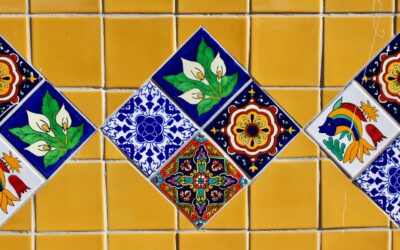
Patterned encaustic-look tiles, with blue-and-white Moroccan or Portuguese motifs, are the boldest move and can carry a whole kitchen on their own. If you go patterned, keep the rest of the room quiet, plain counters, simple cabinets, so the backsplash stays the star rather than competing with everything around it.
Pairing Blue With Cabinets and Counters
Blue’s superpower is how well it partners with other finishes. White cabinets are the classic and foolproof match; a blue backsplash against white uppers is clean, bright, and endlessly adaptable. Wood-tone cabinets, especially warm oak or walnut, pair with blue for a rich, organic, nature-inspired look, blue and wood echo the sky-and-earth palette and feel instantly welcoming.
Gray cabinets and blue create a cool, tailored, modern scheme, particularly with a gray-blue or slate tile that keeps the palette in one temperature family. For the boldest look, a blue-on-blue kitchen with navy lower cabinets and a lighter blue backsplash feels layered and confident, as long as you vary the shades enough to create contrast. Black cabinets with a bright cobalt or teal backsplash make a dramatic, high-design statement for those who want their kitchen to feel like a showpiece.
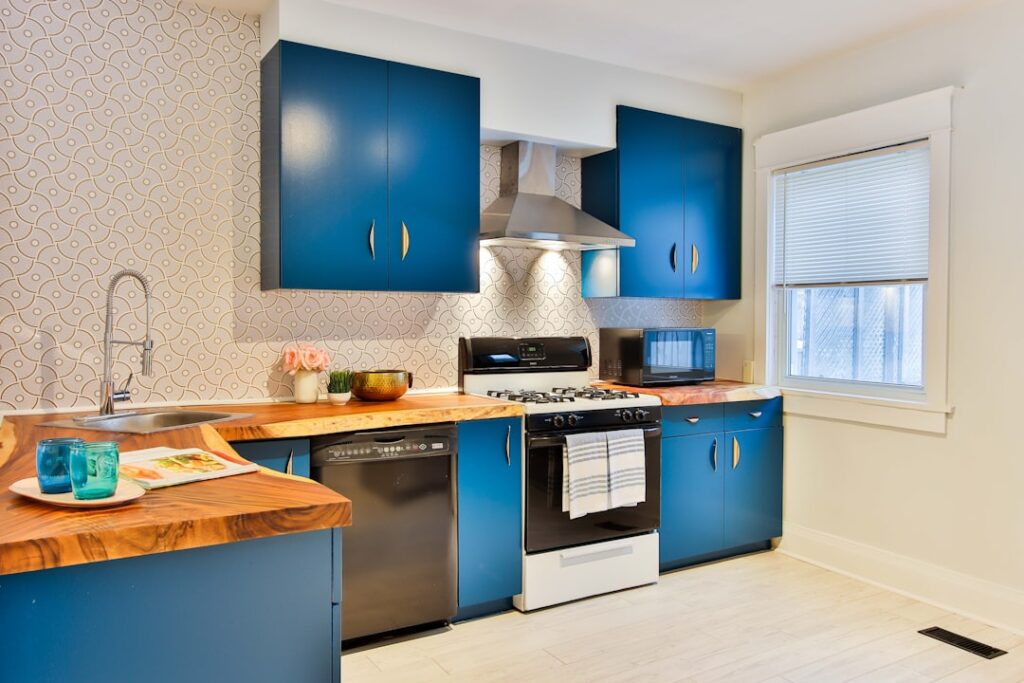
For countertops, white quartz or lightly veined marble lets a blue tile backsplash kitchen breathe and keeps the focus on the color. Butcher block warms up a blue and reinforces a farmhouse feel, while a soft gray stone keeps a navy backsplash feeling cohesive and calm. Avoid busy, multicolored granite behind a patterned blue tile; two loud elements fight each other.
Grout, Trim, and Finishing Details
Grout color quietly controls how your blue backsplash reads. A white or light-gray grout against blue tile creates crisp definition, highlighting each tile’s shape, which is exactly what you want with subway, hexagon, or fish-scale tile where the silhouette is the point. A matching blue or dark grout, by contrast, blurs the grid and makes the wall read as a continuous field of color, which suits a deep navy where you want a seamless, moody expanse.
Think about where the tile ends and how it is trimmed. A full-height backsplash that runs to the underside of the uppers, or all the way to the ceiling behind a range, makes a blue feel intentional and dramatic. Where the tile meets a countertop or an open edge, a metal trim profile, a matching bullnose, or a mitered edge gives a clean, finished line. Brass or matte-black trim can echo your hardware and tie the whole look together.
Finally, remember maintenance. Seal cement grout and any natural-stone tile, wipe the backsplash down regularly since cooking residue dulls even a glossy glaze over time, and keep a few spare tiles from your batch in the garage. Dye lots vary, and having exact-match tiles on hand makes a future repair invisible. Done thoughtfully, a blue tile backsplash kitchen delivers color, character, and a look that stays fresh for years without ever feeling like a passing trend.
Prefer to explore on your own?
See how new flooring looks in your actual room in seconds — free, no signup.
Try the free Floor Studio →