White subway tile has dominated kitchens for a decade, and homeowners are finally ready for some color. A blue tile backsplash is the move that adds personality, depth, and a custom feel to a kitchen without the commitment of painting cabinets or replacing countertops. Blue is uniquely flexible. It can read coastal and breezy, moody and dramatic, or crisp and classic depending on the shade and finish you choose. Get the pairing right with your counters and cabinets and a blue backsplash becomes the feature everyone notices first when they walk into the room.
Part of our Kitchen Remodeling guide — explore the full guide →
Why Blue Works in Kitchens
Blue occupies a sweet spot among accent colors. It is bold enough to make a statement but calm enough to live with every day, unlike a red or orange that can feel intense over time. It also pairs naturally with the materials kitchens are already full of: white and gray quartz, butcher block and walnut, brass and chrome hardware, and stainless appliances. Because water and food prep have a long visual association with cool, clean blues, the color simply feels at home behind a sink and stove.
It is also remarkably range-friendly. The same color family spans a breezy beach cottage and a sleek, dramatic modern kitchen, so blue can suit almost any style depending on how you handle it.
Choosing Your Shade of Blue
The shade sets the entire mood, so this is the decision to slow down on. Tape large samples to the wall and look at them in morning and evening light before buying.
- Navy and deep blue — Dramatic and sophisticated. Stunning against white cabinets and light counters, where the contrast pops.
- Sky and powder blue — Soft, airy, and coastal. Brightens small kitchens and pairs beautifully with white and natural wood.
- Teal and peacock — Rich blue-green tones with a hand-crafted, jewel-like feel, especially in glossy glazes.
- Slate and gray-blue — Muted and modern, reading almost as a neutral while still adding warmth and depth.
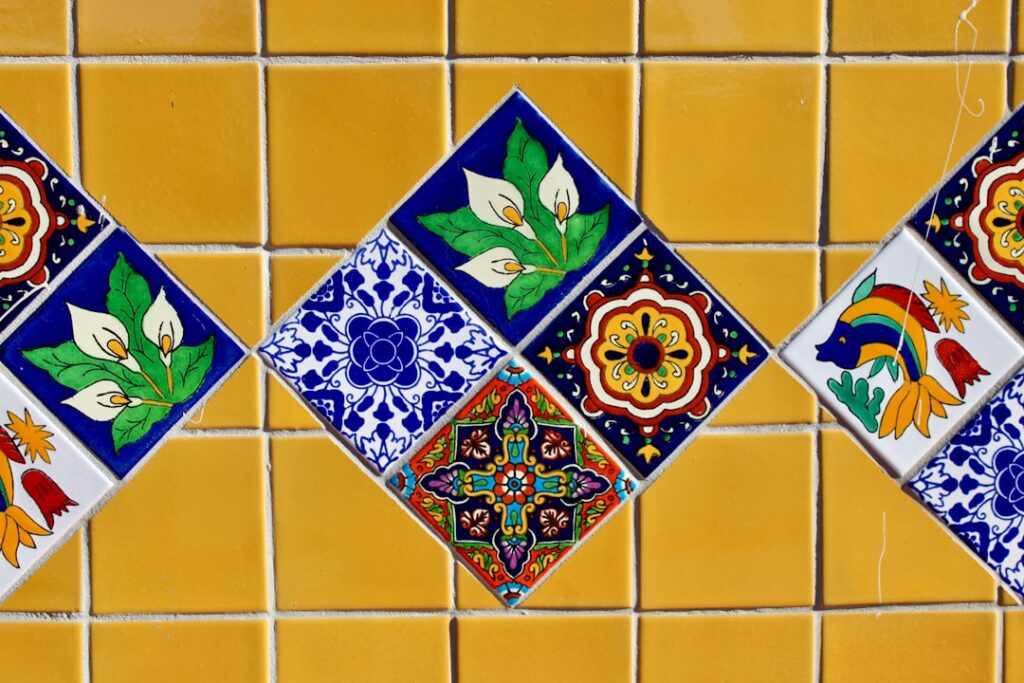
- Cobalt and Mediterranean blue — Vivid and energetic, perfect for a bold, eclectic, or Spanish-inspired kitchen.
Tile Shapes and Materials
The same blue looks completely different depending on the tile shape and material. Glossy ceramic and glass tiles reflect light and intensify the color, making a small backsplash glow, while matte and handmade tiles read softer and more rustic. Popular formats include classic subway tile for a timeless look, elongated and vertical subway for a modern twist, hexagons and penny rounds for a playful geometric feel, and fish-scale or scalloped tiles for a coastal, organic vibe. Zellige-style handmade tiles, with their irregular surface and color variation, bring an artisanal, high-end character that has become especially popular.
Glass tile is a particularly strong choice for blue because it captures light and depth in a way ceramic cannot, though it costs more and demands careful installation.
Pairing Blue With Counters and Cabinets
The magic is in the combination. A few pairings that reliably look great:
- White cabinets plus navy backsplash — High-contrast and classic, the safest way to go bold.
- Light wood cabinets plus sky or teal — Warm and coastal, with a relaxed, inviting feel.
- Gray cabinets plus slate-blue tile — Tonal, modern, and understated.
- White quartz with subtle veining plus any blue — A neutral counter lets the backsplash be the star.
Carry the blue elsewhere in small doses, in a runner, bar stools, or a single accent, so the backsplash feels intentional rather than isolated.
Installation Basics
A backsplash is one of the more achievable tile projects for a homeowner, since it is a vertical, low-wear surface that does not bear weight. The general sequence is to clean and prime the wall as needed, dry-lay your pattern to plan cuts, spread thinset or use a quality mastic for small areas, set the tiles with spacers to keep gridlines straight, let everything cure, then grout. Grout color is its own design decision: a matching blue or gray grout makes the surface read as a seamless field, while a contrasting white grout emphasizes each tile’s shape. For glass and handmade tiles, follow the manufacturer’s instructions closely, since they can be more delicate and may need a white thinset so the color stays true.
What It Costs and How to Care for It
Material prices span a wide range. Basic blue ceramic subway tile runs roughly $2 to $8 per square foot, glass tile climbs to $10 to $30 per square foot, and handmade zellige-style tile can reach $20 to $50 per square foot. A typical kitchen backsplash covers about 30 square feet, so material alone might run $100 to $900 depending on your pick. Professional installation usually adds $10 to $25 per square foot in labor, putting a finished backsplash somewhere between $500 and $2,000 for most kitchens, less if you tile it yourself.
Care is easy. Wipe the tile with a soft cloth and mild cleaner, avoiding abrasive pads that can dull glossy glazes. Seal natural stone and unglazed grout to resist stains, and reseal the grout every year or two. Keep grout lines clean to preserve the crisp look, and a blue tile backsplash will stay as fresh and striking as the day it went up, anchoring your kitchen’s style for years.
Glossy Versus Matte Finishes
The finish you pick changes a blue backsplash as much as the shade does. A glossy glaze reflects light, deepens and brightens the blue, and bounces daylight around a small kitchen, which makes it the go-to for coastal and classic looks; the trade-off is that gloss shows water spots and fingerprints more readily and demands frequent wiping. A matte or satin finish reads softer and more contemporary, hides smudges better, and suits a moody slate or navy scheme, though it does not have the same jewel-like glow. Handmade zellige-style tiles add a third option: a subtly uneven, semi-glossy surface that catches light unevenly for a living, artisanal effect. If your kitchen gets little natural light, gloss helps it feel brighter; if you want low-maintenance and modern, matte is the easier finish to live with day to day.
Layout Patterns That Showcase Blue
How you arrange the tile is its own design lever. A classic horizontal subway running brick-bond is timeless and lets a bold blue read as clean and orderly. Stacking the same subway tiles vertically or in a straight grid feels distinctly modern and emphasizes height. A herringbone layout adds energy and movement, turning even a simple blue tile into a feature. Hexagons and penny rounds bring a geometric, playful character, while a vertical stack of elongated tiles can make a low backsplash feel taller. For a full-impact wall, carry the tile from counter to the underside of the upper cabinets, or run it floor to ceiling behind a range as a dramatic focal point. Pair a busier layout with a quieter grout, and a simpler layout can handle a contrasting grout that highlights the pattern. The shape, the layout, and the grout together decide whether your blue backsplash whispers or shouts.
Prefer to explore on your own?
See how new flooring looks in your actual room in seconds — free, no signup.
Try the free Floor Studio →