Nothing transforms a kitchen or bathroom faster than color on the wall, and a blue backsplash brings energy, depth, and personality that neutral tile simply cannot match. Blue ranges from calming coastal pale to dramatic deep navy, so it works in farmhouse, modern, traditional, and beachy kitchens alike. The key is choosing the right shade, material, and pairing so the blue feels intentional rather than overwhelming. This guide walks through shades, tile types, design ideas, and costs to help you get it right.
Why Choose Blue
Blue is one of the most versatile statement colors for a backsplash. It reads as fresh and clean, pairs naturally with white and wood, and offers a wide emotional range depending on the shade. A soft sky blue feels airy and relaxed, while a deep navy or cobalt adds richness and drama. Because the backsplash is a relatively small surface, blue lets you add bold color with less commitment than painting cabinets or replacing countertops.
Popular Shades of Blue
The shade sets the entire mood, so start here:
- Navy: Deep and sophisticated. Grounds a white kitchen and reads timeless.
- Cobalt and royal: Vivid and energetic. A true statement color.
- Sky and powder blue: Soft and coastal. Brightens and opens a space.
- Teal and blue-green: Trendy and rich, bridging blue and green.
- Slate and gray-blue: Muted and modern, easy to live with long term.
If you worry about tiring of a bold hue, a muted slate or gray-blue offers the color without the intensity of cobalt.
Tile Materials to Consider
Blue comes in nearly every tile material, and each brings a different look:
- Ceramic and porcelain: Affordable, durable, and available in countless blue shades and shapes.
- Glass: Reflects light and makes blue glow, with a glossy, modern feel.
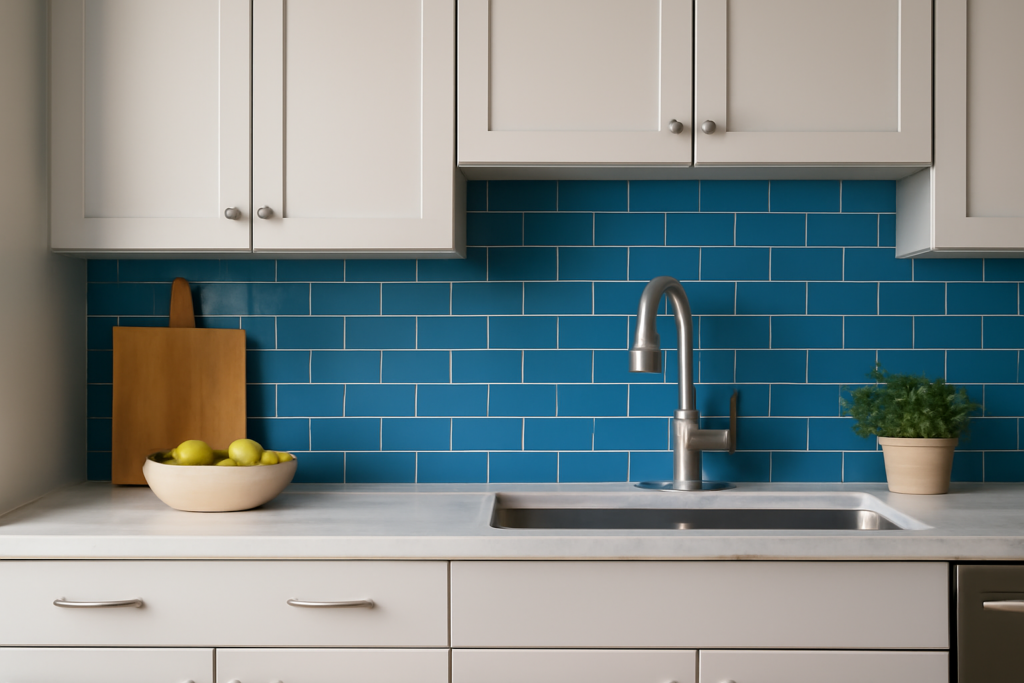
- Subway tile: A classic shape in blue for a fresh take on a familiar look.
- Zellige and handmade: Glazed clay tiles with color variation and an artisan, textured finish.
- Mosaic: Small blue tiles, often mixed shades, for a detailed accent area.
Glossy glass and zellige tiles especially make blue come alive, since light bouncing off the glaze deepens the color.
Pairing With Cabinets and Counters
Blue’s best friend is contrast and balance. White cabinets and a white or light countertop let a blue backsplash pop while keeping the room bright. Wood cabinets bring warmth that softens cooler blues. With navy or dark cabinets, a lighter blue or a blue-and-white pattern keeps things from feeling heavy. For countertops, white quartz, marble-look surfaces, and warm butcher block all pair beautifully with blue, while busy granite can compete, so keep the counter relatively calm.
Design Ideas
There are many ways to work blue into a backsplash:
- Full blue backsplash for a bold, immersive look
- Blue-and-white patterned tile for a Mediterranean or farmhouse feel
- A blue accent strip behind the range with neutral tile elsewhere
- Ombre blue tiles transitioning from light to dark
- Blue grout with neutral tile for a subtle nod to the color
Grout choice matters too: white grout makes blue tile crisp and clean, while a darker grout creates a moodier, more graphic look.
Cost Considerations
Backsplash cost depends mostly on the tile you choose. Basic ceramic blue tile often runs $5 to $15 per square foot, glass tile and mosaics commonly land in the $15 to $30 range, and handmade zellige or specialty tile can run higher. Installation typically adds $5 to $15 per square foot if you hire a pro. Because a backsplash is a small area, even premium tile stays affordable compared to other kitchen upgrades, which is part of why bold blue is worth the splurge here.
Blue in the Bathroom
A blue backsplash is not just for kitchens. Behind a vanity, blue tile brings a spa-like, coastal feel that pairs beautifully with white fixtures and chrome or brushed-nickel hardware. Pale sky and seafoam blues open up a small bathroom and make it feel fresh, while deeper teal and navy add a moody, luxurious touch in a powder room. Glossy tile works especially well here because the reflective surface bounces light around and resists moisture, keeping the space bright and easy to wipe down.
Choosing Tile Shape and Layout
Shape and layout shape the personality of a blue backsplash as much as the color does. Classic subway tile in a running bond pattern reads timeless, while a vertical stack feels modern. Herringbone and chevron layouts add movement and a custom look. Hexagons and arabesque shapes lean playful and distinctive, and penny-round mosaics give a vintage charm. If your blue is bold, a simple shape keeps the look balanced; if your blue is muted, a more interesting shape or layout adds the visual interest the color alone does not.
Care and Maintenance
A blue backsplash is easy to live with. Wipe glazed ceramic, porcelain, and glass with a soft cloth and mild cleaner to keep them gleaming. Seal natural stone or unglazed tile and grout to resist staining, and reseal periodically. Keep grout clean with a soft brush, since grime shows more against light grout lines. Avoid abrasive pads that can scratch glossy glazes, and your blue tile will hold its color and shine for years.
Lighting and How Blue Tile Reads
Blue is one of the most light-sensitive colors you can put on a wall, which is why a tile that looked perfect in the showroom can surprise you at home. Cool fluorescent and daylight-balanced bulbs push blue toward crisp and icy, while warm incandescent or 2700K LED light softens it and can pull a navy slightly toward gray. Natural north-facing light is cooler and tends to intensify a blue’s depth, whereas warm afternoon sun through a west window can wash a pale blue out by midday. Before you order, tape a few sample tiles to the wall and look at them at different times of day and under your actual kitchen lighting. Under-cabinet LEDs in particular sit just inches from the backsplash and dramatically affect how glossy glass or zellige catches the light, so test with them switched on.
Sealing and Long-Term Color Stability
Glazed ceramic, porcelain, and glass tile have a fired, non-porous surface that locks the blue in permanently, so the color will not fade from normal cleaning or light exposure. The vulnerable parts are the grout and any unglazed or natural-stone tile, which are porous and can stain, darken unevenly, or pick up grease near a cooktop. A penetrating grout sealer applied after installation, and refreshed every year or two in a working kitchen, keeps light grout lines from yellowing and preserves the contrast that makes blue tile pop. If you chose handmade zellige, expect some natural color variation and subtle crazing in the glaze over time; that patina is part of the look rather than a defect. For a backsplash that stays vivid, pair a quality stain-resistant grout with periodic sealing and gentle, non-abrasive cleaning.
Final Thoughts
A blue backsplash is a high-impact, relatively low-cost way to give a kitchen or bath real character. Choose a shade that matches the mood you want, pair it with calm cabinets and counters for balance, and pick a tile material that brings the color to life. Whether you go for serene sky blue or dramatic navy, a well-chosen blue backsplash becomes the feature everyone notices first.