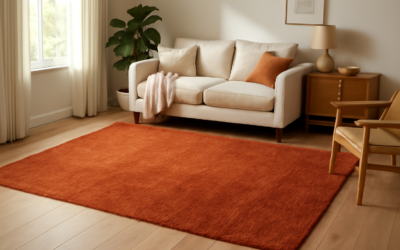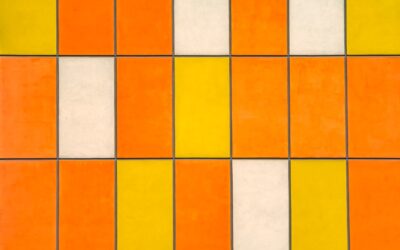
Ready to walk away from the sea of gray and greige that’s blanketed every remodel for a decade? Burnt orange tile brings warmth, energy, and a hand-made, sun-baked richness that instantly makes a room feel alive. I’ve set it as terracotta floors in Southwestern kitchens and as glossy accent walls in bold modern baths, and done right, it never feels dated — it feels intentional. Here’s how to use this saturated, earthy color without overwhelming a space.
Part of our Tile & Grout guide — explore the full guide →
- Understanding the Shades of Burnt Orange
- Where Burnt Orange Tile Shines
- What Burnt Orange Tile Costs
- Colors That Pair Beautifully
- Grout Color and Layout
- Installation and Sealing Notes
- Keeping It From Feeling Dated
- Design Styles Where Burnt Orange Belongs
- Lighting Changes Everything
- How Much Is Too Much
- Is Burnt Orange Tile Right for You?
Understanding the Shades of Burnt Orange
Burnt orange isn’t one color. It’s a family that runs from muted, brownish clay to vivid, near-terracotta. Knowing which end you’re after keeps the whole room from going wrong.
- Terracotta and clay — soft, earthy, Mediterranean; reads as a warm neutral
- Rust and copper — deeper, browner, sophisticated and grounding
- Pumpkin and true burnt orange — brightest and boldest, best as an accent
- Amber and honey glaze — translucent, glossy versions that catch light
Matte finishes push the color toward rustic and organic; high-gloss glazes make it read modern and vibrant. Pick the finish before the exact hue, because it changes everything about how the tile feels in the room.
Where Burnt Orange Tile Shines
The trick with a saturated warm color is placement. A little goes a long way, and the best installs treat it as the star, not the wallpaper.
Kitchen Backsplash
A burnt orange backsplash in 3 x 6 inch or 4 x 4 inch glossy ceramic behind a stove wakes up a kitchen full of white or wood cabinets. Zellige-style handmade tiles, with their uneven glaze and light-catching variation, are especially gorgeous in this color.
Terracotta-Look Floors
For floors, porcelain that mimics saltillo or terracotta gives you that warm clay tone across a whole room without the sealing and chipping of real terracotta. It’s the heart of Southwestern, Tuscan, and Spanish-style design.
Accent Walls and Fireplace Surrounds
A single fireplace surround or shower feature wall in burnt orange delivers a big punch of warmth in a controlled dose.
What Burnt Orange Tile Costs
Pricing tracks the material, not the color. Standard glazed ceramic runs $2 to $6 per square foot from Daltile or American Olean. Porcelain terracotta-look planks and squares land around $3 to $9 per square foot from MSI, Marazzi, or Emser. Handmade zellige and artisan tiles are the splurge, often $15 to $40 per square foot because each piece is individually fired. Professional installation adds $7 to $14 per square foot, and mosaic or handmade tiles run higher because they’re slower to set.
Colors That Pair Beautifully
Burnt orange is a strong color, so it needs the right supporting cast. My go-to pairings:
- Warm whites and creams — let the orange breathe and stay the focus
- Deep teal and navy — the complementary contrast is stunning and modern
- Forest green — an earthy, nature-inspired combo that feels current
- Natural wood and rattan — reinforces the organic, sun-baked mood
- Matte black fixtures — sharp, modern edge against the warm glaze
Avoid pairing it with cool grays, which fight the warmth and make the orange look muddy. If you love gray, go with a warm greige instead.
Grout Color and Layout
Grout dramatically changes the read of burnt orange tile. A matching terracotta or tan grout keeps a floor looking seamless and organic. A charcoal grout against glossy pumpkin tile creates a graphic, modern grid — great for a backsplash, bold for a whole wall. Keep grout lines 1/16 to 1/8 inch on a backsplash and 1/8 to 3/16 inch on rustic floor tile where a wider joint suits the handmade look.
Installation and Sealing Notes
For glazed ceramic and porcelain, set with a quality thinset using a 1/4 inch square-notch trowel on walls, back-buttering handmade tiles that have uneven backs. Let mortar cure 24 to 48 hours before grouting so nothing shifts.
Glazed tile needs no sealer, but the grout does — seal it 48 to 72 hours after grouting. Real terracotta and saltillo are the exception: unglazed clay is porous and must be sealed with a penetrating sealer before grouting and topped with a finish sealer afterward, or it will stain and absorb water like a sponge. This is a big reason I steer most homeowners toward terracotta-look porcelain, which gives the same warm color with zero sealing maintenance.
Keeping It From Feeling Dated
The fear I hear most is that burnt orange will look like a 1970s time capsule. The fix is context. Use clean, modern lines around it — flat-panel cabinets, a frameless shower, simple fixtures — and let the color be the only vintage-leaning element. Balance the warmth with plenty of white space and natural light. A small dose of a saturated color in an otherwise restrained room reads as confident and designed, never dated.
Design Styles Where Burnt Orange Belongs
The color has natural homes, and leaning into one of them keeps the room feeling intentional rather than random.
- Southwestern and Spanish — terracotta floors, arched openings, wrought iron, warm plaster walls
- Mediterranean and Tuscan — glossy amber backsplashes, natural stone, aged wood beams
- Mid-century modern — burnt orange reads as an authentic era color against teak and clean lines
- Bohemian — layered warm tones, handmade zellige, pattern-mixing and plants
- Modern maximalist — a bold color moment against otherwise restrained architecture
Lighting Changes Everything
Warm colors are especially sensitive to light temperature, and this trips people up constantly. Under warm 2700K bulbs and afternoon sun, burnt orange glows rich and inviting. Under cool 4000K or 5000K daylight LEDs, that same tile can turn muddy or even slightly brown and dull. Before you commit, live with samples under your actual kitchen or bathroom lighting at different times of day. If your fixtures run cool, either warm the bulbs or nudge your tile choice toward a brighter pumpkin so it doesn’t go flat.
How Much Is Too Much
The single biggest mistake with a saturated warm color is overcommitting. A full room of burnt orange floor-to-ceiling can feel closed-in and dated fast. My rule of thumb is to treat it as roughly 10 to 30 percent of the visible surfaces — one backsplash, one accent wall, or a floor balanced by plenty of white above it. Let neutral walls, natural light, and simple fixtures give the eye a place to rest. Restraint is exactly what separates a confident, designer-looking install from a dated one.
Is Burnt Orange Tile Right for You?
If your home leans Southwestern, Mediterranean, Tuscan, or bold modern — and you’re tired of playing it safe with neutrals — burnt orange tile delivers warmth and personality that gray never will. Start small with a backsplash or an accent wall, pair it with warm whites or a deep teal, and buy a few loose tiles to live with in your own light for a week before you order the full job. Used with restraint, it’s the kind of color choice that makes people stop and ask who designed your kitchen.
Prefer to explore on your own?
See how new flooring looks in your actual room in seconds — free, no signup.
Try the free Floor Studio →