Black countertops have shed their reputation as a risky choice and become the anchor of some of today’s most striking kitchens. Cambria black quartz sits at the premium end of that trend, pairing a deep, dramatic color palette with the low-maintenance performance of engineered stone. Cambria is an American, family-owned company that manufactures its quartz surfaces in Minnesota, and its dark designs give homeowners the boldness of black stone without the sealing, staining, and etching worries that come with natural materials.
Part of our Countertops guide — explore the full guide →
This guide walks through what makes Cambria’s black quartz distinctive, the kinds of dark designs the brand offers, realistic installed pricing, how the surface holds up day to day, and the styling choices that let a black counter feel elegant rather than heavy. If you are drawn to a rich, moody kitchen, here is what you need to know before committing.
What Sets Cambria Black Quartz Apart
Cambria is a US-based manufacturer of engineered quartz, a surface made by combining roughly 90 percent natural quartz with resins and pigments under intense pressure. The result is a non-porous slab that never needs sealing, resists stains, and offers consistent color from one end to the other. That consistency is a real advantage in dark stone, where the blotchy variation of some natural granites can look uneven.
The company markets its collection under design names rather than raw color labels, and its darker designs range from near-solid blacks to dramatic pieces with bright white or gray veining reminiscent of black marble. Because it is engineered, what you approve on the slab is what lands in your kitchen, with no surprises in pattern or shade. Cambria also backs its surfaces with a lifetime limited warranty for residential installations, which reflects the brand’s premium positioning.
Popular Black and Dark Designs
Cambria’s dark palette generally falls into a few looks, and knowing the categories helps you shop with intent.
- Near-solid blacks: deep, uniform designs that read almost monochrome for a sleek, modern statement
- Black with white veining: dramatic marble-inspired designs where bright veins cut across a dark background, echoing the drama of natural stones like Nero Marquina
- Charcoal and gray-black blends: softer dark tones with subtle movement that feel a touch warmer and hide fingerprints better
Rather than memorizing specific design names, which the brand periodically updates, focus on the overall effect you want: a bold solid black, a high-contrast veined statement, or a muted charcoal. Ask your Cambria dealer to show current dark designs in full-slab form, since veining placement varies dramatically across a large countertop and a small sample cannot convey the finished look.
Cambria Black Quartz Cost
As a premium engineered quartz, Cambria typically prices at the higher end of the quartz market. Expect roughly $60 to $120 per square foot installed, with the most intricate veined designs and thicker profiles pushing toward the top of that range.
- Material and fabrication: the bulk of the cost, bundled in most dealer quotes
- Edge profiles: simple eased edges are standard; mitered or decorative edges add to the price
- Sink and faucet cutouts: commonly $100 to $300 total
A typical 40-square-foot kitchen therefore runs somewhere between $2,400 and $4,800 installed. Because Cambria is sold and installed through authorized dealers, pricing includes professional fabrication and setting, so gather quotes from a couple of certified fabricators to compare. General quartz ranges are useful for budgeting, but always get a firm written quote for your specific design and layout.
Durability and Everyday Performance
The practical case for quartz is strong, and it applies fully to Cambria’s black designs. The surface is non-porous, so it does not absorb liquids, will not harbor bacteria, and never requires the sealing that natural granite and marble demand. It resists staining from wine, coffee, and citrus, and it stands up to daily scratching from ordinary kitchen use, though you should still cut on a board to preserve the polish.
Dark quartz does have two things to keep in mind. First, like all engineered quartz, the resin binder can be damaged by high heat, so always use a trivet or hot pad rather than setting a pan straight from the burner onto the counter. Second, glossy black surfaces show fingerprints, water spots, and dust more readily than lighter or matte finishes. Neither is a dealbreaker, but both shape how the counter looks between wipe-downs.
Styling a Black Quartz Kitchen
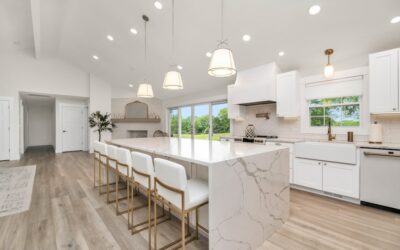
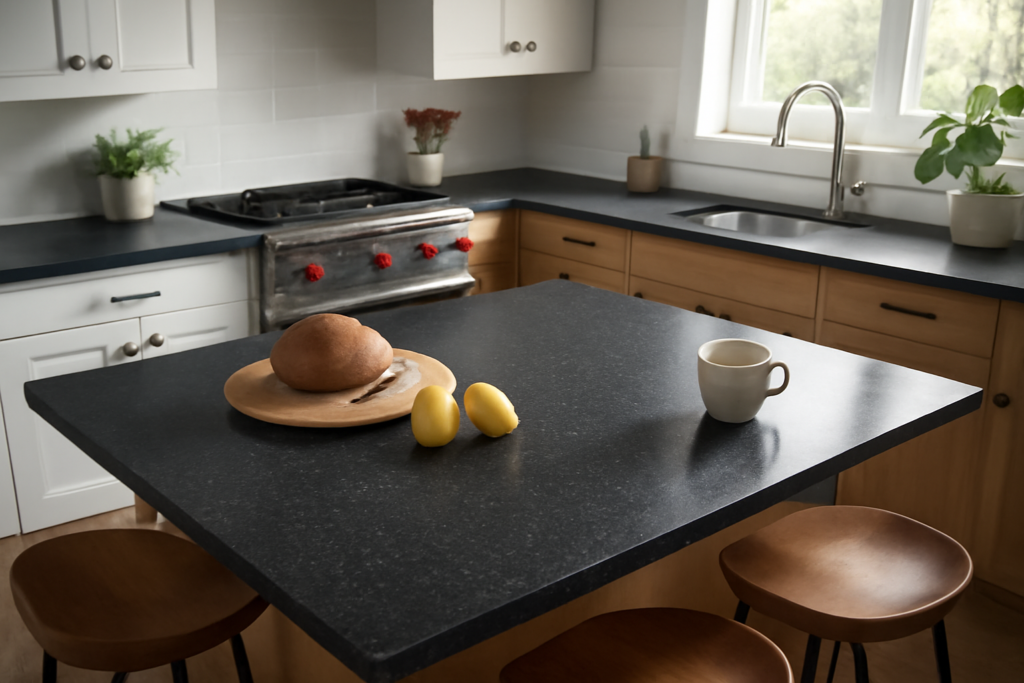
A black counter is a powerful design element, and balancing it keeps the kitchen from feeling closed in. Pair it with lighter cabinets to create striking contrast: white, cream, or light gray cabinetry against black quartz is a timeless, high-impact combination. For a bolder, more dramatic look, dark cabinets with black counters can work in a spacious, well-lit kitchen, though it demands good lighting to avoid feeling cave-like.
Lighting and backsplash choices matter. Under-cabinet task lighting keeps the dark surface bright and functional, while a light backsplash, such as white subway tile or a marble-look slab, reflects light and lifts the whole space. Metal finishes in brushed gold, brass, or polished nickel pop beautifully against black quartz and add warmth. If your design has bright white veining, echo that in the backsplash or hardware to tie the room together.
Care and Cleaning
Maintenance could hardly be simpler. Wipe the surface daily with warm water and a soft cloth, using a mild dish soap or a quartz-safe cleaner for anything sticky. Skip abrasive pads, bleach, and harsh chemicals, which can dull the finish over time. To keep a glossy black design looking sharp, buff it dry after cleaning to prevent water spots and streaks, and address fingerprints with a quick microfiber pass. Because there is no sealing and no special stone treatment involved, the whole routine takes seconds.
Polished vs. Matte Black Finishes
One decision shapes the daily experience of a black counter more than the design name: the finish. A high-gloss polished surface delivers maximum drama, reflecting light and giving veining a wet, luminous depth that makes a kitchen feel luxurious. The catch is that gloss is unforgiving of fingerprints, water spots, and fine dust, so a polished black counter looks its best right after a wipe-down and needs more frequent buffing to stay pristine.
A matte or honed finish flips those priorities. It reads softer and more contemporary, hides smudges and light scratches far better, and forgives a busy household that cannot wipe the counter every hour. The trade is a little less sparkle and, on some matte surfaces, a slightly greater tendency to show dry residue if a cleaner is not rinsed off. If fingerprints would drive you crazy, lean matte; if you want the boldest possible statement and do not mind upkeep, choose polished. Ask your dealer which finishes a given design is offered in before you fall for a specific look.
Making a Dark Kitchen Feel Bright
The single biggest worry with black counters is that the room will feel closed in, and the fix is layered light rather than a lighter countertop. Under-cabinet LED strips wash the work surface and stop the counter from swallowing task light, which matters more with dark stone than with any pale surface. Overhead and pendant lighting on dimmers lets you dial the mood up for cooking and down for evenings, so the drama never tips into gloom.
Reflective and light-toned surroundings do the rest. A white or light backsplash, pale walls, and glossy cabinet fronts bounce daylight around and keep the black counter reading as a deliberate accent rather than a heavy mass. In a smaller kitchen, reserving the black quartz for an island or a single run, while keeping perimeter counters lighter, gives you the statement without darkening the whole room. Warm metal fixtures and a few open wood elements add warmth that keeps the palette from feeling cold.
Is Cambria Black Quartz Right for You?
For homeowners who want a bold, luxurious counter with genuinely low upkeep, Cambria black quartz is a compelling choice backed by an established US manufacturer and a strong warranty. You get the drama of black stone, consistent color you can approve before installation, and a non-porous surface that never needs sealing and resists stains with ease. The tradeoffs are a premium price, the need for a trivet under hot pans, and a glossy finish that shows fingerprints. Pair it with lighter cabinets and good lighting, view the full slabs before you buy, and you will land a countertop that turns your kitchen into a genuine statement while asking almost nothing of you in return.