Yes — can you paint grout lines is one of the few “can I just paint it” questions in the trades where the answer is a genuine yes, with one big condition: you use a purpose-made grout colorant (an epoxy- or urethane-based grout paint and sealer), not latex wall paint, not craft acrylic, and not a paint pen from the office drawer. Done with the right product on sound grout, painted grout lines hold up 5 to 10 years on floors and even longer on walls and backsplashes, and the transformation on a dingy floor is dramatic for about $25 and a tedious afternoon. Done with regular paint, it peels and yellows within months. I have used colorants on dozens of jobs, mostly to rescue sound-but-stained grout, and here is what actually works, how to apply it, and where the honest limits are.
Part of our Tile & Grout guide — explore the full guide →
Why regular paint fails and grout colorant does not
Grout is porous, alkaline cement that lives with moisture, cleaning chemicals, and, on floors, foot traffic and wet mopping. Latex and ordinary acrylic paints are designed for none of that: they sit on the surface as a soft film, water gets under the edges within weeks in a shower, alkalinity attacks the binder, and mop abrasion finishes the job. Grout colorants are different chemistry — typically waterborne epoxy or urethane resins loaded with pigment — formulated to penetrate slightly into the grout surface, bond to alkaline cement, resist standing water, and double as a sealer. The good ones are rated for wet areas and floors and are scrubbable once cured. That last part matters: a colored joint you cannot clean is not an upgrade.
What you can and cannot fix with grout paint
Colorant is a cosmetic and water-resistance upgrade for structurally sound grout. It excels at:
- Permanently stained or blotchy grout that no cleaner rescues
- Lightening dark grout or darkening dingy white grout (dark-over-light is the easy direction; white-over-dark may need two coats)
- Evening out patchy color from old repairs and sun fade
- Sealing while it colors — most products replace a separate sealer
It cannot fix cracked, crumbling, or missing grout — colorant is a film, not a filler. Rake and regrout failed joints first, let the new grout cure (manufacturers typically want new grout to cure fully before colorant, often two to three weeks), then paint everything for a uniform color. It also does not bond well to epoxy grout: epoxy joints are non-porous, and most colorants either will not stick or need a specific epoxy-rated formula and aggressive scuffing. If your grout has a plasticky sheen and repels water, test one joint before buying a whole kit.
Choosing a product
You will find three tiers on the shelf and online, typically $12 to $30 per bottle, with a bottle covering roughly 100 to 300 linear feet of joint depending on width:
| Type | Durability | Best use | Notes |
|---|---|---|---|
| Urethane/epoxy colorant-sealer | 5–10+ yrs | Floors, showers, everything | The pro choice; scrubbable, wet-rated |
| Acrylic grout “refresh” paints | 1–3 yrs | Dry backsplashes, low traffic | Easier, cheaper, shorter life |
| Grout pens/markers | Months–1 yr | Touch-ups, rentals, small areas | Convenient, fastest to apply, least durable |
Color availability is wide — whites, grays, beiges, and charcoal are standard, and several brands offer 30-plus colors or custom tinting. Take a grout sample or photo in daylight when choosing; wet grout reads two shades darker than dry.
How to apply grout colorant properly
The product is simple; the prep and the wipe-back are where results are won. A full bathroom floor takes 3 to 5 hours of hands-and-knees work. The sequence:
- Clean aggressively. Scrub the joints with an alkaline tile cleaner or a 1:1 vinegar solution (ceramic/porcelain only), rinse well, and let the floor dry overnight. Colorant over soap film peels like paint over grease. Some manufacturers specify their own pre-cleaner; use it.
- Strip old sealer if present. Drip water on a joint: if it beads hard, there is sealer, and the colorant needs it scuffed or stripped to bond. A light pass with a stiff nylon brush and cleaner usually suffices.
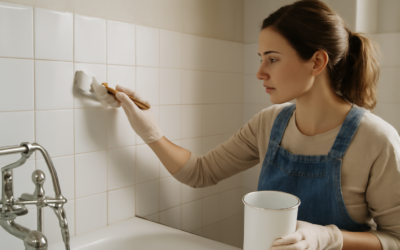
- Apply to the joint. Work the colorant into the grout line with the applicator brush or a small stiff artist’s brush, in sections of a few square feet. Push it into the grout texture; do not just stripe the surface. Slight overlap onto the tile is normal and expected.
- Wipe back the tile. After the section sits 3 to 5 minutes (per label), wipe the excess off the tile face with a barely damp sponge or towel, pulling across the joints, not along them. On textured tile, a nylon brush cleans the overlap out of the surface profile. This wipe-back step is 60 percent of the labor and 90 percent of how professional it looks.
- Second coat if needed. Going white over dark, or covering deep stains, expect two thin coats over one thick one.
- Cure. Light foot traffic in 1 to 2 hours for most products, mopping and showers in 24 to 72 hours per label. Respect the wet-area cure; it is the difference between ten years and ten weeks.
How it holds up: honest durability expectations
On wall tile and backsplashes, a quality urethane colorant is close to permanent — I have jobs past the ten-year mark that still look freshly grouted. On floors, expect 5 to 10 years in normal households, with the first wear appearing in pivot zones: in front of the sink, the shower entry, the hallway doorway. Wear shows as gradual thinning back to the original color, not ugly peeling, so touch-ups are a ten-minute job with the leftover bottle (store it tightly capped; shelf life after opening is a year or two). In showers, longevity is excellent if the grout underneath is sound and the cure was respected, but colorant will not save grout that is failing from water getting behind the tile — no coating fixes a waterproofing problem.
Cleaning afterward is normal: neutral or mild alkaline cleaners, nylon brushes, no problem. Avoid soaking colored joints in strong acids (heavy-duty descalers, muriatic-based cleaners), which dull and eventually strip the film.
Maintaining painted grout lines
Once cured, painted grout lines want the same care as epoxy grout: neutral or mildly alkaline cleaners, a nylon brush, and no acid soaks. The two habits that extend their life the most are quick wipe-downs of kitchen-floor joints before grease films build (grease trapped on the surface is what eventually dulls the finish in front of the stove) and squeegeeing shower walls so mineral deposits do not crust over the colorant. When a high-traffic joint finally wears thin — you will see the original grout color ghosting through — clean it, let it dry, and brush a fresh stripe from the stored bottle; the new coat blends invisibly because you are repainting with the identical pigment, something cement grout patches can never promise. That repairability is, quietly, the biggest long-term advantage colorant holds over regrouting.
Cost versus the alternatives
Perspective on the money: a bottle of colorant and a cheap brush set is $20 to $40 and covers a full bathroom. Professional regrouting of the same room runs $400 to $900. Retiling starts around $1,500 for a small floor. For sound grout with cosmetic problems, colorant is not the budget compromise — it is the correct scope of work, and plenty of pros (me included) offer it as a line item. Where I steer clients away from it: heavily cracked joints, epoxy grout, active moisture problems, and rental turnover jobs where a $6 grout pen honestly covers the need for the next tenant walkthrough.
Final field notes: buy one bottle and test a closet corner or the joint behind the toilet first, both for adhesion and because color on your actual grout in your actual light beats the label swatch. Mask nothing, but keep a damp rag in your off hand the entire time — dried colorant on tile faces takes a razor and patience to remove, while wet overlap wipes off in a second. Kneepads, a podcast, and modest expectations for your back, and by evening you will have the highest-impact $25 upgrade in the flooring world. Painted grout lines, with the right product, are one shortcut I will defend all day.
Prefer to explore on your own?
See how new flooring looks in your actual room in seconds — free, no signup.
Try the free Floor Studio →