Few home-safety myths are as stubborn as the idea that a CO alarm must sit near the floor because carbon monoxide is “heavy,” or high on the ceiling because it “rises like smoke.” Neither is quite right. The correct carbon monoxide detector height is, for most modern alarms, wherever the manufacturer’s instructions say, because carbon monoxide weighs almost exactly the same as air and mixes evenly through a room once it is present.
That means a CO alarm on a wall at eye level, one on the ceiling, and one plugged into a standard outlet about 12 to 18 inches off the floor will all detect a dangerous buildup in a typical room. What changes the answer is the specific device. Each alarm is tested and listed for particular mounting positions, and the manual is the final word. This guide explains the science, the common mounting options and the situations where the instructions override general advice.
- Carbon Monoxide Detector Height: What the Science Says
- The Three Common Mounting Options
- When the Manufacturer's Instructions Override
- Where Height Matters Less Than Location
- How to Mount a CO Alarm Step by Step
- CO Safety Beyond the Alarm
- Troubleshooting Placement Problems
- Frequently Asked Questions
Carbon Monoxide Detector Height: What the Science Says
Carbon monoxide has a density of about 0.97 relative to air. That tiny difference means it does not pool on the floor like a heavy gas or collect at the ceiling like hot smoke. It is also usually produced by combustion, so it often enters a room slightly warm and then disperses as it cools and circulates. Within minutes, concentrations tend to even out from floor to ceiling in an enclosed space.
Smoke behaves differently. Hot combustion gases and particles rise quickly and spread along the ceiling first, which is why smoke alarms are ceiling-mounted or placed high on walls. When people apply smoke-alarm logic to CO, they end up worrying about carbon monoxide detector height far more than they need to.
So how high should a carbon monoxide detector be mounted? For a standalone CO-only alarm, common guidance is anywhere from outlet height to the ceiling, with many manufacturers suggesting about 5 feet off the floor on a wall, roughly at the breathing height of a standing adult, so the display is easy to read. Combination smoke and CO alarms go wherever the smoke sensor needs to be: on the ceiling or high on the wall.
The Three Common Mounting Options
Wall Mounting at Eye Level
Mounting a battery CO alarm on a wall about 5 feet up makes the digital readout easy to check, keeps it away from curious kids and pets, and makes it simple to press the test button without a ladder. It is a good choice for hallways outside bedrooms. Keep it out of the top 4 to 6 inches of the wall near the ceiling corner, where air can stagnate.
Ceiling Mounting
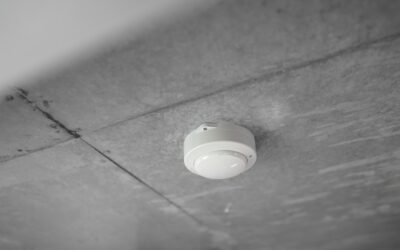
A ceiling mounted carbon monoxide alarm works well, especially if it is a combination smoke and CO unit. Keep it at least 4 inches from walls, away from ceiling fans and supply registers, and not in the peak of a vaulted ceiling. The tradeoff is convenience: you need a ladder to test it or read any display.
Plug-In at Outlet Height
A plug-in carbon monoxide alarm with battery backup is the easiest installation of all. The standard outlet height of roughly 12 to 18 inches is acceptable for most listed plug-in models, since CO mixes into the air at that level too. Pick an outlet not controlled by a wall switch, not hidden behind furniture or drapes, and not in a spot where it will be bumped by vacuums or feet. The battery backup keeps it working during a power outage, which is exactly when people run generators and space heaters that raise CO risk.
When the Manufacturer’s Instructions Override
Every alarm sold in the US is tested to a safety standard in the positions its maker specifies. If the manual says to mount the unit on a wall at a certain height, or says not to install it within a certain distance of a ceiling, follow it. Using the device outside those conditions can slow its response or cause false alarms.
Instructions also override for these reasons:
- Combination units: the smoke sensor dictates a high location, so you should not plug a combo alarm into a low outlet unless it is designed for that.
- Displays and voice alerts: some models specify a height where the speaker is not muffled by furniture.
- Sensor protection: certain units should not be installed where they will be splashed, exposed to high humidity or bumped often.
- Local code: some jurisdictions set placement rules that are stricter than general guidance, particularly for hardwired alarms in new construction.
Where Height Matters Less Than Location
Once you accept that carbon monoxide detector height is flexible, the real question becomes where the alarm sits in the home. Placement relative to sleeping areas and fuel-burning appliances matters far more than whether the device is 2 feet or 6 feet off the floor.
- Put an alarm outside every sleeping area, close enough to wake sleepers with the door closed.
- Put one on every level of the house, including the basement.
- Keep alarms about 10 to 20 feet from furnaces, water heaters and gas ranges to avoid nuisance alerts from brief start-up emissions.
- Avoid bathrooms, directly over sinks, near open windows, and in the direct airflow of fans or vents.
- In homes with attached garages, add an alarm in the room nearest the garage entry.
How to Mount a CO Alarm Step by Step
- Read the manual and note the approved positions and minimum distances.
- Choose the spot based on sleeping areas and appliances, then pick a height that fits the device’s instructions.
- Mark and drill pilot holes for the mounting plate, using anchors if you are not hitting a stud or joist.
- Install batteries or pull the activation tab, then attach the alarm to the plate until it clicks.
- Press the test button and confirm the alarm sounds clearly from the bedrooms with doors closed.
- Label the date on the back so you know when the sensor reaches end of life, usually 7 to 10 years.
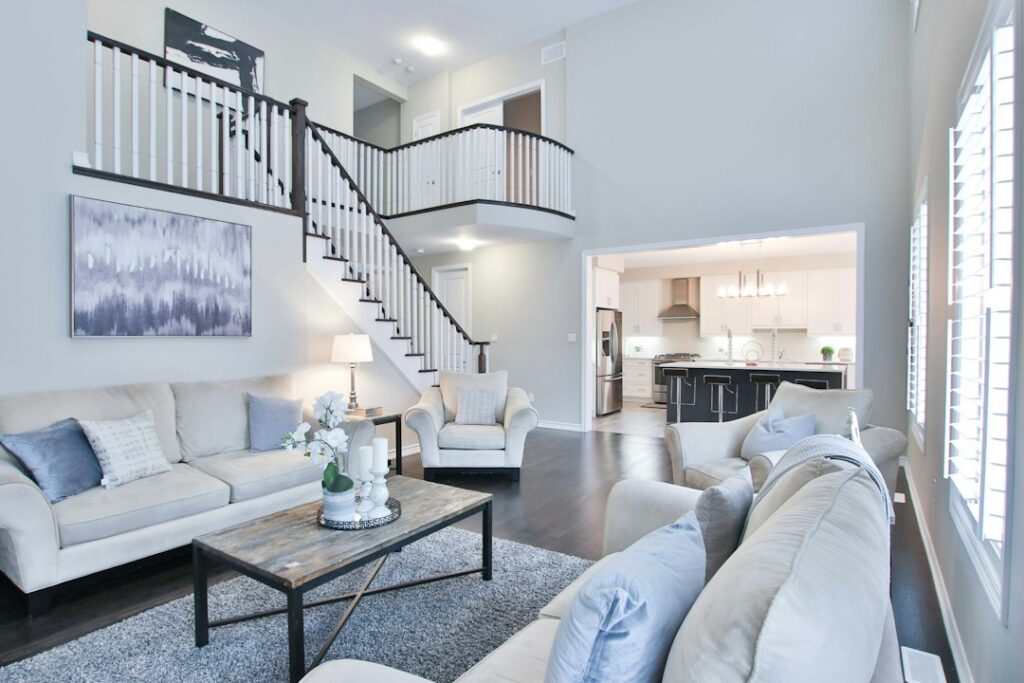
For ceiling locations, use a sturdy stepladder, never stand on the top step or top cap, keep three points of contact and have someone hold the base. Over stairwells or in two-story rooms, a plug-in or wall-mounted unit at a reachable height is safer than balancing a ladder on stairs, and a pro can handle anything you cannot reach safely.
CO Safety Beyond the Alarm
An alarm is the last line of defense. Keep combustion appliances such as furnaces, boilers, water heaters, gas ranges, fireplaces, and wood or pellet stoves vented and cleared per the manufacturer’s manual and local code, and schedule an annual chimney and vent inspection. Use unvented kerosene or propane heaters indoors only if the label allows it, and never run a generator, grill or vehicle inside a garage or near windows, even with the door open.
If a CO alarm sounds, get everyone outside to fresh air immediately and call 911 or the fire department. Do not go back inside until responders say it is safe, and have a licensed HVAC technician inspect fuel-burning appliances before using them again.
One practical tip: whatever height you choose, pick a spot you will actually check. An alarm mounted at a convenient height gets tested monthly, while one tucked high over a stairwell tends to be forgotten until it chirps at 3 a.m. Consistency across the house also helps; if every CO alarm sits at the same height on a hallway wall, family members and guests learn where to look for the display, and you can replace them all on the same schedule when the sensors reach end of life.
Troubleshooting Placement Problems
Frequent nuisance alarms: the unit may be too close to a gas range or furnace. Move it farther away and away from direct airflow.
Alarm cannot be heard in bedrooms: add another unit closer to sleeping areas or choose interconnected models.
Plug-in keeps getting unplugged: relocate it to an outlet behind a doorway path, or switch to a wall-mounted battery model at 5 feet.
End-of-life chirp: replace the entire alarm, not just the battery.
Most battery or plug-in CO alarms cost $20 to $50, and combination units run $30 to $60. Hardwired, interconnected installations by an electrician typically add $100 to $250 per location.
Frequently Asked Questions
How high should a carbon monoxide detector be mounted?
Anywhere from outlet height to the ceiling works for most listed CO alarms, because carbon monoxide mixes evenly with air. Many people choose about 5 feet on a wall for easy reading. Always follow the manufacturer’s instructions.
Is a ceiling mounted carbon monoxide alarm effective?
Yes. Ceiling mounting works well, especially for combination smoke and CO alarms. Keep the unit at least 4 inches from walls and away from fans and vents.
Is carbon monoxide heavier or lighter than air?
It is very slightly lighter, but the difference is so small that it disperses throughout a room rather than rising or sinking.
Can I plug a CO detector into a low outlet?
Most plug-in CO alarms are designed for standard outlet height. Choose an unswitched outlet that is not blocked by furniture, and pick a model with battery backup.