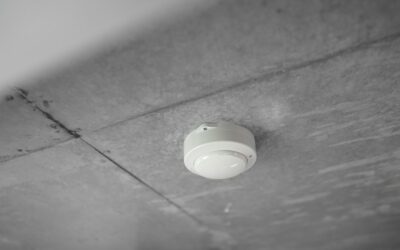
A standard carbon monoxide alarm does its job only if someone is home to hear it. If a furnace starts backdrafting while you are at work, the house can fill with gas for hours while the alarm sounds to empty rooms, a sleeping pet or a teenager with earbuds in. A smart CO detector closes that gap by sending an alert to your phone, and often to other household members, the moment it detects dangerous levels.
The quick version: a smart carbon monoxide alarm still sounds a loud local siren, but it also connects to your home network so it can push notifications, log readings and, on some models, alert a monitoring service. Install one on every level of the home, outside each sleeping area and near fuel-burning appliances, replace it when the sensor reaches end of life (usually 7 to 10 years) and test it monthly. It supplements good venting and annual appliance service; it never replaces them.
Here is how connected alarms work, where to place them, how to route alerts when no one is home and what to do if one goes off.
What a Smart CO Detector Does Differently
Every carbon monoxide alarm uses an electrochemical sensor that reacts to CO molecules and produces a small electrical current in proportion to concentration. Listed alarms sound based on both level and time: a moderate concentration triggers only after prolonged exposure, while a high concentration triggers within minutes. That design avoids nuisance alarms from brief whiffs while catching the slow buildups that cause poisoning.
A smart CO detector uses the same kind of sensor. The difference is connectivity. It communicates over Wi-Fi or a low-power radio to a hub or directly to an app. That adds several features:
- Remote alerts: push notifications, texts or calls when the alarm sounds.
- Shared alerts: several family members can receive the same notification.
- Interconnection: one alarm can trigger others throughout the house, even without new wiring.
- Status reporting: low battery, sensor end of life and offline warnings arrive on your phone instead of as a 3 a.m. chirp.
- Readings and history: some models show current CO levels in parts per million, which helps you spot low-level problems early.
- Automations: on some systems, an alarm can turn off the furnace fan, turn on lights or unlock a door for responders.
Some units combine smoke and CO detection. Combination units save ceiling space, but make sure the model is listed for both hazards, and remember that smoke and CO alarms have different ideal placements.
Where to Place Carbon Monoxide Alarms
Placement matters more than features. Follow the manufacturer’s instructions and your local code, and use these general guidelines:
- Every level of the home, including the basement.
- Outside each separate sleeping area, in the hallway within earshot of bedrooms. Many people also add one inside each bedroom.
- Near fuel-burning appliances, but not right next to them. Keep alarms roughly 5 to 20 feet from furnaces, water heaters and ranges to avoid nuisance trips from brief startup puffs.
- In rooms over or next to an attached garage, where idling vehicles are a common CO source.
- Near fireplaces and wood or pellet stoves, following the clearance in the alarm’s manual.
Carbon monoxide mixes fairly evenly with room air, so alarms can go on the wall or ceiling depending on the model’s instructions. Avoid dead air spots in corners, locations within a few feet of a window or exhaust fan, humid bathrooms, and garages themselves unless the alarm is rated for that environment.
Power Options and Sensor Life
Smart alarms come in battery-only, plug-in with battery backup, and hardwired with battery backup versions. Battery-only units are easiest to place. Plug-in units should go directly into a wall outlet, not an extension cord or power strip that could be switched off or unplugged.
Hardwired alarms usually connect to an existing alarm circuit. If you are replacing a hardwired unit, turn off the breaker and confirm power is off with a non-contact voltage tester before disconnecting anything. Match the new unit’s connector or use the adapter supplied, and never test the wiring while it is energized. Adding a new hardwired circuit or alarm location is a job for a licensed electrician.
Every CO sensor wears out. Most carry a 7 to 10 year life, and many alarms announce end of life with a distinct chirp or app message. Write the install date on the back of the unit and replace it on schedule, even if it still seems to work.
Setting Up Alert Routing
A smart carbon monoxide sensor is only as good as the people who get its alerts. Take a few minutes during setup to plan who gets notified and what they should do.
- Install the app and name each alarm by location, such as “basement furnace” or “upstairs hall.”
- Add every adult in the household so an alarm reaches more than one phone.
- Enable critical alerts on your phone so notifications break through do-not-disturb settings.
- Add a trusted neighbor or nearby relative if the app allows, especially if pets stay home alone.
- Consider professional monitoring if you travel often or have elderly relatives living alone. Monitoring centers can dispatch the fire department when an alarm sounds.
- Protect the network. Place alarms where your Wi-Fi signal is strong, and turn on offline notifications so you know if a unit loses connection.
- Test the full chain using the test button and confirm every phone receives the alert.
What to Do When the Alarm Sounds
Treat every CO alarm as real. Get everyone, including pets, outside into fresh air immediately. Call 911 or the fire department from outside. Do not go back in until responders say the home is safe. If anyone has symptoms such as headache, dizziness, nausea, confusion or unusual sleepiness, tell the dispatcher and seek medical care.
If you receive a remote alert while away, call 911 and anyone who might be in the house. Do not drive home and walk in to check.
If you smell natural gas or propane, which has an added rotten-egg odor, that is a separate hazard. Leave the house without operating switches, then call your gas utility or 911 from a safe distance. A CO alarm does not detect gas leaks; consider a separate listed combustible gas alarm if you have gas appliances.
Preventing Carbon Monoxide Problems
Alarms are the last line of defense. Prevention comes first:
- Have furnaces, boilers, water heaters and gas ranges inspected and serviced every year by a qualified technician.
- Have chimneys, flues and stove vents inspected annually and cleaned as needed.
- Keep vents and flues clear of snow, nests and debris.
- Never run a generator, grill or camp heater indoors, in a garage or near open windows.
- Never idle a vehicle in an attached garage, even with the door open.
- Use unvented fuel heaters indoors only if the label allows it, and follow its ventilation rules.
- Keep clearances around fireplaces and stoves as the maker’s manual specifies.
Gas appliances and gas lines are licensed-professional work. Installing, moving or reconnecting them requires the proper permits and a leak test. Do not attempt gas connections yourself.
Costs and Maintenance
Smart carbon monoxide alarms generally cost $50 to $130 each, and combination smoke and CO models run slightly higher. A home with three levels and several bedrooms may need four to six units. Professional monitoring, if you add it, is usually a modest monthly fee.
Maintenance is simple. Press the test button monthly, vacuum dust from the vents a few times a year, replace batteries when prompted, and replace the entire unit at end of life. Update the app when prompted so alert features keep working.
Troubleshooting
Frequent low-level readings
Readings that hover above zero may point to a venting problem or a cracked heat exchanger. Schedule a professional inspection of your fuel-burning appliances.
App shows the alarm offline
Check Wi-Fi strength, restart the router, and move a range extender closer if needed. The local siren still works even when offline, but remote alerts will not.
End-of-life chirping
This means the sensor is expired. Replace the alarm; new batteries will not fix it.
Frequently Asked Questions
Does a smart CO detector still work without Wi-Fi?
Yes. The sensor and siren work locally. You lose phone alerts and remote status until the connection returns.
How many carbon monoxide alarms do I need?
At least one on every level and one outside each sleeping area. Many homes add units near attached garages and fuel-burning appliances.
How long do smart carbon monoxide alarms last?
Most have a sensor life of 7 to 10 years. Replace the whole unit when the app or chirp signals end of life.
Can a CO alarm detect a gas leak?
No. It detects carbon monoxide only. Natural gas or propane leaks need a separate combustible gas alarm, and the odor is your first warning.
Where should I not put a CO alarm?
Avoid spots directly next to fuel appliances, near windows or exhaust fans, in humid bathrooms, and in dead air corners.
Is professional monitoring worth it?
It is worth considering if the home is often empty with pets inside, or if an elderly relative lives alone and may not respond to an alarm.