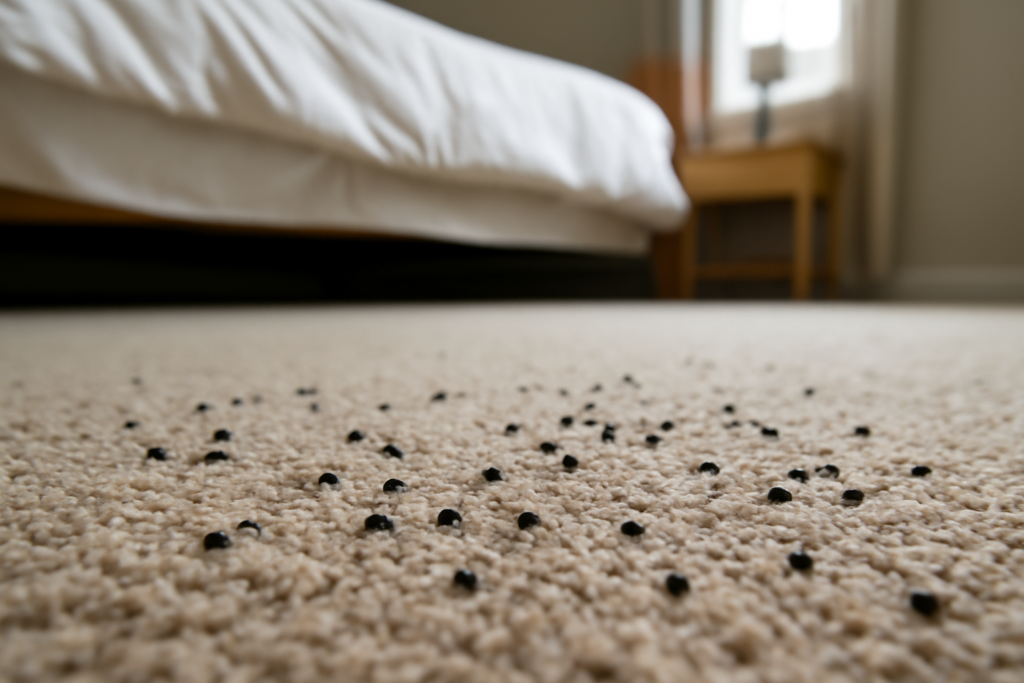
You pull back the bed skirt or move a dresser and spot them — carpet bedroom little tiny black bugs in house creeping along the baseboards or clustered near the window. Before you panic, the most common culprit is the carpet beetle, a small household pest that feeds on natural fibers, not on people. This is an identification and cleaning problem, not a crisis. Here is how to figure out what you are dealing with and clear them out for good using a straightforward, integrated approach.
First, Identify What You’re Seeing
Not every tiny bug in a carpet is the same, so start with a close look. Carpet beetles are the usual suspect and come in a few forms:
- Adult carpet beetles: tiny, rounded, 1/8 inch or smaller, often black or mottled black, brown, and white. They are attracted to light and windows.
- Carpet beetle larvae: small, fuzzy or bristly, tan-to-brown “carrot-shaped” crawlers. The larvae, not the adults, do the actual damage.
- Shed skins and fecal pellets: tiny translucent casings near baseboards and closet edges are a telltale sign.
If the bugs jump, they are more likely fleas; if they cluster at windows in fall, they could be other overwintering insects. But small, slow-moving black or mottled specks in a bedroom carpet almost always point to carpet beetles.
Why They Showed Up
Carpet beetles feed on natural materials — wool carpet, wool clothing, silk, feathers, pet hair, dead insects, and lint. A bedroom is an ideal habitat because it collects shed skin, pet dander, and fibers under the bed and in closets where you rarely clean.
Adults typically fly in from outside through open windows in spring and summer, often drawn to plants, then lay eggs in dark, undisturbed spots indoors. Once the larvae hatch, they feed for weeks to months on those natural fibers. Understanding the food source is the key to eliminating them.
Where to Look for the Source
Getting rid of them means finding where the larvae are feeding. Do a careful inspection of these hotspots:
- Carpet edges and under furniture where dust and fibers gather undisturbed
- Closets — especially wool, cashmere, and silk clothing and stored blankets
- Under the bed and behind the headboard
- Air vents, baseboards, and along the wall-to-carpet edge
- Stored items like feather pillows, taxidermy, or old rugs
Pay attention to any wool item with small irregular holes — that is larvae feeding, and it points you to the infestation’s core.
The Cleaning-First Treatment Plan
Carpet beetles respond best to an integrated pest management (IPM) approach that leads with thorough cleaning, not chemicals. Work through these steps in order.
- Vacuum aggressively and often. Vacuum the entire bedroom — carpet, edges, under furniture, closet floors, and along baseboards — daily at first. Use the crevice tool on edges where larvae hide. Empty the vacuum outside immediately after.
- Launder or dry-clean fabrics. Wash bedding, curtains, and washable clothing in hot water. Dry-clean or hot-dry wool and delicate items to kill eggs and larvae.
- Freeze what you can’t wash. Seal delicate items in a bag and freeze for several days to kill all life stages.
- Deep clean the carpet. Steam clean or hot-water extract the carpet to reach eggs and larvae down in the pile.
- Declutter and seal storage. Store off-season wool and natural fibers in sealed bins, not open closets.
Consistency is what wins here. A single vacuuming won’t do it — the value is in repeating the routine over a couple of weeks to catch newly hatched larvae.
When to Use Products
If cleaning alone isn’t enough, targeted products help. Boric-acid-based carpet powders and insecticides labeled for carpet beetles can be applied to carpet edges and cracks per the label directions. Diatomaceous earth (food-grade) sprinkled along baseboards and under furniture is a low-toxicity option that damages the insects’ outer layer.
Always read and follow the product label exactly, keep children and pets away during application, and ventilate afterward. For a large or stubborn infestation, a licensed pest control professional can treat the space effectively. Do not overuse chemicals in a bedroom — cleaning and source removal do most of the work.
Preventing Them From Coming Back
Once you have cleared them, keep them out with a few habits:
- Vacuum regularly, including under beds and along edges, to remove the fibers and dander they feed on
- Install or repair window screens to block adults from flying in
- Store natural fibers sealed and add cedar or airtight bins for wool
- Reduce clutter so there are fewer undisturbed feeding sites
- Fix any lint and dust buildup in vents and closets
The Takeaway
Finding carpet bedroom little tiny black bugs in house is unsettling, but it is a manageable, common problem — almost always carpet beetles feeding on natural fibers rather than anything harmful to you. Identify them correctly, hunt down the food source, and lead with thorough, repeated vacuuming, laundering, and carpet cleaning. Reach for targeted, label-directed products only if needed, and seal your window screens and wool storage to keep them from returning.
Identifying and Confirming the Pest
Little tiny black bugs in a carpeted bedroom are most often carpet beetles, and correctly identifying them is the first step to getting rid of them. Adult carpet beetles are tiny, rounded, and can look black or mottled, while the more destructive larvae are small, fuzzy, and worm-like, often hiding along baseboards, under furniture, and at carpet edges. They feed on natural fibers, wool, silk, pet hair, and shed skin, which is why bedrooms and closets are hot spots.
Distinguishing them from bed bugs matters: bed bugs cluster near the mattress and bite, while carpet beetles damage fabrics and do not bite, so confirm which you have before treating.
An Integrated Approach to Removal
The most effective response combines several non-chemical and targeted steps rather than reaching straight for a fogger. Vacuum thoroughly and frequently, focusing on carpet edges, under beds, and inside closets, and dispose of the bag or empty the canister outside right away. Launder or hot-dry affected bedding and clothing, since heat kills all life stages. Reduce the food source by cleaning up pet hair and lint and storing natural-fiber items in sealed containers. For persistent infestations, a targeted residual insecticide labeled for carpet beetles applied along baseboards and carpet edges helps, always following the label directions. If the problem keeps returning despite diligent cleaning, a licensed pest control professional can locate the source, such as a nest in the attic or an old wool item, that keeps reseeding the infestation.