Those little tan, bristly worms you find curled up along your baseboards aren’t harmless lint, and finding a carpet beetle larvae nest means the damage to your carpet, wool, and stored clothing has probably already started. Unlike the adult beetles that feed on pollen outdoors, the larvae are the destroyers, chewing through natural fibers, feathers, and even dried food while they grow. Catch a nest early and you’ll save your rugs and sweaters; miss it and you’ll find bare patches in wool and holes in your favorite coat.
I’ve dealt with these in older homes where they’d been quietly working for months behind furniture nobody moved. The good news is they’re beatable without a pricey exterminator in most cases, as long as you find every hiding spot and stay consistent for a few weeks. Here’s how to recognize the larvae, locate their nests, and clear them out.
What Carpet Beetle Larvae Look Like
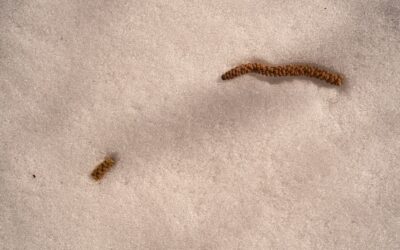
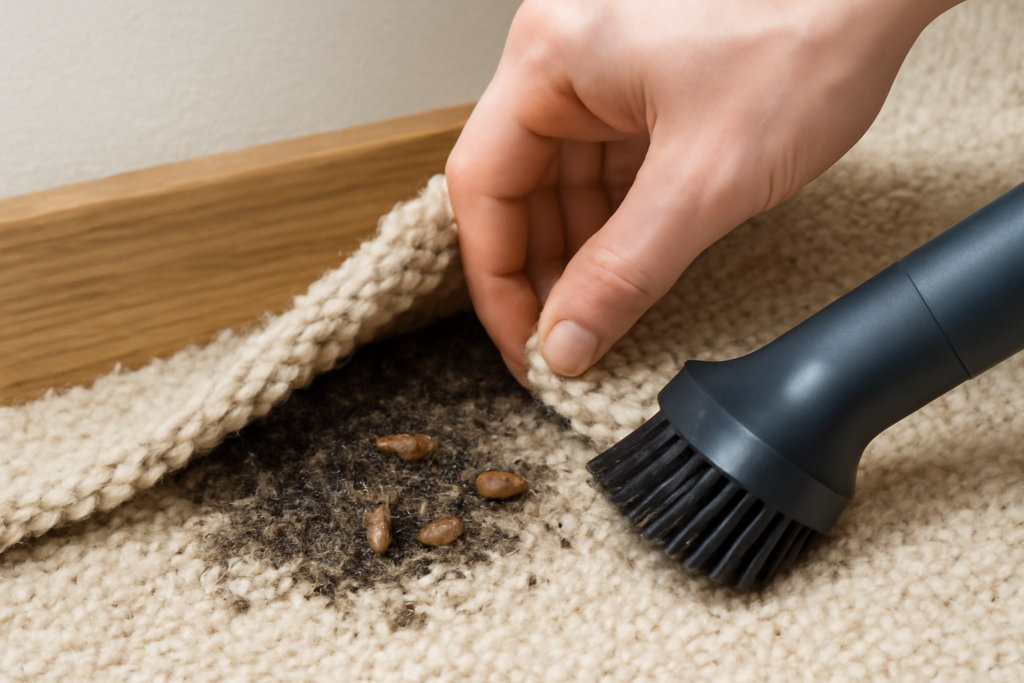
The larvae are small, usually an eighth to a quarter-inch long, and covered in fine hairs or bristles that give them a fuzzy, striped appearance. Colors range from creamy white to tan to dark brown, often with lighter and darker bands. They move slowly and tend to curl up when disturbed. You’ll also spot the evidence they leave behind: shed skins that look like empty translucent shells, tiny fecal pellets the size of a salt grain, and irregular holes in fabric.
People often confuse them with bed bugs or clothes moth larvae. Carpet beetle larvae are hairier and don’t leave the silk webbing that clothes moths do. If you see fuzzy little worms plus shed skins near natural-fiber items, you’re almost certainly looking at carpet beetles.
Where They Nest and Hide
There’s no single tidy nest like a wasp would build. Instead, larvae congregate in dark, undisturbed spots close to a food source. Check these areas carefully:
- Under and behind furniture that rarely moves
- Along baseboards and in carpet edges near walls
- Inside closets, especially with wool or silk clothing
- In air ducts and heating vents where lint collects
- Under area rugs and inside the pad
- Behind and inside upholstered furniture
- In stored blankets, taxidermy, and dried flower arrangements
They also feed on accumulated pet hair, dead insects trapped in light fixtures, and crumbs, so a spot with all that debris and no foot traffic is prime real estate. Pull furniture away from walls and inspect the carpet edges with a flashlight; that’s where I find the heaviest concentrations.
How to Confirm an Infestation
Seeing one larva doesn’t mean a full infestation, but shed skins and multiple larvae do. Lift the corner of any wool rug and check the underside and the pad. Run your hand along carpet edges and look for thinning or bare patches, a telltale sign larvae have been grazing. Open stored-clothing containers and hold garments to the light; feeding holes and grazed nap on wool sweaters confirm the problem.
Step-by-Step Removal
- Vacuum aggressively and often. Vacuum every day for the first week, hitting carpet edges, under furniture, closet floors, and vents. Use the crevice tool along baseboards. Empty the canister or bag outside immediately so larvae don’t crawl back out.
- Launder or dry-clean affected fabrics. Wash washable items in hot water at 120°F or higher. Dry-clean wool and silk that can’t take hot water. Freezing infested items at 0°F for two weeks kills all life stages if laundering isn’t an option.
- Steam clean carpets and upholstery. The heat from a steam cleaner (over 130°F) kills eggs and larvae the vacuum misses. This is the single most effective step for carpet.
- Treat cracks and edges. An insecticide labeled for carpet beetles, or a boric-acid-based powder, applied along baseboards and carpet edges kills survivors. Follow the label and keep pets and kids away until it dries.
- Store clean items sealed. Once fabrics are clean, store them in airtight bins or garment bags so beetles can’t re-infest.
Preventing Them From Coming Back
Adult beetles fly in through open windows and land on flowers you bring inside, so screens and a quick shake-out of cut flowers help. Vacuum regularly, especially the neglected corners and under heavy furniture, since accumulated hair and lint is what feeds them. Keep wool and silk clothing clean before long-term storage, because larvae are drawn to sweat, food stains, and body oils on fabric.
Cedar blocks and lavender sachets offer mild deterrence but won’t stop an active infestation on their own. They’re a maintenance layer, not a cure. Pheromone traps sold for about $10 a pack help you monitor whether adults are present and worth setting in closets after you’ve cleaned up.
When to Call a Professional
If you’ve steam cleaned, laundered, and treated for a month and still find fresh larvae and shed skins, or if the infestation spans multiple rooms and stored collections, a licensed pest control company is worth the $150 to $400 for a targeted treatment. They can access wall voids and duct systems where larvae hide beyond a homeowner’s reach. For most single-room outbreaks caught early, though, diligent vacuuming, hot laundering, and steam cleaning will clear a carpet beetle larvae nest within two to three weeks.
Products and Costs for a DIY Treatment
You can assemble everything you need for well under $100. A dust applicator with boric-acid or diatomaceous-earth powder handles the cracks and edges, an aerosol or concentrate insecticide labeled for carpet beetles treats broader areas, and pheromone monitoring traps tell you whether adults are still active. Here’s what I typically reach for and roughly what it costs at Home Depot, Lowe’s, or Amazon:
- Harris or Zap-A-Roach boric acid powder: $8 to $15 a bottle, applied along baseboards with a duster.
- Food-grade diatomaceous earth (4 lb): $12 to $20, a pet-safer option for edges and closet corners.
- Ortho Home Defense or a permethrin-based spray: $10 to $18, for carpet edges and cracks per label.
- Dr. Killigan’s or generic carpet-beetle pheromone traps: $10 to $25 per pack for monitoring.
- Rental or owned steam cleaner: $35 a day to rent, or $100 to $200 to buy a Bissell unit.
Buy the traps first if you’re unsure whether beetles are still breeding. Catching a few adults over two weeks confirms an active population and tells you to keep treating; an empty trap after a thorough cleanup is a good sign you’ve won.
The Damage They Cause and Why Speed Matters
Larvae don’t feed fast, but they feed constantly, and a colony left alone for a season will graze wool carpet down to the backing in patches and pepper stored sweaters with pinholes. Silk, felt, feather down, fur, and even the wool blend in a favorite suit are all fair game. Synthetic carpet like nylon and polyester is largely safe, but larvae will still chew synthetics soiled with food, sweat, or pet dander to reach the residue.
Because a single female beetle lays up to 100 eggs and the larval stage can stretch several months to over a year in cool homes, a small problem compounds quietly. Acting within the first couple of weeks of spotting larvae is the difference between a $50 cleanup and replacing a wool area rug that runs into the thousands.
Frequently Asked Questions
Do carpet beetle larvae bite people? No. They don’t bite, but their bristly hairs can trigger an itchy skin rash or irritation in sensitive people that’s sometimes mistaken for bed bug bites.
Will they go away on their own? Not reliably. As long as there’s a food source of natural fiber, hair, or lint, the cycle continues. You have to remove the food and kill the larvae.
Can they infest a whole house? Yes, if ignored. They spread from room to room following food sources and can nest in ducts, so treat early and thoroughly.
How long until I’m in the clear? Most caught-early single-room cases clear in two to three weeks of daily vacuuming, hot laundering, and steam. Keep a trap out for a month afterward to confirm.
Prefer to explore on your own?
See how new flooring looks in your actual room in seconds — free, no signup.
Try the free Floor Studio →