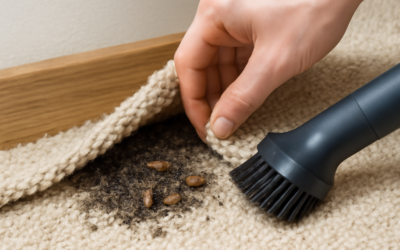
Homeowners hunting for a tidy hive or web are often confused, because that is not how these pests operate. There is technically no such thing as a carpet beetle nest in the way wasps or ants build one, yet the search term captures a real problem: carpet beetle larvae quietly cluster in hidden, undisturbed spots where they feed on natural fibers. Finding and clearing these clusters is the single most important step in stopping the damage, because the larvae, not the adults, do the eating. Knowing exactly where they gather turns a frustrating search into a targeted cleanup.
- Why There Is No True Nest
- What to Look For
- Where Larvae Cluster
- How to Find the Source
- Removing a Carpet Beetle Cluster
- How Long Cleanup Takes
- Preventing Them From Coming Back
- Carpet Beetle Larvae vs. Clothes Moth Larvae
- Inspecting Hidden and High Areas
- Natural and Chemical Control Options
- When to Call a Professional
Why There Is No True Nest
Unlike social insects, carpet beetles do not build a communal structure. Adult females simply lay eggs near a food source, and the hatching larvae spread out to feed wherever fibers and debris collect. What looks like a “nest” is really a concentration of larvae, shed skins, and fecal pellets in a feeding zone. Recognizing this changes your strategy from hunting a single hive to inspecting every quiet spot where larvae might gather.
What to Look For
The signs of a larval cluster are subtle but distinctive once you know them:
- Larvae: Tiny, carrot-shaped, bristly or fuzzy creatures, often tan to brown, about 1/8 to 1/4 inch long.
- Shed skins: Translucent, hollow casings the larvae leave behind as they molt, a telltale sign of an active population.
- Fecal pellets: Fine, sand-like grains the size of a salt grain near damaged items.
- Fabric damage: Irregular holes, thinning, or bare patches in wool, silk, or fur.
Where Larvae Cluster
Larvae seek dark, undisturbed places rich in the keratin and other proteins they eat. Inspect these common hot spots:
- Carpet edges and under furniture: Along baseboards and beneath heavy pieces that rarely move.
- Closets: Among stored wool clothing, especially items left unworn for months.
- Storage bins and chests: Inside boxes of blankets, sweaters, and linens.
- Air vents and ducts: Where lint, pet hair, and dust accumulate.
- Under and behind appliances: Where shed hair and crumbs collect.
- Attics and wall voids: Near old bird or rodent nests, animal hides, or taxidermy, which are rich food sources.
How to Find the Source
Tracking down the cluster takes a systematic search. Pull furniture away from walls and peel back carpet edges to inspect underneath. Empty closets and check garment seams and folds, where larvae hide. Look inside long-term storage and behind baseboards. Larvae avoid light, so they tend to be on the undersides of items and in the deepest corners. Following a trail of shed skins and damage usually leads to the densest concentration.
Removing a Carpet Beetle Cluster
Once you locate the larvae, act thoroughly to break the cycle:
- Vacuum the area intensively, including carpet edges, cracks, and the undersides of furniture, then empty the vacuum outside immediately.
- Launder washable infested items in hot water, or dry-clean delicate fabrics; heat kills all life stages.
- Freeze items that cannot be washed by sealing them in bags and placing them in a freezer for several days.
- Steam clean carpets and upholstery where larvae cluster, since heat and moisture destroy eggs and larvae.
- Discard heavily infested items you cannot salvage, sealing them in bags before removal.
- Clean vents, ducts, and hidden corners to remove the lint and debris that feed larvae.
How Long Cleanup Takes
Set realistic expectations, because carpet beetles are not eliminated in a single afternoon. Their long larval stage and ability to hide mean you may need several rounds of cleaning over a few weeks to break the cycle. Vacuum the affected areas thoroughly every few days at first, continue laundering and inspecting stored items, and keep an eye out for new shed skins or damage. If you find no new larvae or skins for several weeks, the cluster is likely cleared. Consistency matters more than intensity; a thorough routine repeated over time beats one frantic deep clean followed by neglect.
Preventing Them From Coming Back
After cleanup, prevention keeps larvae from re-establishing. Store wool, silk, and fur in sealed containers or garment bags. Vacuum regularly, especially along edges and under furniture. Keep ducts and quiet corners clean, and reduce clutter where dust gathers. Seal entry points and maintain window screens to keep egg-laying adults out. Sticky traps near windows help you monitor whether adults reappear.
Carpet Beetle Larvae vs. Clothes Moth Larvae
Both pests damage natural fibers, so it helps to tell them apart. Carpet beetle larvae are bristly, carrot-shaped, and crawl freely, leaving behind shed skins and sand-like fecal pellets. Clothes moth larvae are smooth, cream-colored caterpillars that often spin silken tubes or leave webbing and irregular casings on the fabric. If you see webbing, suspect moths; if you see fuzzy larvae and shed skins, suspect carpet beetles. The control steps overlap heavily, but correct identification helps you target the problem and rule out a different infestation.
Inspecting Hidden and High Areas
Clusters often hide where homeowners rarely look. Check the tops of door and window casings, the corners of ceilings near light fixtures, and inside ductwork registers where dust collects. In attics, examine insulation near soffit vents and any spot where birds or rodents may have nested, since animal remains and feathers are prime food. Pull stored boxes away from walls and inspect their undersides. A flashlight and patience reveal clusters that a quick glance misses.
Natural and Chemical Control Options
Several approaches help once you find a cluster. Thorough vacuuming and laundering in hot water are the foundation and are often enough for small problems. For added control, diatomaceous earth can be applied lightly in cracks and along baseboards, where it abrades and dehydrates larvae. Insecticide sprays and dusts labeled for carpet beetles can be used per the product directions on edges and hidden harborage, but follow safety instructions carefully, especially around children and pets. Boric acid products are another option for cracks and voids. Always read and follow every label.
When to Call a Professional
If you cannot locate the source, if clusters keep returning, or if damage spreads despite thorough cleaning, the infestation may be hidden in wall voids, ducts, or an old animal nest you cannot reach. A licensed pest control professional can pinpoint concealed breeding sites and apply targeted treatments. For a persistent or widespread problem, professional help is the surest way to eliminate carpet beetles completely.
Prefer to explore on your own?
See how new flooring looks in your actual room in seconds — free, no signup.
Try the free Floor Studio →