Finding tiny beetles near a window or small bald patches in a wool rug sends most homeowners searching for a clear picture to compare against. A good carpet beetle image is genuinely the fastest way to confirm what you are dealing with, but photos on a screen can be misleading about scale, and the most destructive stage is the larva, not the adult you usually notice first. This guide describes in vivid detail exactly what carpet beetles and their larvae look like, how their lifecycle works, the damage they leave behind, and how to get rid of and prevent them.
Carpet Beetle Image: What Adults Look Like
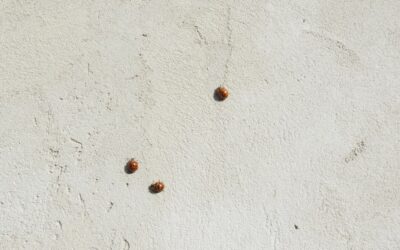
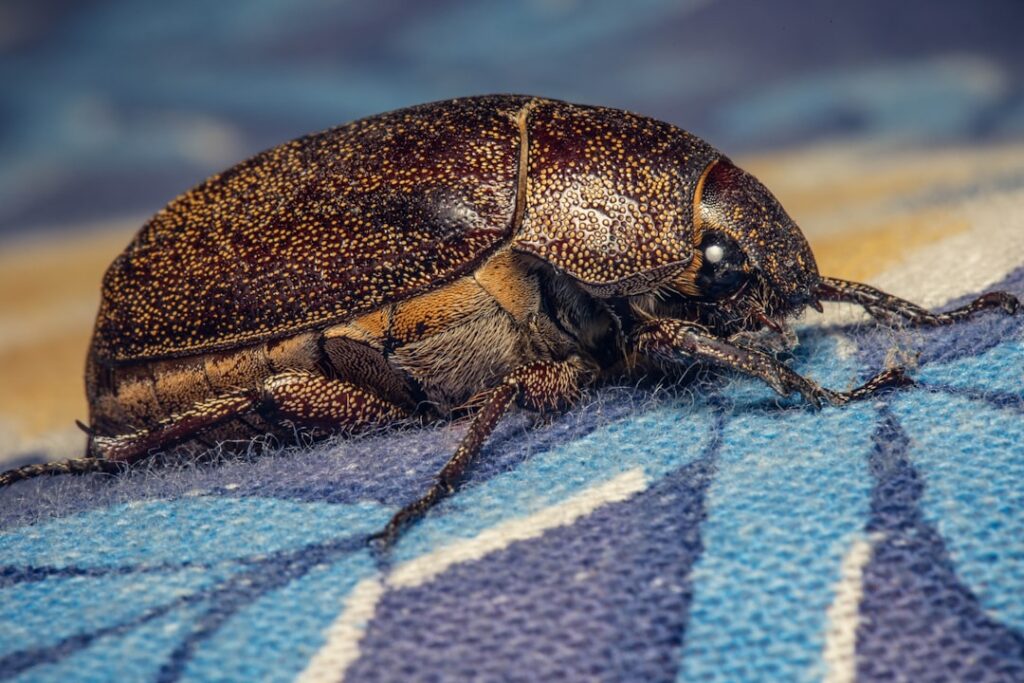
Adult carpet beetles are small, only about 1/16 to 1/8 inch long, roughly the size of a pinhead to a sesame seed. Their bodies are rounded, almost oval or dome-shaped, similar to a miniature ladybug in outline but far smaller. The three common household species each have a distinct look:
- Varied carpet beetle: A mottled pattern of white, brown, and dark yellow scales that gives a speckled, camouflage appearance. As the scales wear off with age, older beetles can look uniformly dark.
- Black carpet beetle: Shiny, solid dark brown to black, with a slightly more elongated oval body. This is the one most often mistaken for a bed bug or a common household beetle.
- Furniture carpet beetle: Similar mottling to the varied species but with more white and yellowish scales, often appearing lighter overall.
If you have a specimen, look under magnification for short, clubbed antennae and fine scales covering the wing cases. Adults are strong fliers and are drawn to light, which is why you often first spot them on windowsills or near lamps.
What the Larvae Look Like (the Real Culprits)
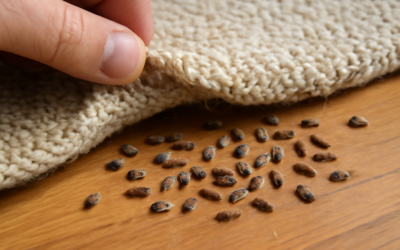
Here is the key point any carpet beetle image search should teach you: the adults do not eat fabric, the larvae do. Carpet beetle larvae are the destructive stage and look nothing like the beetles. They are elongated, carrot-shaped or tapering, about 1/8 to 1/4 inch long, and covered in dense bristly hairs that earn them the nickname “woolly bears.”
Their coloring ranges from tan to dark brown, often banded in alternating light and dark stripes across the body. Some species sport a distinctive tuft of longer hairs at the rear that they can flare out. As they grow, they molt repeatedly and shed their bristly skins, so finding cast-off larval skins is itself a reliable sign of an active infestation. The larvae shun light and hide in dark, undisturbed places, which is why you find damage long before you find them.
The Carpet Beetle Lifecycle
Understanding the lifecycle explains why an infestation can smolder for months unseen. A female lays 40 to 90 eggs in secluded spots near a food source, such as inside a closet, under baseboards, or in air ducts. The eggs hatch in one to three weeks.
- Egg: Tiny, white, laid in hidden crevices near fibers or lint.
- Larva: The longest and most damaging stage, lasting anywhere from several months to over a year depending on temperature and food supply.
- Pupa: The larva pupates inside its last larval skin.
- Adult: Emerges, mates, and often flies toward windows and light; adults live only a few weeks and feed mainly on pollen outdoors.
Because the larval stage is so long, a single generation can quietly chew through fabrics for a year, and homes often see overlapping generations.
Signs of Carpet Beetle Damage
Even without spotting an insect, the damage pattern is a giveaway. Watch for:
- Irregular bare patches or thinning in wool rugs, carpet, and upholstery, often in quiet corners under furniture.
- Small, irregular holes in wool sweaters, silk, felt, and other natural fibers, frequently scattered rather than clustered like moth damage.
- Shed bristly skins and a fine, sand-like debris (frass) near the damage.
- Damage to stored items: feathers, taxidermy, wool blankets, and even dry pet food or cereal.
Carpet beetles feed on keratin, the protein in animal-based fibers, so they attack wool, silk, fur, feathers, and leather far more than synthetics. Blends and soiled synthetics can still be damaged where food stains or body oils are present.
Where You Find Them
Larvae gravitate to dark, undisturbed, protein-rich spots. Check the edges of carpet along baseboards, under and behind heavy furniture, inside closets and storage boxes, in air vents and ducts where lint and pet hair collect, and around window frames where adults gather. Attics with old wool insulation, bird or rodent nests, and dead insects in light fixtures are classic hidden breeding grounds.
How to Get Rid of Carpet Beetles
Elimination is a matter of thoroughness rather than a single spray. Work through these steps:
- Vacuum aggressively and often. Cover carpet edges, under furniture, closet floors, and upholstery. Vacuuming physically removes eggs, larvae, and food debris. Empty the canister or bag outside immediately.
- Launder or dry-clean infested fabrics. Wash washable items in hot water above 120 degrees Fahrenheit, or dry-clean wool and silk. Freezing items at 0 degrees for two weeks also kills all stages.
- Steam clean carpets and upholstery. Heat and moisture penetrate where vacuuming cannot.
- Treat cracks and hidden areas with an insecticide labeled for carpet beetles, or use boric acid or diatomaceous earth along baseboards and in closets. Follow all label directions.
- Remove the food source, such as old nests, dead insects in fixtures, and forgotten wool stored in the attic.
For a large or recurring infestation, a professional pest control service can locate the breeding source and treat it more completely than DIY methods.
Carpet Beetles Versus Clothes Moths
Because both attack natural fibers, carpet beetles are often confused with clothes moths, and telling them apart changes how you treat the problem. Here is how to read the evidence:
- The insect itself: Carpet beetle larvae are bristly, striped, and hairy; clothes moth larvae are smooth, cream-colored, and caterpillar-like. Adult carpet beetles are hard-shelled rounded beetles, while clothes moths are small buff or golden moths that flutter and avoid light.
- The damage: Carpet beetles create scattered, irregular holes and grazed, thinned patches. Clothes moths leave silken tubes, webbing, and cocoon cases in the damaged area.
- Behavior: Adult carpet beetles fly toward windows and light; clothes moths hide in dark closets and scatter when disturbed.
If you see webbing and silky cases, you are dealing with moths. If you see bristly larvae, shed skins, and beetles on the windowsill, it is carpet beetles. Both respond to the same core strategy of cleaning, heat, and removing the food source, but confirming which pest you have helps you target hiding spots correctly.
Are Carpet Beetles Harmful to People?
Carpet beetles do not bite and do not spread disease, so they are not a direct medical threat the way some pests are. That said, they are not entirely harmless to sensitive people. The tiny bristly hairs shed by the larvae can cause an itchy, allergic skin reaction sometimes mistaken for bed bug bites, appearing as small red welts, particularly in people who handle infested bedding or clothing. The hairs and shed skins can also irritate the respiratory system and trigger reactions in those with allergies or asthma.
The bigger cost is property damage. Left unchecked, a colony can ruin wool rugs, heirloom textiles, fur, feathers, stored clothing, and even damage book bindings and taxidermy. Because the larvae work slowly and out of sight, the loss adds up before most people realize an infestation is underway, which is exactly why early identification matters so much.
How to Prevent Them
Prevention keeps them from returning. Vacuum regularly, especially in low-traffic corners. Store wool, fur, and other natural fibers in sealed containers with cedar or naphthalene protection. Clean garments before long-term storage, since body oils and food stains attract larvae. Seal gaps around windows and vents, and check secondhand furniture, rugs, and taxidermy before bringing them inside.
Rather than relying on a single carpet beetle image to diagnose the problem, use the whole picture: mottled beetles on windowsills, bristly striped larvae in dark corners, shed skins, and irregular bald spots in natural fibers. Catch those signs early, clean thoroughly, and remove the hidden food source, and you can stop the damage before it spreads through the rest of your fabrics.
Prefer to explore on your own?
See how new flooring looks in your actual room in seconds — free, no signup.
Try the free Floor Studio →