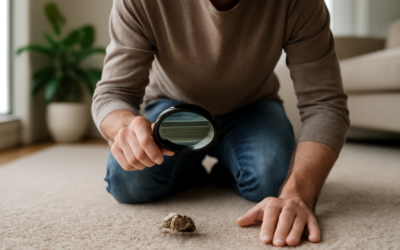
You spot a tiny round beetle on your windowsill and wonder how it got there in the first place. The answer surprises many homeowners. Do carpet beetles fly is one of the most common questions about these pests, and the short answer is yes, adult carpet beetles can fly, which is exactly how they get into homes and spread from room to room. Understanding their flight, their life cycle, and where the real damage comes from is the key to controlling them.
Do Carpet Beetles Fly? The Direct Answer
Adult carpet beetles are capable fliers. They have wings tucked under their hard outer shell, and they use them to move around, especially toward light. This is why you often find them near windows, light fixtures, and on sills, where they gather as they try to get outside or are drawn to the brightness.
The larvae, on the other hand, cannot fly. The immature carpet beetle is a small, fuzzy, worm-like crawler with no wings at all. It moves slowly across floors and into dark, undisturbed spots. This split is important, because the flying adults and the crawling larvae play very different roles in an infestation.
Adults Versus Larvae
Knowing which life stage you are dealing with changes how you respond. The two stages differ sharply:
- Adult carpet beetles: small, oval, hard-shelled beetles often patterned in black, white, brown, or orange, that fly and feed mainly on pollen and nectar outdoors
- Carpet beetle larvae: tiny, elongated, bristly or fuzzy crawlers that do not fly and feed on fabrics and other materials indoors
The crucial takeaway is that the larvae cause the damage, not the adults. Adults are mostly a nuisance and a sign that breeding is happening nearby, while the hungry larvae are the ones chewing through your belongings.
How Flying Helps Them Spread
Because adults fly, carpet beetles get into homes easily through open windows, doors, and gaps around vents. They are attracted to light, so they often drift inside in spring and early summer when they are most active. Once indoors, a female can lay eggs in undisturbed spots near a food source, and those eggs hatch into the destructive larvae.
Flying also lets adults move between rooms and find new places to lay eggs, which is how a small problem in one closet can turn up in another part of the house. The flight stage is essentially the dispersal and breeding phase of the pest’s life.
What the Larvae Eat
The larvae have a taste for natural materials rich in a protein called keratin. Common targets include wool carpets and rugs, wool clothing, silk, fur, feathers, leather, and felt. They will also feed on lint, pet hair, dead insects, and dried food crumbs that collect in neglected corners.
This is why infestations often hide in low-traffic, undisturbed areas. Under furniture, along baseboards, inside closets, in stored clothing, and beneath rugs are all favorite spots. The larvae avoid light and activity, so the damage frequently goes unnoticed until you move something and find the holes.
The Carpet Beetle Life Cycle
Understanding the full life cycle explains why flight matters so much. A female adult lays small eggs in hidden spots near a food source, such as inside a closet, beneath a rug, or in a heating vent. Those eggs hatch into the destructive larvae, which feed on natural fibers and other materials for weeks or even months as they grow, molting and shedding their bristly skins along the way.
When a larva matures, it pupates and emerges as an adult beetle. The new adults are drawn to light and often fly toward windows in an effort to get outside, where they feed on pollen and nectar and mate. Females then return indoors to lay the next generation of eggs, and the cycle repeats. The flying adult stage is essentially nature’s way of dispersing the population and starting fresh infestations in new locations.
Why You See Them in Spring
Carpet beetle adults are most active and most likely to fly in the warmer months, especially spring and early summer. This is when they emerge from pupation and head toward light and outdoor flowers, which is why homeowners often notice a cluster of small beetles on windowsills as the weather warms. Seeing adults at that time of year is a normal signal of their seasonal activity.
It also serves as a useful early warning. A flush of adults indoors in spring suggests that larvae may have been feeding somewhere in the home over the colder months. Treating that sighting as a prompt to inspect closets, rugs, and stored fabrics can help you catch and stop an infestation before the next generation gets established.
Signs of a Carpet Beetle Problem
Catching an infestation early limits the damage. Watch for these indicators:
- Adult beetles gathering near windows, sills, and light fixtures.
- Small, irregular holes in wool, silk, or other natural-fiber fabrics.
- Shed larval skins, which look like tiny bristly castings, in closets and along baseboards.
- Fuzzy, crawling larvae in dark corners, under rugs, or in stored clothing.
- Bare or thinning patches in wool carpet, especially in undisturbed areas.
If you notice adults indoors, treat it as a warning to inspect your closets, rugs, and storage for the more damaging larvae before they multiply.
How to Control Carpet Beetles
Control relies on cleaning, removal, and cutting off food sources rather than any single quick fix. Thorough, frequent vacuuming is the most effective step, since it removes larvae, eggs, lint, and food debris from carpets, rugs, baseboards, and furniture. Empty the vacuum afterward so nothing crawls back out.
Wash or dry-clean infested clothing, bedding, and washable fabrics in hot conditions to kill larvae and eggs. Items that cannot be washed can sometimes be sealed in bags and frozen, since extreme cold also kills the larvae. Declutter storage areas and seal valuable natural-fiber clothing in airtight containers to deny the pests a feeding ground.
Prevention and When to Call a Pro
Keeping carpet beetles out is mostly about denying entry and food. Install or repair window screens to keep flying adults outside, and seal gaps around doors, vents, and windows. Keep storage areas clean and uncluttered, vacuum regularly, and store wool and silk items in sealed containers with the area cleaned first.
For a persistent or widespread infestation that keeps returning despite cleaning, a licensed pest control professional can identify the source and apply targeted treatments safely. So while the answer to whether carpet beetles fly is a clear yes for the adults, remember that the crawling larvae do the real harm. Focus your efforts on cleaning, removing food sources, and sealing entry points, and you can keep these pests from chewing through your floors and fabrics.
Prefer to explore on your own?
See how new flooring looks in your actual room in seconds — free, no signup.
Try the free Floor Studio →