If you have found small shed skins or chewed wool, you are probably wondering how long do carpet beetles live and how soon you can be rid of them. The honest answer is that the question of how long do carpet beetles live depends heavily on which stage you mean, because the destructive larval phase can stretch for many months while the adults you actually notice live only a few weeks.
Understanding the full lifecycle is the key to controlling them, since the part of the insect that damages carpet, clothing, and upholstery is rarely the part you see flying near a window. This guide breaks down each stage and the practical steps that interrupt it.
The Carpet Beetle Lifecycle at a Glance
Carpet beetles are complete-metamorphosis insects, moving through four distinct stages: egg, larva, pupa, and adult. The total lifespan from egg to the death of the adult commonly runs from a few months to well over a year, and in cool, low-food conditions some larvae can persist far longer.
- Egg: hatches in roughly 1 to 5 weeks depending on temperature.
- Larva: the damaging stage, lasting anywhere from about 60 days to a year or more.
- Pupa: typically a few weeks inside the last larval skin.
- Adult: generally 2 to 6 weeks, focused on mating and laying eggs.
How Long Adults Live
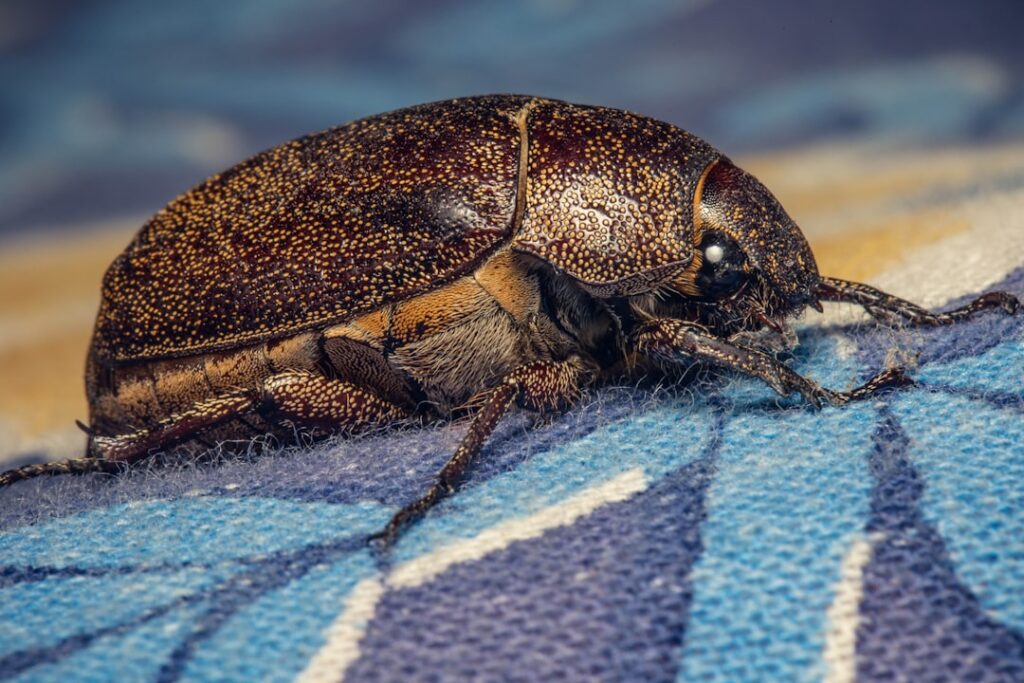
Adult carpet beetles are small, oval, and often mistaken for ladybugs or tiny mottled beetles. Once they emerge from the pupal stage, they live only a few weeks, usually between two and six. Their goal in that short window is reproduction. Adults feed mainly on pollen and nectar outdoors, which is why they are drawn to windows and light as they try to get outside.
Because the adults are short-lived and not the feeders that destroy fabric, killing the ones you see does little on its own. A single female can lay dozens of eggs before she dies, and those eggs become the larvae that do the real harm. Seeing adults indoors is a signal that breeding may be happening somewhere in the home.
The Larval Stage Lasts the Longest
The larva is where the lifecycle truly stretches out. Carpet beetle larvae can remain in that stage for two months to over a year, and the duration is strongly influenced by temperature, humidity, and food supply. In a warm home with abundant natural fibers, development is faster; in cooler, leaner conditions, larvae slow down and can survive surprisingly long periods between meals.
These bristly, tan-to-brown larvae are the ones that chew wool, silk, fur, feathers, leather, and other animal-based materials, along with lint, pet hair, and dead insects collected in undisturbed corners. The shed skins they leave behind as they grow are often the first clue homeowners notice. Because this stage is so long, an infestation can smolder quietly for many months.
Eggs and Pupae
Female adults lay eggs in dark, protected spots near a food source, such as inside ductwork, beneath baseboards, in closets, under furniture, or within stored wool. Eggs hatch in about one to five weeks. Warmer temperatures shorten that window, which is part of why infestations seem to accelerate in summer.
After feeding and molting repeatedly, the larva pupates, often within its final larval skin, and remains in the pupal stage for roughly one to a few weeks before the adult emerges. Generations can overlap, so a home may host eggs, larvae, pupae, and adults simultaneously, which is why control needs to target the environment, not just a single stage.
What Influences Their Lifespan
Several factors determine whether the cycle runs fast or drags on for over a year.
- Temperature: warmth speeds every stage; cool conditions extend the larval period dramatically.
- Humidity: moderate humidity favors development.
- Food availability: abundant natural fibers and debris support faster, larger populations.
- Light: larvae avoid light and thrive in undisturbed, dark areas.
This is why infestations cluster in closets, under heavy furniture, along carpet edges, and in storage boxes that go untouched for seasons.
Signs You Have an Infestation
Knowing how long the larvae linger helps you read the signs. Look for irregular holes in wool sweaters, blankets, or rugs, thinning or bare patches in natural-fiber carpet, and the telltale shed larval skins, which look like tiny hollow husks. You may also find small fecal pellets about the size of a grain of salt near damaged items.
Because larvae hide, you might see adults at windowsills in spring and summer before you ever spot the larvae. Treat any cluster of adults indoors as a prompt to inspect dark, fiber-rich areas thoroughly.
How to Break the Lifecycle
The most effective control attacks the long larval stage and removes the conditions that sustain it. A consistent routine usually clears a moderate infestation.
- Vacuum thoroughly and often, including carpet edges, under furniture, closet floors, and along baseboards, then discard the vacuum contents outside.
- Launder or dry-clean infested clothing, bedding, and washable fabrics; hot washing and hot drying kill all stages.
- Freeze items that cannot be washed by sealing them in a bag and placing them in a freezer for several days.
- Store wool, fur, and other susceptible items in sealed containers or garment bags.
- Reduce clutter, lint, and pet hair that feed larvae, and clean rarely disturbed corners.
When to Call a Professional
If you continue finding larvae or damage after several weeks of diligent cleaning, or if the infestation seems to span multiple rooms and hidden voids, a licensed pest control professional can identify harborage points and apply targeted, labeled treatments safely. Persistent infestations sometimes trace back to a hidden source such as an old bird or rodent nest, dead animals in a wall, or a forgotten wool item, which a pro is better equipped to locate.
Knowing how long do carpet beetles live makes the strategy clear: because the larvae can survive for many months while adults come and go quickly, lasting control comes from steady sanitation that outlasts the longest stage, not from a single spray. Stay consistent, and you will outlast the colony.
Prefer to explore on your own?
See how new flooring looks in your actual room in seconds — free, no signup.
Try the free Floor Studio →