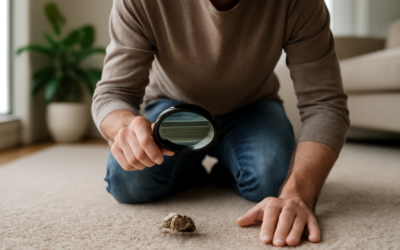
You spot a tiny, fuzzy larva on the baseboard or notice mysterious holes in a wool sweater, and the worry sets in. So are carpet beetles bad, or just an annoyance? The honest answer is that they are a genuine nuisance and fabric pest, not a disease threat. Their larvae quietly chew through wool, silk, leather, and stored dry goods, and a handful of people react to their bristly hairs with skin irritation. Understanding what they actually do helps you respond calmly and effectively. Here is the straight story.
What Carpet Beetles Actually Damage
The adult beetles are mostly harmless; they feed on pollen and nectar outdoors. The real culprits are the larvae, which have a strong appetite for natural fibers and animal-based materials.
- Wool and silk: Carpets, rugs, sweaters, and upholstery are prime targets.
- Leather, fur, and feathers: Coats, hides, and down items can be chewed.
- Stored dry goods: Larvae will infest flour, grains, pet food, and cereals in the pantry.
- Other keratin items: Hairbrushes, taxidermy, and animal-fiber blends.
Synthetic fibers like polyester and nylon are generally safe, though larvae may still damage blends or soiled synthetics that carry food or sweat residue.
Are They a Health Risk?
This is the part that worries people most, so let’s be clear. Carpet beetles do not bite, they do not spread disease, and they are not known to be vectors for illness the way some pests are. They will not make your home unsafe in a medical sense.
That said, some people develop skin irritation, an itchy rash, or a bumpy reaction from contact with the tiny bristly hairs the larvae shed. These hairs can also irritate the eyes or airways in sensitive individuals. If you experience a persistent rash, breathing irritation, or any reaction you are unsure about, see a doctor; only a medical professional can diagnose and advise on your specific symptoms.
How to Identify a Carpet Beetle Problem
Catching an infestation early limits the damage. Look for the signs rather than waiting to see the insects themselves.
Adult beetles are small, oval, and often mottled black, white, brown, or orange, measuring just a few millimeters. The larvae are more telling: small, carrot-shaped, and covered in bristly hairs, sometimes leaving behind shed skins that look like the larvae themselves. Irregular holes in wool fabrics, bare patches in rugs, and shed casings near baseboards, closets, and under furniture all point to carpet beetles.
Integrated Pest Management Approach
The most effective control is not a single spray but a combined, methodical approach known as integrated pest management. It targets the pest on several fronts at once.
Sanitation and Cleaning
Vacuum thoroughly and frequently, paying attention to carpet edges, under furniture, closet floors, and along baseboards. Vacuuming physically removes eggs, larvae, and the hairs that cause irritation. Empty the canister or bag outside afterward. Pay special attention to the quiet, lint-rich zones beetles favor: under and behind heavy furniture, the edges where carpet meets the wall, vent and register openings, and the backs of closet shelves. Use a crevice attachment to reach into these spots, since that is where larvae feed undisturbed, and run the vacuum in these areas on every cleaning rather than only when you notice a problem.
Launder and Treat Fabrics
Wash infested clothing and linens in hot water, or dry-clean items that cannot be washed. Freezing small items for several days or heat-treating them can kill larvae and eggs in delicate fabrics.
Remove the Food Source
Store vulnerable wool, silk, and fur in sealed containers or garment bags. Toss out heavily infested stored grains and pet food, and keep pantry goods in airtight containers.
Targeted Treatment
If cleaning alone does not knock out the population, targeted treatment helps. Insecticides labeled for carpet beetles can be applied to baseboards, carpet edges, and other harborage areas; always follow the product label exactly and keep children and pets clear.
Boric-acid-based products and diatomaceous earth are lower-toxicity options for cracks and crevices. For a large, persistent, or recurring infestation, or if you are unsure how to treat safely, call a licensed pest control professional who can identify the source and apply the right products correctly.
Carpet Beetles vs Clothes Moths
Carpet beetles are often confused with clothes moths because both attack natural fibers and leave holes in wool, but telling them apart helps you target your response. Carpet beetle damage tends to show as larger, more irregular bare patches and grazed areas, and you will find the bristly, carrot-shaped larvae and their shed skins rather than webbing. Clothes moth damage, by contrast, often comes with silken webbing, tube-like cases, or a faint musty smell, and the larvae are smooth, cream-colored caterpillars without the obvious hairs.
Where they hide also differs. Clothes moths prefer dark, undisturbed closets and folded garments, while carpet beetle larvae roam more widely and turn up along baseboards, under furniture, and near lint accumulation. Both respond to the same integrated pest management basics of cleaning, fabric protection, and source removal, so an accurate identification mainly tells you where to focus your search rather than changing the overall strategy.
Understanding the Life Cycle
Effective control is easier when you understand how carpet beetles develop, because the timing explains why a single cleaning rarely ends the problem. Adults lay eggs on or near a food source such as wool, lint, or stored animal-based goods. Those eggs hatch into the destructive larvae, which are the stage that feeds on fabrics, and the larval phase can stretch on for an extended period depending on conditions and available food.
That long larval stage is exactly why a thorough, repeated routine works better than a one-time blitz. Eggs and well-hidden larvae can survive an initial cleaning and continue feeding, so vacuuming and laundering on a consistent schedule over several weeks catches the stragglers as they emerge. Breaking the cycle, by removing food sources and disturbing harborage areas repeatedly, is the heart of the integrated pest management approach and the surest path to clearing them for good.
Preventing Future Infestations
Once you have cleared an infestation, a few habits keep beetles from returning. Prevention is far easier than eradication.
- Vacuum regularly and clean under furniture and along edges where lint collects.
- Store seasonal woolens and natural fabrics in sealed bins or bags.
- Inspect secondhand rugs, furniture, and clothing before bringing them inside.
- Check windowsills and light fixtures, since adults are drawn to light and enter from outdoors.
- Seal cracks and gaps around windows and doors to limit entry points.
The Bottom Line
So, are carpet beetles bad? They are a real fabric pest worth taking seriously because of the damage their larvae do to wool, silk, and stored goods, and the skin irritation their hairs can cause in some people. But they are not a disease threat, and a steady routine of cleaning, fabric protection, and targeted treatment brings them under control. When in doubt about persistent symptoms or a stubborn infestation, lean on a doctor or a pest professional for guidance.
Prefer to explore on your own?
See how new flooring looks in your actual room in seconds — free, no signup.
Try the free Floor Studio →