You spot a tiny, oval, speckled bug on a windowsill and brush it off as harmless. Weeks later you find mysterious bald patches in a wool rug and holes in a sweater you never wore. Those are classic signs of carpet beetles, one of the most common and most overlooked household pests in America. They don’t bite, but their larvae quietly chew through carpet, clothing, and upholstery. Catch them early and cleanup is simple; ignore them and the damage adds up fast. Here’s how to identify, treat, and prevent them.
What Carpet Beetles Look Like
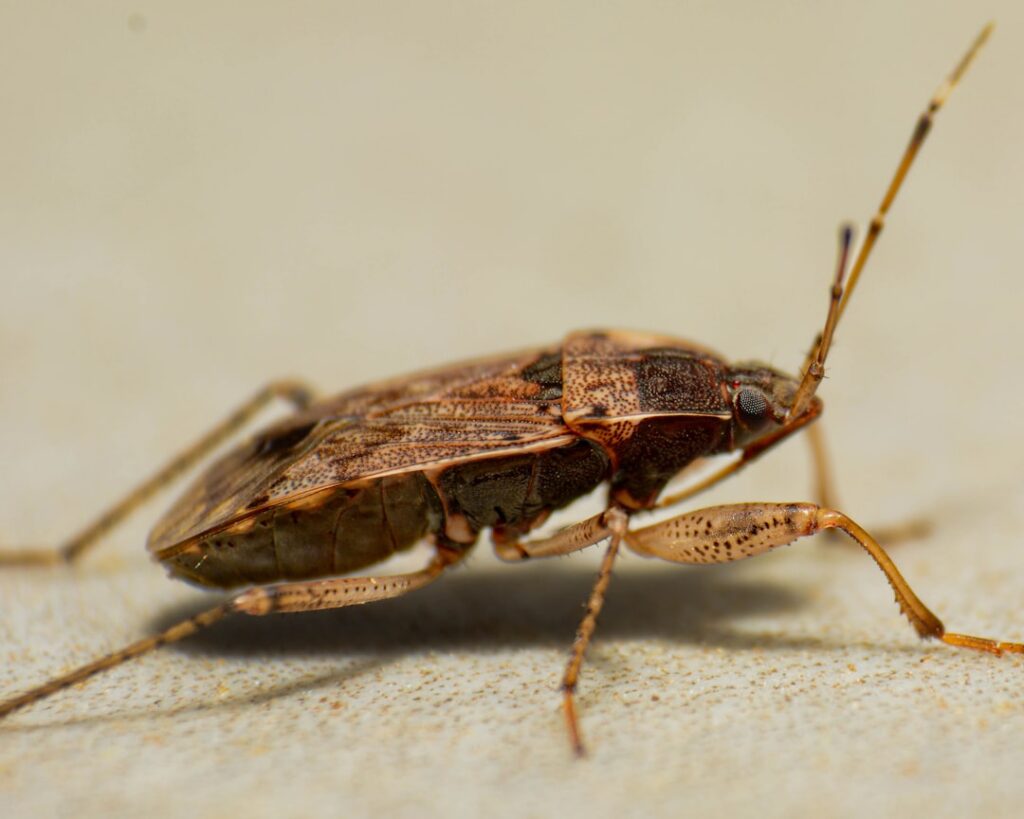
Adult carpet beetles are small, 1/16 to 1/8 inch long, rounded and oval, and often mistaken for tiny ladybugs or bed bugs. The most common species, the varied carpet beetle, has a mottled pattern of white, brown, and yellow scales; the black carpet beetle is solid dark brown to black. Adults are actually harmless to your belongings, they feed on pollen and are drawn to windows and light.
The real culprits are the larvae. Carpet beetle larvae are tiny, tan-to-brown, carrot-shaped, and covered in bristly hairs, sometimes called “woolly bears.” They avoid light and hide in dark, undisturbed spots, which is exactly why the damage often appears before you ever see the pest.
This hide-and-feed behavior is what makes carpet beetles so sneaky compared to other pests. The larvae seek out the exact places you rarely clean: under heavy furniture, along baseboards, inside closets and storage boxes, beneath area rugs, and in the dark corners of drawers and attics. They can go months without being noticed because they never venture into the open. By the time you spot an adult beetle crawling toward a sunny window, larvae may have been quietly feeding in three or four hidden locations for weeks. That’s why identifying the early signs, rather than waiting to see a bug, is the key to catching an infestation before it spreads through your textiles.
The Telltale Signs of an Infestation
Because the larvae stay hidden, you usually notice the evidence first. Watch for these signs:
- Shed skins: Larvae molt as they grow, leaving behind translucent, bristly cast skins in drawers, closets, and along baseboards. This is often the clearest early sign.
- Irregular holes and bare patches: Damage to wool carpet, rugs, sweaters, and upholstery, often clustered rather than uniform like moth damage.
- Fecal pellets: Tiny grain-like specks, about the size of a salt crystal, near infested items.
- Live larvae: Small woolly, bristled larvae in dark corners, under furniture, or along carpet edges.
- Adult beetles near windows: Small oval beetles crawling toward light, a sign adults are present and laying eggs.
What Attracts Carpet Beetles
Larvae feed on natural fibers containing keratin and animal proteins. Your home is a buffet if you have wool carpet or rugs, silk, felt, leather, feathers, fur, or dead insects in wall voids. They’re also drawn to items soiled with sweat, food, or oils. Synthetic fibers like nylon and polyester are generally safe, which is one reason wool and natural-fiber owners see the most trouble.
Adults fly in through open windows and doors in spring, attracted to light, then lay eggs in dark, protected spots near a food source. Each female can lay up to 100 eggs, so a small problem multiplies quickly.
How to Get Rid of Carpet Beetles
A methodical approach clears most infestations without a professional:
- Vacuum aggressively: Vacuum all carpets, rugs, upholstery, closets, and baseboards thoroughly, several times a week. Pay attention to edges, under furniture, and dark corners. Empty the canister or bag outside immediately.
- Wash and heat-treat fabrics: Launder infested clothing and linens in hot water (at least 120°F) and dry on high heat. Larvae die from sustained heat.
- Freeze what you can’t wash: Seal delicate items in bags and freeze them at 0°F for two weeks to kill all life stages.
- Steam clean: Steam carpets and upholstery; the combination of heat and moisture kills larvae and eggs.
- Apply targeted treatments: For persistent cases, use an insecticide labeled for carpet beetles (containing bifenthrin or deltamethrin) along baseboards and carpet edges, or sprinkle food-grade diatomaceous earth in cracks and voids.
- Discard heavily damaged items: Some infested rugs or textiles aren’t worth saving, remove them to stop the cycle.
How to Prevent Them Coming Back
Prevention is mostly about cleanliness and blocking entry points:
- Vacuum regularly, especially under furniture and along baseboards where lint and hair collect.
- Store wool, fur, and silk in airtight containers or garment bags, ideally with cedar or pheromone traps.
- Clean clothing before long-term storage, larvae feed on the sweat and food residue, not just the fabric.
- Install or repair window screens to keep adults from flying in.
- Remove old bird and rodent nests from eaves and attics, they’re prime breeding grounds.
- Use sticky pheromone traps to monitor for adults so you catch a resurgence early.
Carpet Beetles vs. Bed Bugs and Moths
People often confuse these pests. Bed bugs bite and cluster around mattresses; carpet beetles don’t bite people at all, though their bristly larvae can cause a rash in sensitive individuals. Clothes moths also damage wool, but their larvae leave silky webbing and tubes, while carpet beetle larvae leave shed skins and bristly bodies. Correctly identifying the pest matters, because the treatment for a biting insect differs from a fabric pest.
The Carpet Beetle Life Cycle
Understanding the life cycle explains why infestations are so persistent. A female lays 40 to 100 eggs near a food source, textiles, lint, or a dead insect, and they hatch in one to three weeks. The larval stage is the damaging one, and it’s remarkably long: larvae can feed for several months up to a full year, depending on temperature and food supply. That’s why you keep finding damage even after you’ve killed the adults you saw at the window.
Larvae eventually pupate and emerge as adults, which live only a few weeks, just long enough to mate and lay the next generation. Because larvae hide in dark, undisturbed places and feed for months, breaking the cycle takes persistence. You have to eliminate not just the visible bugs but the eggs and hidden larvae, which is why repeated vacuuming and heat treatment over several weeks beats a single cleanup.
Do Carpet Beetles Cause Health Problems?
Carpet beetles don’t bite or transmit disease, but they aren’t entirely harmless to people. The tiny barbed hairs (hastisetae) on the larvae can cause an allergic skin reaction in sensitive individuals, an itchy, red, bumpy rash sometimes mistaken for bed bug bites. Some people also develop respiratory irritation or watery eyes from breathing shed hairs and skins in a heavily infested home. If you’re seeing an unexplained rash along with fabric damage and shed skins, carpet beetles are a likely culprit. Thorough vacuuming, including mattresses and upholstery, and washing bedding on hot usually resolves the reaction once the infestation is under control.
When to Call a Professional
If damage keeps appearing after several weeks of cleaning, if you find larvae in multiple rooms, or if you can’t locate the source, call a pest control professional. Widespread infestations sometimes trace back to a hidden food source, like a dead animal or an old nest in a wall void, that needs to be found and removed. Catching the signs of carpet beetles early, the shed skins, fabric holes, and tiny woolly larvae, is your best defense. Act quickly with thorough vacuuming and heat treatment, and most infestations clear within a few weeks.
Prefer to explore on your own?
See how new flooring looks in your actual room in seconds — free, no signup.
Try the free Floor Studio →