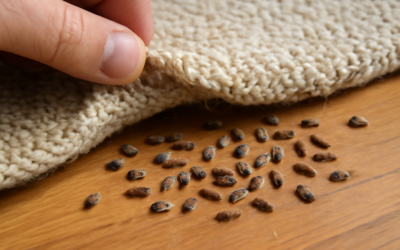
You notice a tiny carpet beetle crawling across your bedroom carpet and suddenly realize those small bald patches in your rug were not from normal wear after all. Carpet beetles are among the most common and destructive household pests, yet many homeowners do not even know they exist until the damage is already done. With 30 years of flooring experience, we have seen carpet beetle damage ruin everything from wool Berber to antique Persian rugs.
The good news is that carpet beetle infestations are entirely manageable once you know what you are dealing with. This guide covers identification, damage assessment, elimination strategies, and long-term prevention so you can protect your flooring investment.
- Identifying Tiny Carpet Beetles
- Common Carpet Beetle Species
- What Damage Do Carpet Beetles Cause
- Signs of a Carpet Beetle Infestation
- How to Get Rid of Carpet Beetles
- Natural and Chemical Treatment Options
- Preventing Carpet Beetle Infestations
- Carpet Beetles vs Bed Bugs
- When to Call a Professional
- Frequently Asked Questions
Identifying Tiny Carpet Beetles
A tiny carpet beetle adult is remarkably small, typically measuring just 1/16 to 1/8 of an inch long. That is roughly the size of a sesame seed, which is why they often go unnoticed until populations grow. The adults are oval-shaped with a rounded, dome-like body and short antennae.
Adult carpet beetles can fly and are attracted to light. You might spot them near windows, on windowsills, or around light fixtures. They are often mistaken for ladybugs due to their rounded shape, though they are significantly smaller and have different coloring depending on the species.
The larvae are actually more destructive than the adults. Carpet beetle larvae are small, elongated, and covered in tiny bristle-like hairs. They range from 1/8 to 1/4 inch long and are typically brown or tan with distinctive dark bands. These larvae are the ones doing the real damage to your carpets, rugs, and natural fiber textiles.
Common Carpet Beetle Species
There are several species of carpet beetle found in North American homes. Knowing which type you have helps determine the best treatment approach.
- Varied Carpet Beetle: The most common species. Adults have irregular patches of white, brown, and dark yellow scales on their backs. Roughly 1/10 inch long. Found in every US state.
- Black Carpet Beetle: Solid dark brown to black coloring. Slightly larger at 1/8 to 3/16 inch. Their larvae can grow up to 5/16 inch and cause extensive damage.
- Furniture Carpet Beetle: Similar to the varied carpet beetle but with more distinct white and dark spots. Targets upholstered furniture as well as carpeting.
- Common Carpet Beetle: Features a distinctive pattern of black with white and red-orange scales. About 1/10 to 1/8 inch long.
All species share similar habits and dietary preferences, so the removal and prevention methods work across the board regardless of which tiny carpet beetle species has moved into your home.
What Damage Do Carpet Beetles Cause
Carpet beetle larvae feed on keratin, a protein found in natural animal fibers. This means they target wool carpet, silk rugs, leather, fur, feathers, and even pet hair that accumulates in corners and under furniture. Synthetic carpets like nylon and polyester are generally safe from carpet beetle feeding, though larvae may still hide in synthetic carpet if there is enough organic debris present.
The damage pattern from carpet beetles is distinctive. You will see irregular holes and bare patches in carpet, often concentrated along edges, under furniture, and in closets where the carpet sees less traffic and vacuuming. Unlike moth damage which tends to create larger holes, carpet beetle damage appears as scattered thin spots and small irregular bald patches.
Beyond carpet, these tiny pests can damage clothing, blankets, taxidermy, museum specimens, and even dried food products. A single female carpet beetle can lay 40 to 100 eggs, and the larval stage lasts anywhere from two months to over a year, giving them plenty of time to feed and cause damage.
Signs of a Carpet Beetle Infestation
Catching a carpet beetle problem early saves you significant money on carpet repairs or replacement. Watch for these telltale signs:
- Shed larval skins: As larvae grow, they molt multiple times. Finding tiny, translucent, bristly shell casings is a strong indicator of an active infestation
- Bare patches in carpet: Especially along baseboards, under furniture, and in closets
- Adult beetles near windows: Adults are drawn to sunlight and often gather on windowsills
- Fecal pellets: Tiny, sand-grain-sized dark pellets near feeding areas
- Damaged clothing: Holes in wool sweaters, silk items, or other natural fiber garments stored in closets
- Live larvae: Fuzzy, striped caterpillar-like creatures in carpet fibers, especially in undisturbed areas
Check under area rugs, behind furniture, inside closets, and along the carpet-baseboard junction. These are prime hiding spots for carpet beetle larvae because they are dark, undisturbed, and often accumulate the organic debris that larvae feed on.
How to Get Rid of Carpet Beetles
Eliminating a tiny carpet beetle infestation requires a systematic, multi-step approach. Here is the process we recommend based on decades of helping homeowners deal with carpet pest damage:
- Thorough vacuuming: Vacuum every square inch of carpeted area, paying extra attention to edges, corners, under furniture, and closet floors. Use the crevice attachment along baseboards. Immediately dispose of the vacuum bag or empty the canister into an outdoor trash bin.
- Steam cleaning: Steam clean carpets at a temperature of at least 120 degrees Fahrenheit. This kills eggs, larvae, and adults on contact. Professional hot water extraction is even more effective.
- Launder textiles: Wash all clothing, bedding, curtains, and other washable fabrics in hot water. For items that cannot be washed, place them in the freezer at 0 degrees Fahrenheit for at least 72 hours.
- Targeted insecticide: Apply a residual insecticide labeled for carpet beetles along baseboards, carpet edges, closet floors, and other areas where larvae are active. Follow all label directions carefully.
- Repeat: Vacuum daily for at least two weeks and repeat steam cleaning after 7 to 10 days to catch any newly hatched larvae.
Consistency is critical. A single missed vacuuming session can allow a new generation of larvae to establish itself. The entire elimination process typically takes three to four weeks of sustained effort.
Natural and Chemical Treatment Options
Depending on the severity of your infestation, you have several treatment options ranging from all-natural to professional-grade chemicals.
Natural treatments:
- Diatomaceous earth (food grade): Sprinkle along carpet edges and in closets. This natural powder damages the exoskeleton of beetles and larvae, causing dehydration. Leave for 48 hours, then vacuum thoroughly.
- Boric acid powder: Effective and low-toxicity. Apply to carpet, work into fibers with a broom, leave overnight, and vacuum. Avoid use around pets and children.
- Cedar oil spray: A natural repellent that can deter adult carpet beetles from laying eggs. Not effective at killing established larvae.
- White vinegar solution: A 50/50 vinegar and water spray can kill larvae on contact and clean surfaces where beetles travel.
Chemical treatments:
- Bifenthrin-based sprays: Residual insecticides that continue killing for weeks after application
- Deltamethrin dust: Effective for treating cracks, crevices, and wall voids where beetles hide
- Insect growth regulators (IGRs): Prevent larvae from developing into reproducing adults
Preventing Carpet Beetle Infestations
Once you have eliminated the current infestation, prevention is straightforward but requires ongoing diligence. Here are the most effective prevention strategies:
- Vacuum regularly: At least twice per week, hitting edges, corners, and under furniture every time. This is the single most effective prevention measure.
- Store seasonal clothing properly: Use sealed plastic bins or garment bags for wool, silk, and other natural fiber items. Cedar blocks add an extra layer of protection.
- Seal entry points: Caulk gaps around windows, doors, and where utility lines enter the home. Adult carpet beetles commonly fly in through open windows.
- Clean up pet hair: Regularly clean areas where pet hair accumulates, as this is a major food source for carpet beetle larvae.
- Use screens: Make sure all windows have tight-fitting screens to prevent adult beetles from entering.
- Monitor with sticky traps: Place pheromone-based carpet beetle traps in closets and along baseboards to catch early signs of reinfestation.
Homeowners with wool or natural fiber carpeting should be especially vigilant. If you are installing new carpet and carpet beetles have been a problem, consider synthetic fibers like nylon or polyester that are naturally resistant to carpet beetle feeding.
Carpet Beetles vs Bed Bugs
Many homeowners confuse carpet beetles with bed bugs, but these are very different pests requiring different treatments. A tiny carpet beetle larva can cause skin irritation from its bristly hairs, which is sometimes mistaken for bed bug bites. Here is how to tell them apart:
- Shape: Carpet beetles are round and dome-shaped. Bed bugs are flat and oval, resembling an apple seed.
- Size: Adult carpet beetles are 1/16 to 3/16 inch. Adult bed bugs are about 3/16 to 1/4 inch.
- Behavior: Carpet beetles are attracted to light and often found on windowsills. Bed bugs avoid light and hide in mattress seams and bed frames.
- Damage: Carpet beetles damage fibers and fabrics. Bed bugs feed exclusively on blood.
- Skin reactions: Carpet beetle larvae cause a rash-like irritation from bristle contact. Bed bugs leave red, itchy bite marks in clusters or lines.
When to Call a Professional
DIY treatment works well for minor to moderate carpet beetle infestations. However, you should call a professional pest control company if the infestation is widespread across multiple rooms, if you have tried DIY methods for a month without improvement, or if the beetles are in areas that are difficult to access like wall voids, attic spaces, or between floor layers.
Professional pest control for carpet beetles typically costs $150 to $400 for an initial treatment, with follow-up visits running $75 to $150 each. Most infestations require two to three treatments spaced two weeks apart for complete elimination.
Frequently Asked Questions
Are tiny carpet beetles harmful to humans?
Carpet beetles do not bite or sting, but their larvae have tiny bristle-like hairs called setae that can cause allergic reactions in some people. Symptoms include itchy red welts, eye irritation, and occasionally respiratory issues. The beetles themselves are not dangerous but should be eliminated to protect your carpets and textiles.
Can carpet beetles live in synthetic carpet?
Adult carpet beetles can be found anywhere in a home, but their larvae cannot feed on synthetic fibers like nylon or polyester. However, larvae can survive in synthetic carpet if there is enough organic debris such as pet hair, dead skin, food crumbs, or natural fiber lint present. Regular vacuuming prevents this.
How long does it take to get rid of carpet beetles?
A minor infestation can be eliminated in two to four weeks with consistent vacuuming, steam cleaning, and targeted treatment. Severe infestations may take six to eight weeks or longer, especially since the larval stage can last several months. Persistence and consistency are more important than any single treatment method.
Where do carpet beetles come from?
Adult carpet beetles fly and commonly enter homes through open windows, doors, and gaps in the building envelope. They are attracted to flowers and pollen outdoors, so they often hitch a ride on cut flowers brought inside. They can also be introduced through secondhand furniture, clothing, or rugs.
Do carpet beetles go away on their own?
No. Carpet beetles will not leave on their own as long as they have food sources available. Without intervention, the population will grow and the damage will spread. Early detection and treatment are essential to preventing costly carpet replacement.
Prefer to explore on your own?
See how new flooring looks in your actual room in seconds — free, no signup.
Try the free Floor Studio →