Those tiny holes in your wool rug were not made by moths. If you want to know how to get rid of carpet beatles, the first thing to understand is that the adult beetle you see crawling on a windowsill is almost never the culprit. The damage comes from the larvae, small bristly worms about 1/8 to 1/4 inch long that feed in dark, undisturbed places for weeks before you ever notice them. Catch them early and you can clear an infestation with a vacuum, a few household products, and roughly two weekends of work.
I have pulled these pests out of baseboards, closet corners, and the underside of wool area rugs more times than I can count. The good news is that carpet beetles are slow-moving and predictable. Once you know where they hide and what they eat, they are far easier to eliminate than fleas or bed bugs.
How to Identify a Carpet Beetle Problem
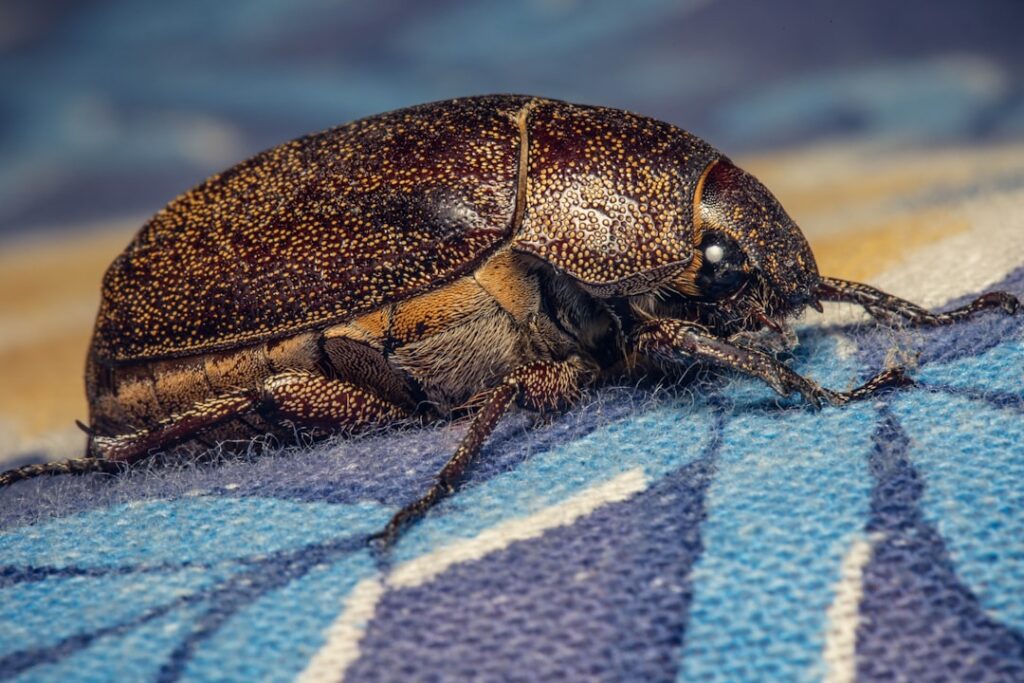
Adult carpet beetles are small, round, and about 1/16 to 1/8 inch across. The common varied carpet beetle looks like a tiny mottled turtle in white, brown, and yellow; the black carpet beetle is a solid dark oval. They are drawn to light, so you will often spot the adults near windows in spring.
The larvae are the destroyers. Look for carrot-shaped, tan-to-brown fuzzy larvae, plus the shed skins they leave behind. Those translucent cast skins are the single most reliable sign of an active infestation. You will also see irregular holes in natural fibers, thinning patches in wool carpet, and fine sandy debris (frass) collecting in corners.
- Damaged materials: wool, silk, felt, feathers, leather, and fur
- Shed skins: hollow, bristly larval casings in drawers and closet corners
- Live larvae: under rug edges, behind baseboards, inside vents
- Adults: near windows and light fixtures in warmer months
How to Get Rid of Carpet Beatles Step by Step
Knowing how to get rid of carpet beatles comes down to breaking the life cycle: remove the food source, kill the larvae, and deny them a place to lay eggs. Work through these steps in order and do not skip the deep clean.
- Vacuum aggressively. Vacuum every carpet, rug, and upholstered surface, plus baseboards, closet floors, and vents. Use the crevice tool along wall edges where larvae hide. Empty the canister or bag into an outdoor trash can immediately.
- Launder or freeze fabrics. Wash infested clothing and linens in hot water at 120°F or higher and dry on high heat. Items you cannot wash can be sealed in a bag and frozen at 0°F for two weeks to kill eggs and larvae.
- Steam clean. Run a steam cleaner over carpets and rugs. The combination of heat and moisture kills larvae and eggs that vacuuming misses.
- Treat cracks and edges. Sprinkle food-grade diatomaceous earth or a boric acid powder along baseboards, under furniture, and in closet corners. Leave it for several days, then vacuum it up.
- Repeat weekly. Because eggs hatch on a staggered schedule, repeat the vacuum-and-treat routine once a week for three to four weeks.
Natural and Chemical Treatment Options
You do not always need a heavy pesticide. For a light problem, a natural approach handles it. Diatomaceous earth is my go-to: a 4-pound bag runs about $12 to $20 and shreds the soft bodies of larvae mechanically, so they cannot build resistance. Boric acid works similarly and costs around $10 per pound.
For a heavier infestation, an insecticide labeled for carpet beetles and containing a residual pyrethroid such as deltamethrin or cyfluthrin will knock down larvae fast. A ready-to-use spray costs $8 to $15. Always test on a hidden patch first, keep pets and kids off treated areas until dry, and never spray a rug you plan to keep unless the label clears it for textiles. If you are cleaning delicate wool or silk, review our broader cleaning guides before applying anything stronger than soap and water.
Boric Acid vs. Diatomaceous Earth
Boric acid is a stomach poison and slightly faster on active larvae. Diatomaceous earth is purely physical and safer around food-prep areas. For a kitchen pantry, choose diatomaceous earth; for a wool closet, either works well. Both need to stay dry to keep working.
Protecting Wool Carpet and Area Rugs
Natural-fiber flooring is a magnet for these pests. If you own wool carpet or hand-knotted rugs, inspect the back and fringe every few months, since larvae feed on the underside where light never reaches. Rotate rugs twice a year so no section sits undisturbed, and lift them to vacuum the subfloor beneath.
Homeowners weighing a switch away from vulnerable materials often move toward synthetic options. Carpet beetles will not eat nylon or polyester, so if reinfestation keeps happening, a synthetic rug or hard-surface floor removes the buffet entirely. Compare durable, pest-resistant choices in our flooring guides when you are ready to replace damaged pieces.
Where Carpet Beetles Hide
Larvae avoid traffic and light, so the worst infestations grow in the places you clean least. Check these spots first:
- Under and behind heavy furniture that never moves
- Inside floor and wall vents, where lint collects
- Closet corners, especially under stored wool and boots
- The fringe and backing of area rugs
- Attic insulation and around dead insects in window tracks
- Beneath baseboards and along the tack strip edge of wall-to-wall carpet
Adults get in through open windows and on cut flowers, since they feed on pollen outdoors. Fixing torn window screens and inspecting bouquets before you bring them inside cuts off a major entry point.
How to Stop Them From Coming Back
Elimination is only half the job. Prevention keeps you from repeating the whole process next spring. Vacuum high-risk areas weekly, store off-season wool and cashmere in sealed containers with cedar blocks or lavender sachets, and keep humidity below 50 percent with a dehumidifier, since larvae thrive in damp, warm conditions.
Every couple of months, do a five-minute inspection: pull back a rug corner, shine a flashlight into the closet, and check window tracks for adults. A pheromone glue trap, about $10 for a two-pack, gives you an early warning by catching adults before they lay a new generation of eggs.
Carpet Beetles vs. Clothes Moths
People confuse these two pests constantly, and the treatment overlaps but is not identical. Both eat natural fibers, but the evidence differs. Clothes moths leave silky webbing and cocoon cases, while carpet beetles leave hard, bristly shed skins and fine sandy frass. If you find webbing, you are dealing with moths; if you find crusty cast skins and fuzzy larvae, it is beetles.
The reason it matters is entry point. Moths almost always arrive on infested clothing brought into the home, so the fix centers on your closet. Carpet beetles fly in from outside as adults and lay eggs wherever natural fibers and undisturbed debris meet, which means you have to hunt across the whole house, not just the wardrobe. When in doubt, treat for both: hot-wash fabrics, vacuum relentlessly, and apply a residual powder along edges.
When to Call a Professional
Most homeowners clear carpet beetles themselves, but call a pest control company if the infestation covers multiple rooms, keeps returning after two full treatment cycles, or has spread into wall voids and HVAC ductwork. A professional treatment typically costs $150 to $350 for a single visit and includes a residual application you cannot buy over the counter. That is money well spent if you are protecting an expensive wool rug or an heirloom textile.
Final Thoughts
Learning how to get rid of carpet beatles is mostly about consistency: vacuum relentlessly, treat the hidden edges, launder or freeze infested fabrics, and repeat for a full month to outlast the hatching eggs. Stay ahead of them with sealed storage, dry air, and routine inspections, and these fabric-chewing pests will not get another foothold in your home. Move quickly at the first shed skin and you will save your carpet, your clothes, and a lot of frustration.