If you’ve found mysterious bare patches in a wool rug, shed bristly skins along a baseboard, or small beetles on a windowsill, you’re likely dealing with a hidden infestation. Understanding the carpet beetle stages is the key to stopping the damage, because only one phase of the insect’s life actually eats your carpet, fabrics, and natural fibers. Carpet beetles pass through four distinct stages, and knowing what each looks like, and which one to target, lets you break the cycle instead of just swatting the adults you happen to see. This guide walks through the complete life cycle and how to fight it.
The Four Stages at a Glance
Carpet beetles are holometabolous insects, meaning they undergo complete metamorphosis through four stages: egg, larva, pupa, and adult. The full cycle can take anywhere from a few months to over a year depending on temperature, humidity, and food supply. The crucial fact for homeowners is that the larva is the destructive stage, the adults don’t eat fabric at all. Targeting the wrong stage is why so many infestations persist.
Stage 1: The Egg
The cycle begins when an adult female lays eggs, often 40 to 90 of them, in dark, undisturbed places near a food source. That means inside closets, beneath furniture, along carpet edges, in air ducts, and around stored wool, fur, or feathers. The eggs are tiny, about a millimeter, white to cream-colored, and easily overlooked. They hatch in roughly one to three weeks under warm conditions. Because eggs are laid in hidden, protected spots, an infestation is usually well established before you notice anything.
Stage 2: The Larva, the Real Culprit
This is the stage that damages your home. Carpet beetle larvae are small, elongated, and covered in bristly hairs, often tan to brown with banding, and sometimes described as looking like tiny fuzzy caterpillars. They feed on keratin, the protein in natural animal fibers, which is why they target:
- Wool carpets and rugs
- Silk, fur, feathers, and leather
- Wool and cashmere clothing
- Stored blankets, upholstery, and even dried pet hair, lint, and dead insects
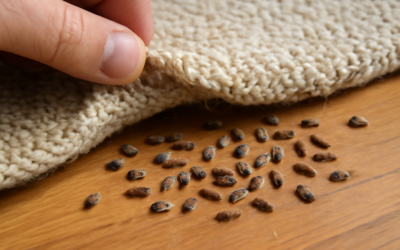
Larvae avoid light and stay hidden, feeding for weeks to many months, the longest stage of the cycle. The telltale signs are irregular bare spots or holes in natural-fiber goods and the shed, bristly skins the larvae leave behind as they molt and grow. Finding those cast skins is often the clearest evidence of an active infestation.
Stage 3: The Pupa
When a larva is fully grown, it pupates, transforming inside its final larval skin. The pupa is inactive and doesn’t feed, and it remains tucked in the same hidden, sheltered location where the larva fed. This transitional stage lasts a number of days to a few weeks. Because the pupa is quiet and out of sight, it’s easy to miss, but it’s the bridge between the destructive larva and the next generation of egg-laying adults.
Stage 4: The Adult
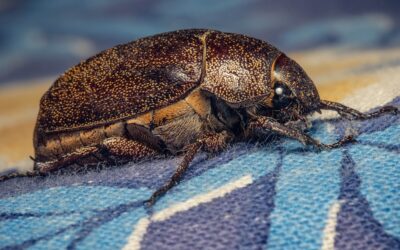
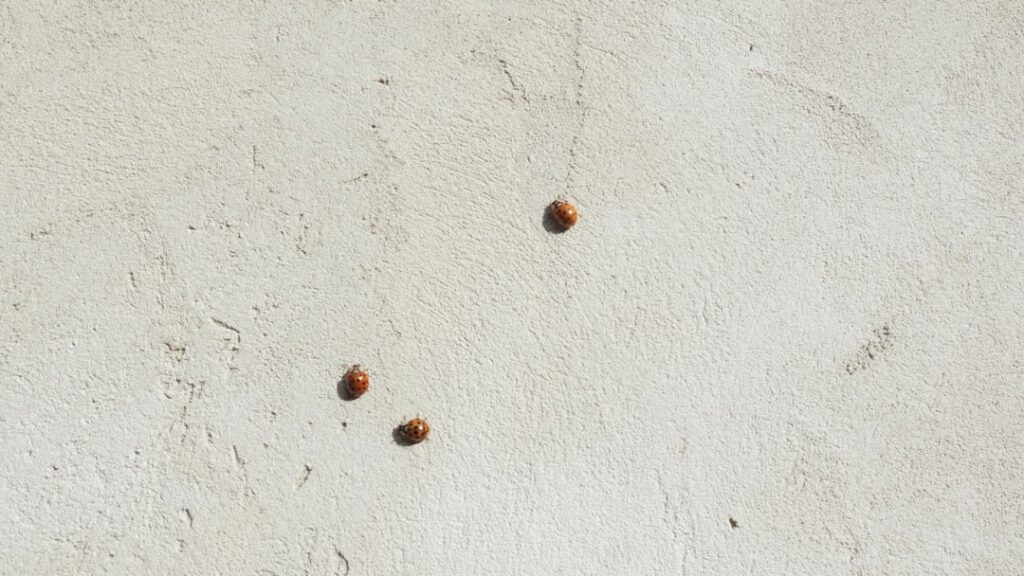
Adult carpet beetles are small, rounded, about 1/8 inch, and often mottled with white, brown, yellow, or black scales, depending on the species. Unlike the larvae, adults do not eat fabric, they feed on pollen and nectar outdoors. You’ll frequently spot them near windows and lights because they’re drawn to sunlight and trying to get outside to feed and mate. The problem is that adults fly in from outside, mate, and lay the next batch of eggs in your closets and carpets, restarting the cycle. Seeing adults indoors is a warning that eggs and larvae may already be present.
Why the Stages Matter for Control
Here’s the practical payoff: spraying the adults you see on the windowsill does almost nothing, because the damage comes from hidden larvae, and the eggs and pupae are tucked away in protected spots. Effective control means breaking the cycle at multiple stages.
- Find the source. Inspect closets, under furniture, carpet edges, stored woolens, and dark corners for larvae, shed skins, and bare patches.
- Deep clean. Vacuum thoroughly and frequently, especially edges, under furniture, and along baseboards, to remove eggs, larvae, and the lint and hair they feed on. Discard the vacuum contents promptly.
- Launder and heat-treat. Wash or dry-clean infested fabrics; high heat kills all stages. Freezing delicate items for several days also works.
- Remove food sources. Store wool, fur, and silk in sealed containers, and clean up dead insects, pet hair, and lint that larvae feed on.
- Block re-entry. Since adults fly in from outside, screen windows and seal gaps, and check cut flowers, which can carry adults indoors.
Carpet Beetles vs. Clothes Moths
Homeowners often confuse the two main fabric pests, and telling them apart helps you confirm what you’re up against. Both damage natural fibers, but the signs differ. Carpet beetle larvae leave behind bristly shed skins and create irregular, scattered holes or thinning across a rug or garment, and you’ll often see the small adult beetles near windows. Clothes moth larvae, by contrast, spin silken webbing, tubes, or cases and tend to chew concentrated holes, and the adults are small buff-colored moths that scuttle and avoid light rather than flying toward it. Carpet beetles also eat a wider menu, including lint, dead insects, and pet hair, whereas clothes moths focus on wool, silk, and fur. The control measures overlap, thorough vacuuming, laundering, heat or freezing, and sealed storage, so even if you misidentify the pest, the cleaning steps still help.
Preventing the Next Infestation
Long-term prevention is mostly good housekeeping. Vacuum regularly and reach the hidden, undisturbed areas where larvae thrive. Store natural-fiber clothing and textiles in sealed bins, and clean items before storing them, since body oils and food residue attract beetles. Keep humidity moderate, and inspect secondhand rugs, furniture, and woolens before bringing them inside. For a heavy or persistent infestation, a professional pest-control treatment targeting the larval stage and harborage areas may be needed.
Understanding the carpet beetle stages turns a frustrating, recurring problem into a solvable one. Remember that the larva does the damage, the adult lays the eggs, and the eggs and pupae hide in dark, protected spots, so effective control attacks all of them, not just the beetles you happen to see. At D and G Floors we tell homeowners with natural-fiber rugs that consistent vacuuming and smart storage are the cheapest, most effective defense against the one household insect that literally eats your floor.
Prefer to explore on your own?
See how new flooring looks in your actual room in seconds — free, no signup.
Try the free Floor Studio →